Residential AV Planning for Tampa Area Homes
A beautiful TV, premium speakers, and fast internet can still deliver a disappointing experience when they are added one piece at a time. Residential AV planning Tampa homeowners can rely on begins before the drywall closes, the furniture arrives, or a screen is mounted. The goal is not to fill a room with equipment. It is to make entertainment, connectivity, and everyday control feel simple while keeping the finished space clean and comfortable.
For Tampa Bay homes, planning also needs to account for open floor plans, bright Florida sunlight, pool areas, concrete block construction, humidity, and the growing number of devices competing for a home network. A professional plan turns those real-world conditions into smart decisions instead of expensive corrections later.
Start With How You Actually Use Each Space
The best AV design starts with lifestyle, not a product list. A family room may need a television that stays visible during a sunny afternoon, clear dialogue for movie night, and easy access to streaming without a stack of remotes. A media room may call for a larger display, immersive surround sound, acoustic treatment, and lighting that supports the experience instead of washing out the picture.
Outdoor spaces deserve the same thought. A patio television needs the proper enclosure or weather-rated design, depending on exposure. Speakers should cover the seating and dining areas without forcing the volume high enough to disturb the neighbors. Equipment locations, shade, glare, and Wi-Fi coverage all affect whether the space gets used as intended.
Planning conversations should cover who uses the system, what they watch or listen to, where they gather, and how much simplicity matters. A homeowner who wants one-button control has different needs than someone who enjoys adjusting individual settings. Neither approach is wrong. The system should match the household, not force the household to adapt to the technology.
Residential AV Planning in Tampa Starts With the Structure
New construction and renovations create the best opportunity to conceal wiring, place equipment intelligently, and prepare for future upgrades. Running wire after walls are complete is possible, but it can limit placement options and add labor. When the project is still open, an AV plan can account for television locations, in-wall or in-ceiling speakers, projector wiring, access points, security cameras, keypads, and equipment racks from the beginning.
Even in an existing home, thoughtful routing can preserve the look of the space. The right installation avoids dangling cables, crowded power strips, and components sitting where they do not belong. A clean result often depends on details that are easy to miss, such as adding power behind a wall-mounted TV, leaving service access to equipment, and using proper-rated cable for each location.
Florida construction adds another consideration. Block walls, metal framing, and insulation can weaken wireless signals. A strong plan uses wired connections where they matter most, especially for fixed TVs, streaming devices, gaming systems, access points, and cameras. Wireless technology is convenient, but it performs best when it is supported by a well-designed network foundation.
Plan the Equipment Location Early
A central equipment location can keep source devices, network hardware, and control components out of sight. It might be a closet, conditioned storage area, dedicated cabinet, or equipment rack, depending on the home and system size. The right location needs ventilation, power, network access, and room for service.
Not every home needs a large rack full of gear. A simple living-room system may need only a compact, concealed solution. Larger homes with multiple televisions, distributed audio, surveillance cameras, and several wireless access points benefit from a centralized design. The trade-off is upfront planning and cost in exchange for easier maintenance, cleaner rooms, and a system that can grow with the home.
Build Around Picture Quality, Sound, and Light
Screen size should be based on viewing distance, room layout, and preferred content, not just the biggest model that fits on the wall. A screen that is too small can feel underwhelming in a large room. One that is too large can dominate a space or become uncomfortable for close seating. Mounting height matters, too. A television placed too high above a fireplace may look dramatic but can cause neck strain during a two-hour movie.
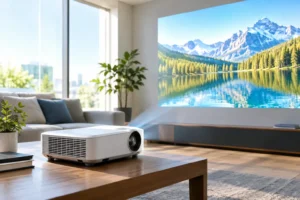
Light control is equally important in Tampa homes. Bright rooms can look excellent with the right high-brightness display and placement, but direct sun on a screen is rarely ideal. Window treatments, glare-conscious mounting, and thoughtful furniture layout can do more for daytime viewing than an expensive television alone.
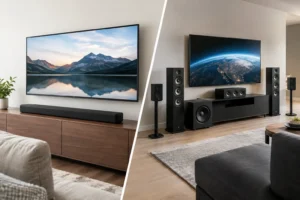
Sound is where many otherwise attractive rooms fall short. Flat-panel TVs are thin by design, so their built-in speakers rarely deliver full, room-filling audio. A soundbar can be a practical upgrade for a casual space. For a more immersive room, properly placed speakers and a subwoofer create clearer dialogue, better music, and more impact without requiring excessive volume.
Speaker selection is not simply a question of in-wall versus freestanding. In-ceiling speakers offer a discreet look and work well for background music or distributed audio. Dedicated speakers positioned at ear level usually provide a stronger front soundstage for movies. The right choice depends on the room, design preferences, and expected performance.
Treat Wi-Fi as Part of the AV System
Streaming, gaming, smart TVs, voice assistants, cameras, doorbells, and mobile devices all depend on reliable connectivity. When a network struggles, the issue may show up as buffering video, delayed camera notifications, dropped calls, or controls that respond slowly. That is why Wi-Fi should be part of the AV conversation, not an afterthought.
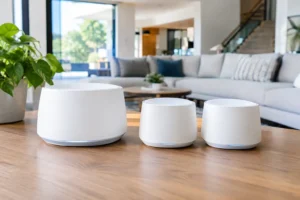
A professionally planned Wi-Fi mesh network places access points where coverage is needed, rather than hoping a single router can reach every bedroom, patio, and garage. The number and placement of access points depend on the home’s size, layout, building materials, and outdoor needs. More hardware is not always better. Correct placement and wired backhaul often make the bigger difference.
For homes with cameras or a substantial smart-home setup, network organization also matters. Separating certain devices and ensuring adequate capacity can improve reliability and make troubleshooting easier. It is a practical step that protects the experience homeowners expect from their entertainment and security systems.
Keep Control Simple, Even When the System Is Advanced
A high-performance system should not require a manual every time someone wants to watch television. The most successful designs reduce friction. That might mean one remote for a room, a wall keypad for music, a phone app for selected controls, or an integrated interface that manages entertainment, shades, lighting, and more.
There is a balance to strike. Full-home automation can be an excellent fit for homeowners who want coordinated control throughout the property. It also requires more planning, programming, and budget than a focused AV installation. For many homes, simple and dependable room-by-room control provides the best value.
The key is consistency. If every television works differently, guests and family members will default to the easiest option, often leaving valuable features unused. Clear, intuitive control helps the technology disappear into the background, which is exactly where it belongs.
Do Not Forget Outdoor Audio, Security, and Future Capacity
A residential AV plan can support more than movie night. Outdoor audio extends entertainment to the pool, patio, and grill area. Security cameras, video doorbells, and landscape lighting can improve visibility and convenience. Planning these systems together prevents competing pathways, overloaded network equipment, and repeated disruption to walls or landscaping.
Future capacity is worth considering, but it should be realistic. Prewiring a few strategic locations for another TV, an additional access point, outdoor speakers, or cameras can be a smart investment. Filling every wall with unused wire is not necessary. Good planning leaves options without paying for features that may never be used.
Frequencies USA helps homeowners turn these decisions into a clear, polished installation, whether the project is a single media room, a whole-home audio system, or a connected indoor-outdoor upgrade. Professional design brings the equipment, wiring, network, and control experience into one coordinated plan.
The best time to ask what your home could support is before a small upgrade becomes a patchwork of compromises. A free estimate can clarify the right path, the right budget, and the details that will make the finished system easy to enjoy for years.
 Previous Post