Best Projectors for Bright Rooms That Perform
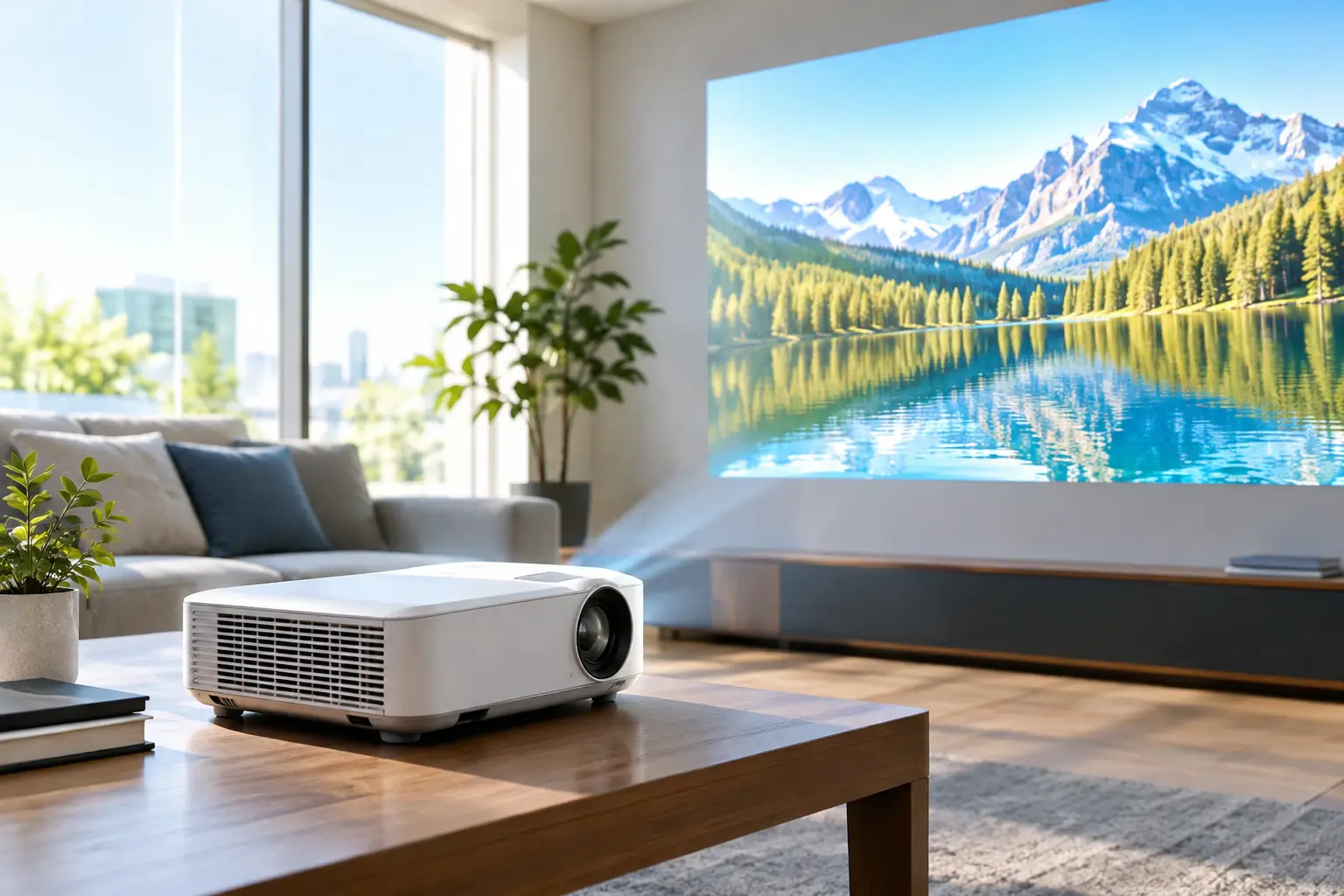
A projector can look incredible at sunset, then disappear under Florida afternoon light. That is why the best projectors for bright rooms are not simply the models with the highest advertised lumen number. They are part of a system designed around the room: the light coming through the windows, the size of the image, the screen surface, viewing distance, and how the equipment is installed.
For a media room with controlled lighting, nearly any quality projector can create a cinematic picture. For a living room, sports lounge, pool house, or business presentation space with daylight pouring in, the decision requires more care. The goal is not to fight every bit of ambient light. It is to build a viewing experience that stays bright, colorful, and easy to enjoy when the room is being used as intended.
What Makes a Projector Work in a Bright Room?
Brightness is the starting point. Projector output is measured in lumens, but the number alone does not tell the full story. A projector producing 3,000 lumens can look excellent on a properly sized screen in a moderately bright living room. That same projector can look flat and washed out if it is stretched across an oversized 150-inch image beside uncovered glass doors.
For most bright residential spaces, a laser projector rated around 3,000 to 4,000 ANSI or ISO lumens is a strong starting range. Larger rooms, commercial spaces, and outdoor-adjacent entertainment areas may call for 4,500 lumens or more. Laser light sources are especially appealing because they start quickly, maintain consistent brightness over time, and avoid the lamp changes associated with older projectors.
Still, brightness must be balanced with image quality. Some high-output models are built for presentations and may prioritize raw light over black level, color accuracy, and motion handling. A premium home entertainment projector gives you a more refined image for movies, streaming, and live sports, even if a purpose-built commercial unit technically produces more light.
Think About Image Size Before Chasing Lumens
A bigger image spreads the projector’s light across more surface area. This is why a 120-inch image generally looks brighter than a 150-inch image using the same projector and screen material. If daytime viewing is non-negotiable, choosing a practical image size is often smarter than buying more projector than the room needs.
For many family rooms, an image between 100 and 120 inches delivers the immersive feel people want while keeping brightness, seating distance, and installation options manageable. A custom design can determine the right size based on where viewers sit, how much natural light enters the room, and whether the projector will also be used for gaming, movies, or everyday TV.
Best Projectors for Bright Rooms by Use Case
There is no single best choice for every bright space. The right projector depends on whether you are creating a polished media room, a multipurpose living area, or a high-impact commercial display.
For a Bright Living Room: Epson QB1000 or LS12000
Epson’s premium laser projectors are popular choices for bright living areas because they combine strong light output with excellent color brightness. The Epson QB1000 is designed for homeowners who want a high-performance 4K image with enough output to stand up to ambient light better than many traditional theater-focused projectors. The Epson LS12000 remains a compelling option for a dedicated media space that has some daylight but can be partially controlled with shades.
These models are particularly effective when paired with a fixed-frame ambient-light-rejecting screen and installed with proper alignment. They also have the placement flexibility that makes a clean, concealed installation easier in rooms where ceiling structure or furniture layout limits options.
The trade-off is price and room planning. They are not casual tabletop projectors. To get the result these models are capable of, plan for a quality screen, reliable signal distribution, and professionally routed power and HDMI cabling.
For Maximum Daytime Punch: Epson QL3000 or QL7000
For larger, brighter rooms, Epson’s QL-series laser projectors bring serious light output to residential and commercial AV installations. The QL3000 and QL7000 are suited to spaces where conventional home theater projectors would struggle, such as open-concept homes, sports bars, golf simulators, event spaces, and conference rooms with significant daylight.
Their advantage is clear: they can create a large, vivid image without requiring the room to feel like a dark theater. They are also designed to support interchangeable lenses, which gives an installer more freedom to position the projector where it belongs rather than where the room happens to allow it.
The trade-off is that these are specialized, higher-investment products. They make sense when the room and use case truly demand their performance. In a smaller living room with good window treatments, a premium 3,000-lumen projector may create a better value.
For Sports, Streaming, and Gaming: BenQ X3100i
The BenQ X3100i is a practical option for a multipurpose entertainment room. It offers enough brightness for a room with moderate ambient light and is built with gaming responsiveness in mind. That makes it a strong fit for a man cave, game room, or family space where the screen switches from Saturday football to console gaming to movie night.
It is best used in a room where direct sunlight can be reduced with blinds or shades. Like most lifestyle-oriented projectors, it benefits substantially from a good screen and thoughtful placement. It is not the ideal answer for a wall of uncovered windows at noon, but it can deliver a lively, flexible experience in a well-planned casual entertainment space.
For Short-Throw Installations: Hisense PX3-PRO
An ultra-short-throw projector can be an excellent solution when ceiling mounting is not practical. The Hisense PX3-PRO sits close to the wall or screen and produces a large image from a low console. It is a natural fit for spaces where homeowners want the scale of projection without visible ceiling equipment.
This category has one critical requirement: use an ambient-light-rejecting screen designed specifically for ultra-short-throw projectors. Projecting directly onto a painted wall can work in a dark room, but it gives away too much contrast in a bright space. A proper UST screen helps reject overhead and side light while directing more of the projector’s light toward viewers.
Ultra-short-throw models simplify some installation decisions, but they are less forgiving when it comes to furniture placement and screen alignment. The console must be stable, the screen must be precisely mounted, and the viewing wall should be planned around the equipment.
The Screen Often Matters More Than the Projector
A bright-room projector installed on a basic white wall is like a premium sound system placed behind closed doors. The equipment may be excellent, but the room is preventing it from doing its job.
For conventional ceiling-mounted projectors, an ambient-light-rejecting screen can noticeably improve perceived contrast during daytime viewing. These screens are engineered to reflect projector light back toward the seating area while reducing light arriving from other directions. They are not magic, and they cannot overcome direct sunlight hitting the screen, but they can make the difference between a picture that looks merely visible and one that looks intentionally designed.
Screen gain, viewing angle, and projector placement all matter. A high-gain screen can increase brightness, but it may narrow the best viewing positions or create visible hot spots. In a wide family room, a balanced screen material is often the better choice. For ultra-short-throw projectors, the screen must match the projector type. Mixing the wrong screen with a UST model can produce uneven brightness and image artifacts.
Control the Light You Can Control
The best AV designs do not rely on the projector alone. Motorized shades, blackout treatments, dimmable lighting, and thoughtful fixture placement make a bright room far more projector-friendly without turning it into a cave.
Start by looking at where daylight lands during the hours you actually watch. Side light is easier to manage than sunlight striking the screen directly. If the screen wall receives direct sun, consider a different wall, a retractable screen, or a large direct-view television for daytime use. Sometimes the best answer is a hybrid setup: a TV for casual daytime viewing and a projector with a motorized screen for movies, sports nights, and entertaining.
Lighting inside the room matters as well. Recessed lights aimed away from the screen, layered accent lighting, and dimmable controls preserve the room’s polished look while protecting image contrast. This is especially valuable in open-concept homes where the entertainment space must also feel comfortable for conversation and everyday living.
Installation Details That Protect the Experience
Projectors are visually impressive when they disappear into the room. A professional installation can recess or neatly ceiling-mount the projector, conceal wiring, place source equipment in a clean equipment location, and integrate simple control for streaming, cable, gaming, and audio.
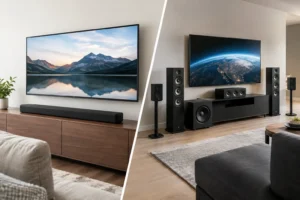
Do not overlook sound. Large projected images make weak TV-style audio feel even more out of place. A compact surround sound system, soundbar, or in-wall speaker package gives the picture the scale it deserves without cluttering the room. Reliable Wi-Fi and hardwired network connections also matter when streaming live sports or 4K content to a projector.
For homeowners in the Tampa Bay area, Frequencies USA can evaluate the room, recommend equipment that fits the light conditions and budget, and deliver a finished system with clean aesthetics and simple everyday control.
The right bright-room projector should make people look forward to using the space at 2 p.m. as much as they do at 9 p.m. Start with the room, not the spec sheet, and the final picture will feel like it was meant to be there.
 Previous Post
 Next Post