Custom Home Theater Installation That Fits Your Room
A great movie room should not require a stack of remotes, a tangle of visible cords, or a degree in audio engineering to enjoy. A custom home theater installation solves those everyday frustrations by designing the room around how you actually watch, listen, and relax.
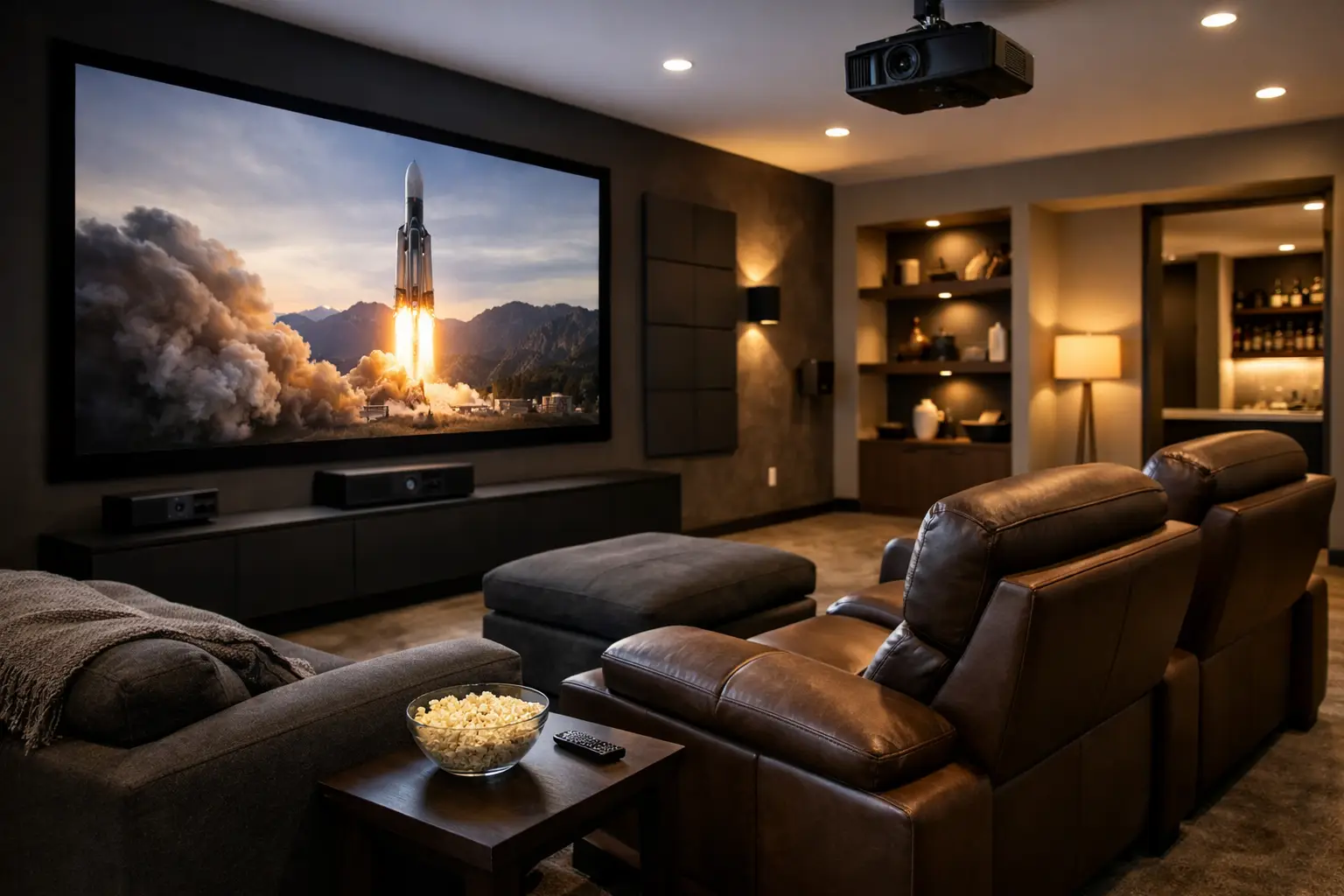
For some Florida homeowners, that means a dedicated theater with acoustic treatments, a projector, and reclining seats. For others, it means making the family room feel cinematic without turning it into a dark equipment closet. The right solution is not defined by the most expensive components. It is defined by a system that looks clean, sounds clear, and works the first time you press play.
Start With the Room, Not the Equipment
The room determines more than most people expect. Its size, ceiling height, windows, wall materials, seating position, and available lighting all affect what will perform well. Buying a large screen before understanding viewing distance, for example, can create an image that feels overwhelming or exposes flaws in lower-quality content.
A professional design begins with the room’s purpose. Is it primarily for Friday movie nights, Sunday football, gaming, or all three? Will young children use it? Does it need to remain bright and welcoming during the day? These answers guide decisions about displays, speakers, lighting, and control.
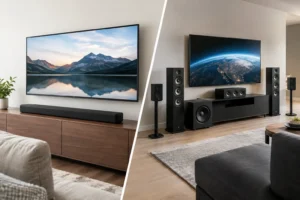
In a dedicated room, a projector and fixed screen can provide the big-screen experience many homeowners want. In a brighter living space, a large premium TV may be the better choice because it handles daylight more effectively and requires less control over window light. Neither approach is automatically better. The room and your habits should make that decision.
Screen Size Should Feel Comfortable, Not Excessive
The best screen size depends on where people sit and what they watch. A theater designed for movies can support a more immersive field of view than a room used mainly for news, sports, and casual TV. Proper placement also keeps viewers from looking too far upward, which can become uncomfortable during a long movie.
Projector selection requires similar care. Brightness, screen material, and ambient light work together. A projector that looks impressive in a showroom can look washed out in a sunny Florida room if the installation does not account for windows, wall color, and light control.
Sound Is What Makes a Theater Feel Real
A big screen gets attention, but sound creates the emotional impact. Dialogue should be easy to understand at normal volume. Music should fill the room without becoming harsh. Explosions and game-day crowds should have weight without rattling every picture frame in the house.
That balance comes from speaker placement and calibration, not simply adding more speakers. A properly designed surround system directs sound around the listener, making a quiet footstep, passing car, or overhead aircraft feel placed rather than smeared across the room.
The center-channel speaker is especially important because it handles much of the dialogue. It needs a clear path to the audience and should be matched thoughtfully with the left and right speakers. Hiding every speaker may look appealing, but placement cannot be sacrificed for aesthetics. In-wall and in-ceiling speakers can deliver excellent results when the system is designed for them from the beginning.
A subwoofer deserves equal attention. One correctly positioned subwoofer can transform the sense of impact in a room. In larger or unusually shaped spaces, two subwoofers may produce more even bass across multiple seats. More bass is not always the goal. Controlled bass is.
Acoustics Matter More Than Bare Walls Suggest
Hard flooring, glass doors, high ceilings, and open-concept layouts can cause echoes and make dialogue harder to follow. Rugs, upholstered furniture, curtains, acoustic panels, and strategic speaker calibration can improve the experience without making the room look like a recording studio.
There are trade-offs. A fully treated dedicated theater can deliver exceptional performance, while a multipurpose family room may need a lighter-touch approach that preserves its everyday style. An experienced installer can identify the improvements that make the greatest difference without overbuilding the space.
Clean Wiring Protects the Look of Your Home
Visible wires are one of the fastest ways to make a new entertainment system feel unfinished. They also create clutter around TVs, equipment cabinets, and speaker locations. A custom home theater installation should account for every cable before walls are closed or components are mounted.
Concealed wiring creates a polished result, but it also makes future service easier when the system is organized correctly. Equipment can be placed in a dedicated cabinet, closet, or rack rather than piled under the TV. This reduces visual clutter, improves ventilation, and keeps devices accessible when updates or adjustments are needed.
Planning for the future is part of good installation work. Extra conduit, labeled wiring, network connections, and accessible equipment locations can save considerable time if you later add speakers, upgrade a display, or expand into multi-room audio. You may not need every feature on day one, but the infrastructure should not limit you later.
Make Control Simple Enough for Everyone
A theater should feel easy, not temperamental. If starting a movie requires turning on several devices in a particular order, someone eventually will get stuck. The best systems reduce common actions to a few clear controls.
One remote, wall keypad, or app can turn on the display, select the right input, set the sound level, and adjust lighting scenes. A “Movie” setting might lower the shades, dim the lights, and start the system. A “Game Day” setting may keep more light in the room while making it easy to switch between cable, streaming, and a gaming console.
Simple control does not mean limited control. It means the daily experience is intuitive while advanced adjustments remain available when needed. This is particularly useful for families, guests, and anyone who does not want to troubleshoot technology before relaxing.
Do Not Overlook Wi-Fi and Streaming Reliability
High-quality streaming is only as dependable as the network behind it. Buffering during a championship game or a movie’s final scene is rarely the TV’s fault. In many homes, weak Wi-Fi coverage, overloaded equipment, or poor device placement is the real issue.
A theater project is a smart time to assess the home network. Hardwired connections are often the best choice for stationary equipment such as streaming devices, receivers, gaming consoles, and control processors. A professionally planned Wi-Fi mesh network can improve coverage in nearby rooms, outdoor spaces, and areas that previously struggled with signal strength.
This is especially valuable in larger homes and properties with concrete block construction, which can affect wireless performance. The theater may be the feature everyone notices, but reliable connectivity makes it enjoyable every night.
Choose Equipment Based on Use, Not Hype
There is no shortage of specifications, logos, and sales claims in home theater equipment. The question is whether a component suits the room and the people using it. A higher-priced receiver may offer channels or features you will never use. A lower-cost display may be the smarter choice if it provides the brightness, size, and reliability your room needs.
It can also make sense to incorporate equipment you already own. If an existing TV, speakers, or receiver still performs well, a professional can evaluate whether it fits into the new system. This keeps the investment focused on areas that genuinely improve the experience, such as better speaker placement, upgraded wiring, lighting control, or network performance.
At Frequencies USA, the approach is built around the finished experience: equipment selected for the space, professional installation, concealed wiring, and straightforward operation. The goal is a theater that feels intentional from every seat, not a collection of impressive components that never quite work together.
Plan the Installation Before Construction or Remodeling
If you are building, remodeling, or finishing a bonus room, involve an AV professional early. Prewiring before drywall is cleaner and typically more cost-effective than opening finished walls later. It also allows for speaker backing, projector power, equipment ventilation, network cabling, and lighting controls to be placed where they belong.
Even in a completed home, there are often clean installation options. Surface conditions, attic access, crawl spaces, and equipment locations all affect the approach. A site visit helps identify what is practical and where compromises may be needed.
The best next step is simple: picture the room on an ordinary weeknight, not just during a movie demo. If the system can make that regular evening easier, cleaner, and more enjoyable for everyone in the house, it is a theater worth planning. A free estimate gives you a clear path from that idea to a finished room you will want to use often.
 Previous Post
 Next Post