Restaurant Sound System Installation That Works
A packed dining room should feel energetic, not exhausting. When music is too loud near the bar, too quiet at the back tables, or distorted on the patio, guests notice. So does your staff. A professional restaurant sound system installation gives every part of the space the right atmosphere without turning daily operation into a constant battle over volume controls.
The goal is not simply to put speakers on the ceiling. It is to create a sound experience that supports your concept, protects conversation, looks polished, and stays easy for your team to manage through busy service.
Start With the Guest Experience, Not the Equipment
A coffee shop, a lively sports bar, an upscale steakhouse, and a waterfront patio all need sound, but they should not sound the same. The right system begins with how you want guests to feel in each area.
For a casual lunch spot, background music may need to add energy while leaving room for easy conversation. A cocktail lounge may need fuller, more immersive sound around the bar while the dining area remains relaxed. A sports-focused venue might prioritize multiple TVs, game-day audio, and clear announcements. The system should fit the business rather than forcing the business to adapt to the system.
That distinction matters because a single pair of speakers connected to one volume knob rarely works well in a restaurant. Sound behaves differently around tile, glass, concrete, open ceilings, booths, kitchens, and outdoor seating. What sounds fine during a quiet afternoon can become harsh and muddy once the room fills with guests.
Design Audio Zones Around How the Restaurant Operates
Most restaurants benefit from separate audio zones. This allows each area to have its own volume level and, when appropriate, its own source. The host stand, dining room, bar, restrooms, private room, waiting area, and patio should not always be tied to one setting.
For example, a patio may need more volume during lunch because of traffic or wind, while that same volume level would overwhelm an enclosed dining room. A private event room may need to play a presentation or playlist without affecting the main floor. At the bar, game audio may be useful during a major event while the rest of the restaurant continues playing background music.
Zoning also gives managers practical control. Rather than walking to a rack of components and guessing which button changes what, they can use a simple wall control, tablet interface, or designated app. A well-designed control system makes daily use straightforward, even for staff members who are not AV experts.
Music and TV Audio Need a Clear Plan
Televisions create one of the most common restaurant audio problems. When several games are on at once, playing every TV through the main sound system creates confusion fast. But running all TVs silently can reduce the excitement guests expect at a sports bar or neighborhood grill.
A better approach depends on the concept. Some venues dedicate audio to one featured game, then switch sources as needed. Others keep TV sound local to the bar area and use music throughout the dining room. Directional speakers, separate bar zones, and carefully planned display placement can help guests watch what they came for without competing audio spilling across the room.
Speaker Placement Is Where Sound Quality Is Won or Lost
More speakers do not automatically mean better sound. In fact, a few oversized speakers turned up too high can make a restaurant feel louder and less comfortable than a properly distributed system with multiple lower-volume speakers.
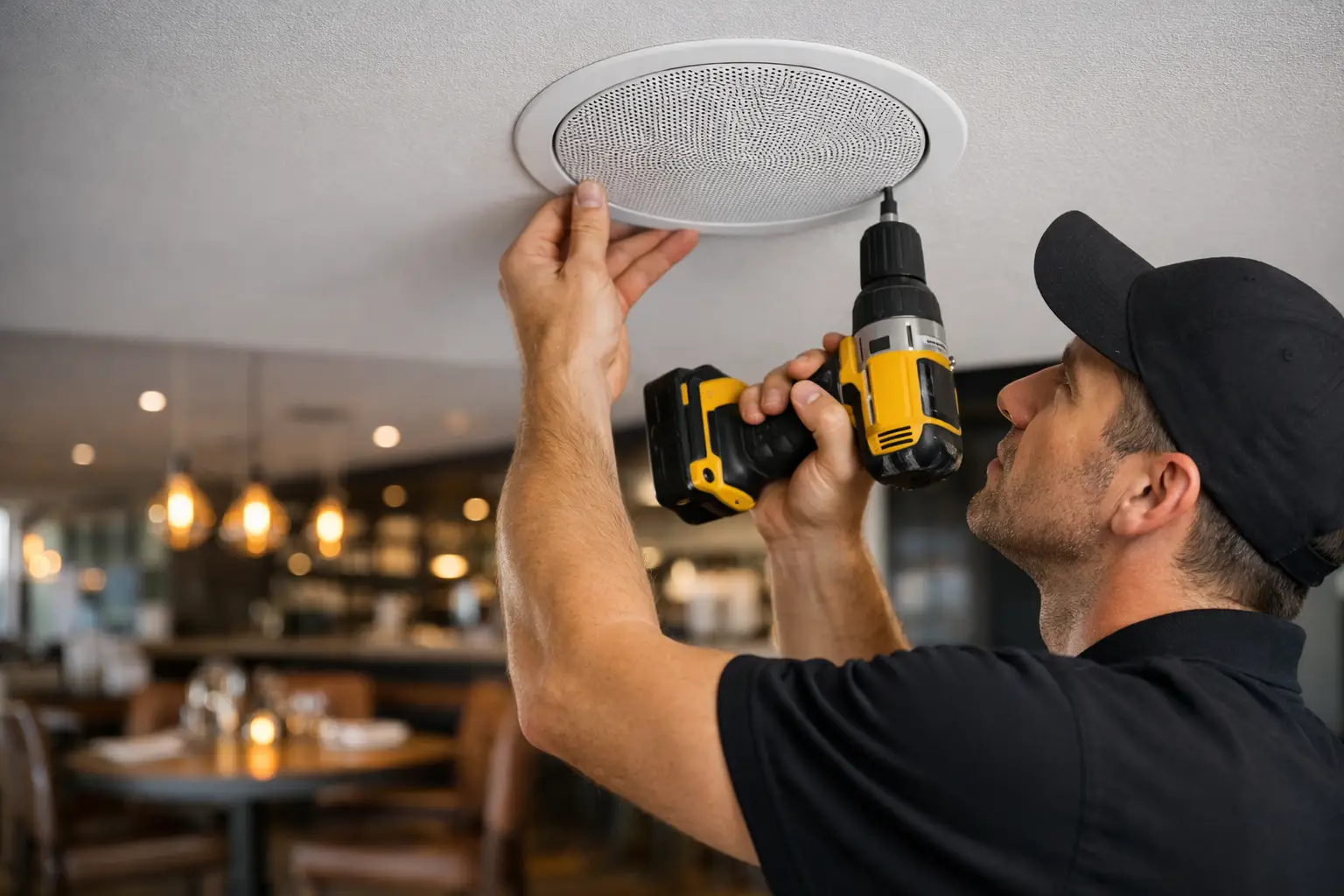
Distributed audio creates more even coverage. Ceiling speakers can provide clean, consistent background music in finished dining areas, while pendant speakers often work well in open-ceiling spaces. Surface-mounted speakers can be a smart fit for patios, covered outdoor bars, and areas where ceiling installation is not practical.
Placement should account for seating patterns, ceiling height, speaker dispersion, and obstacles such as fans, beams, lighting, and HVAC vents. The goal is to avoid hot spots where one table gets blasted while another can barely hear the music.
Clean aesthetics matter, too. Restaurant owners invest heavily in finishes, furniture, lighting, and branding. Visible wires, mismatched hardware, and poorly positioned speakers can undermine that investment. Professional installation keeps wiring concealed wherever possible and selects equipment that complements the space instead of distracting from it.
Restaurant Acoustics Affect More Than Music
If guests have to lean across the table to hear each other, the issue may not be the speaker volume alone. Hard surfaces reflect sound. Concrete floors, glass walls, exposed ceilings, stone, and large open rooms can create excessive reverberation, especially during peak service.
Acoustic treatment can make a meaningful difference without making a restaurant look like a recording studio. Decorative acoustic panels, ceiling elements, upholstered seating, drapery, and thoughtfully selected wall finishes can reduce harsh reflections. The best option depends on the architecture and brand style.
There is a trade-off here. Acoustic treatment improves comfort, but it needs to be incorporated thoughtfully so it supports the restaurant’s design. In many cases, a targeted approach in the noisiest areas delivers better value than treating every surface.
Choose Commercial-Ready Components
Restaurant audio equipment works harder than home equipment. It may run from opening prep through closing, deal with changing staff, and operate in warm, humid, or outdoor conditions. The equipment should be selected for the environment and expected use.
Commercial amplifiers, properly rated speakers, dependable source equipment, and organized rack components provide a more reliable foundation. Outdoor areas deserve special attention in Florida, where heat, humidity, rain exposure, and salt air near the coast can shorten the life of poorly chosen equipment.
A quality system also needs the right level of future flexibility. Perhaps the restaurant is opening with one dining room but plans to add a patio later. Maybe a private room will eventually need a microphone for events. Planning cable paths, equipment capacity, and zones before the walls are closed is far less expensive than rebuilding the system later.
Keep Licensing and Sources in Mind
Playing music in a commercial space is different from streaming music at home. Consumer music accounts may not provide the appropriate rights for business use, and ads or unexpected content can create an awkward guest experience.
Commercial music services are designed for public venues and often offer curated stations, scheduling, content controls, and consistent playback. Your installer can make sure the selected source integrates cleanly with the rest of the system, but music licensing should be addressed directly with the appropriate provider.
What a Professional Installation Process Should Include
A reliable restaurant sound system installation starts with an on-site assessment. Before recommending equipment, an AV professional should evaluate the floor plan, ceiling construction, electrical access, network needs, existing TVs, intended music sources, and the way guests and staff move through the space.
From there, the system design should identify speaker locations, audio zones, control options, equipment placement, and cable routes. This is also the right time to discuss whether the project includes televisions, digital signage, Wi-Fi coverage, security cameras, or outdoor entertainment. Coordinating these systems can reduce visible clutter and prevent separate contractors from working around each other.
During installation, cable management is not a minor detail. Clearly labeled wiring, properly ventilated equipment, protected connections, and accessible service points make the system easier to maintain. Once the system is installed, it should be tuned in the actual space. Sound checks should happen at realistic listening levels, not just in an empty room.
Staff training is the final piece. Managers should know how to adjust zones, select approved sources, handle common issues, and identify when to call for service. The best restaurant AV system feels simple because the planning behind it was thorough.
Avoid the Cheapest Fix for a Long-Term Need
A low-cost speaker package may appear attractive during a build-out, especially when budgets are tight. Yet replacing failed equipment, adding zones after opening, or fixing exposed wiring can cost more than designing the system correctly from the start.
That does not mean every restaurant needs a premium concert-level system. The right investment depends on the size of the venue, the brand experience, the number of zones, and whether the system supports events or sports programming. A good design identifies where performance matters most and keeps the budget focused there.
For restaurants in Tampa Bay and surrounding Florida communities, Frequencies USA can design and install customized commercial audio systems that sound refined, stay easy to control, and preserve the clean appearance of your space. A free on-site estimate is a practical first step before construction begins or recurring sound complaints become part of the guest experience.
Great restaurant audio does not demand attention. It creates the right energy, lets conversations happen naturally, and gives guests one more reason to stay a little longer.
 Previous Post
 Next Post