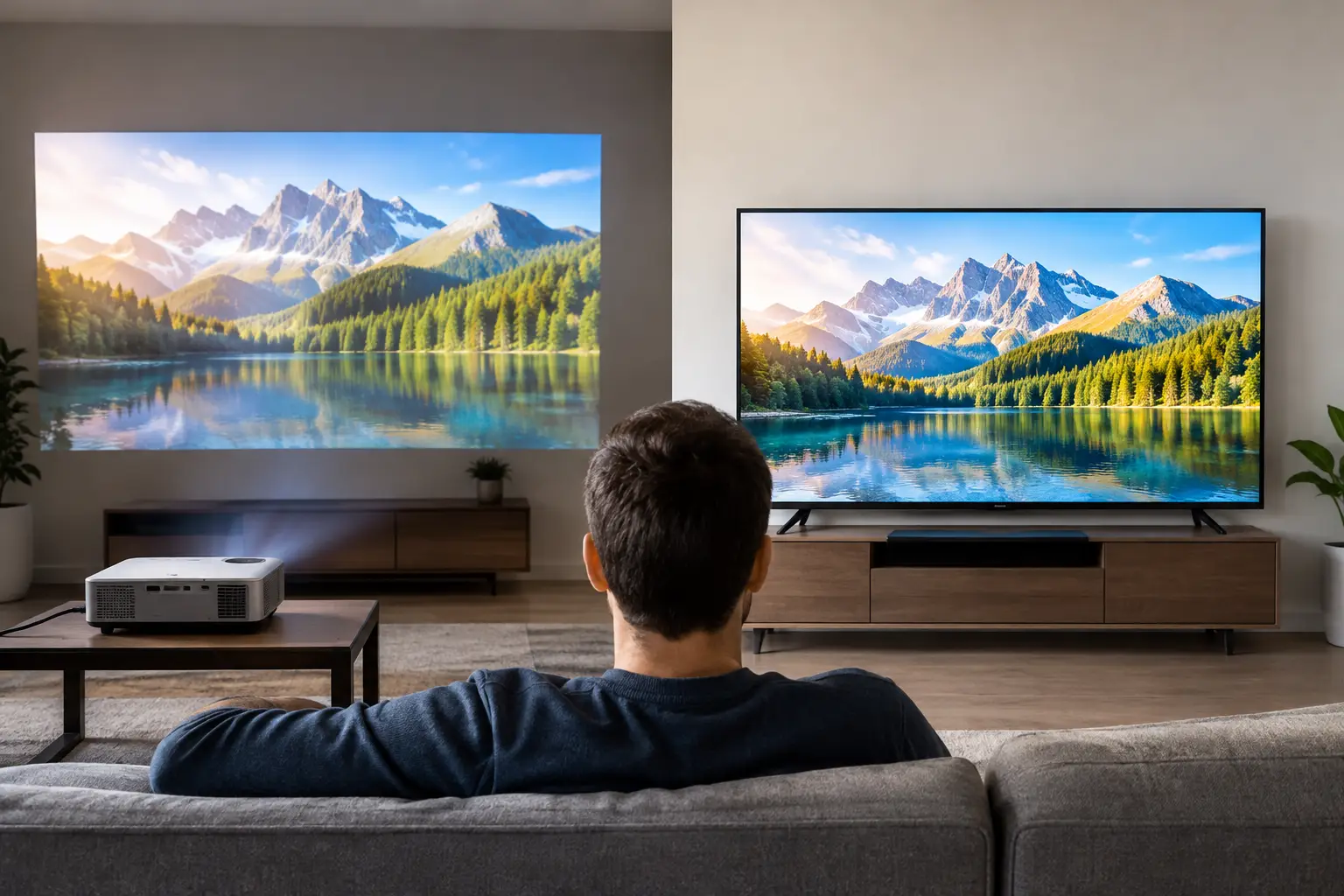
Projector Versus Large Television: Which Fits?
A 100-inch image can make movie night feel like an event. A bright 85-inch television can make Sunday football, daytime streaming, and casual family viewing look excellent with almost no preparation. That is why the projector versus large television decision is not really about choosing the biggest screen. It is about choosing the viewing experience that fits your room, routines, and expectations.
For a dedicated media room, a projector can create the scale and cinematic atmosphere many homeowners want. For a bright living room or a room used all day, a large television is often the more practical choice. The best result comes from planning the display, audio, seating, lighting, and control system together instead of treating the screen as a standalone purchase.
Projector Versus Large Television Starts With the Room
Before comparing specifications, look at how the room actually gets used. Is it a formal theater where the lights can be controlled? Is it a family room with windows, lamps, pets, kids, and people walking through? Will the screen be used mostly after dark, or for morning news and afternoon sports?
A projector performs best when it has help from the environment. Darker walls, controlled lighting, and a properly selected screen allow the image to look richer and more consistent. In Florida homes, where strong sun and wide windows are common, this matters even more. A beautiful projector installation can lose much of its impact when direct daylight reaches the screen.
A large television produces its own light and handles bright rooms with far less effort. It is usually the better fit for an open-concept living space, kitchen-adjacent family room, or multipurpose area where closing shades every time someone wants to watch TV would become a chore.
Screen Size and Seating Distance
Projectors make very large images attainable. A 100- to 120-inch screen can feel right at home in a theater, game room, or converted bonus room. This size is especially compelling for movies, concerts, and gaming because it fills more of your field of view.
Televisions now reach 75, 85, and even larger sizes with impressive picture quality. In many rooms, an 85-inch TV is more than enough. If seating is eight to ten feet away, it can feel immersive without taking over the space. Once you are planning a screen above 100 inches, a projector becomes much more attractive from both a design and budget standpoint.
When a Projector Is the Better Choice
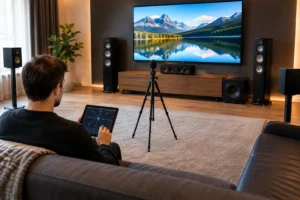
A projector is ideal when the goal is to build an intentional entertainment room. It gives you a theater-like image size without placing an oversized black panel on the wall when the system is off. A recessed motorized screen can disappear into the ceiling, while a fixed screen can become a striking focal point in a dedicated theater.
The experience is also more flexible than many homeowners expect. Modern projectors can deliver sharp 4K images, and the right model paired with the right screen can produce excellent contrast and color. But it is still a system, not just a box. Projector placement, screen material, ceiling height, ventilation, throw distance, and lighting control all affect the final image.
Projectors are especially strong for movie lovers who value scale over maximum daytime brightness. They also work well in man caves, media rooms, and enclosed patios used primarily after sunset. For outdoor viewing, a projector can be fun for occasional events, but it needs protection from weather, a suitable screen, and very low ambient light. A weather-rated outdoor TV is usually the more dependable choice for a permanent pool-area installation.
There are trade-offs. Projector lamps or laser light sources have a finite lifespan, and even quiet projectors produce some fan noise. The room may need blackout shades, dimmable lighting, and darker finishes to reach its full potential. Installation also requires careful planning to keep power, HDMI, network connections, and speaker wiring concealed and reliable.
When a Large Television Wins
A large television is the straightforward answer for everyday viewing. Turn it on, and you get a bright, detailed picture whether it is sunny outside or every light in the room is on. It is well suited to sports, news, kids’ shows, gaming, and quick viewing sessions where nobody wants to manage shades or adjust the room.
Televisions also typically offer stronger black levels and high-contrast performance in normal rooms. OLED models can provide exceptional cinematic depth in darker spaces, while premium LED and mini-LED models can deliver the brightness needed for rooms with substantial natural light. The right choice depends on the room and viewing habits, not simply the newest display technology.
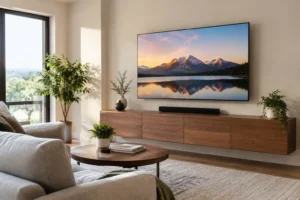
From an installation standpoint, a large television can be clean and polished when it is professionally mounted. Concealed wiring, a recessed media box, properly placed outlets, and integrated sound prevent the common problem of a premium TV surrounded by visible cords and mismatched equipment. A flush or low-profile mount can make a large screen feel intentional rather than bulky.
The main limitation is size. An 85-inch television is impressive, but it cannot recreate the wall-filling scale of a well-designed 120-inch projection system. Very large TVs can also become expensive quickly, heavier to mount, and more challenging to move or service.
Consider the Full Cost, Not Just the Display
The sticker price of a projector can look appealing until you add the screen, ceiling mount, lighting upgrades, wiring, audio, and installation. That does not make it a poor value. It simply means the budget should reflect the complete room, especially if the goal is a true home theater.
A television may cost more upfront at larger sizes, but it often needs fewer room modifications. Still, do not overlook audio. Thin TVs have limited built-in speakers, and even a large, beautiful picture feels underwhelming when dialogue is weak or action scenes sound flat. A soundbar can improve the experience, while in-wall, in-ceiling, or surround speakers can create a far more engaging room without cluttering it with equipment.
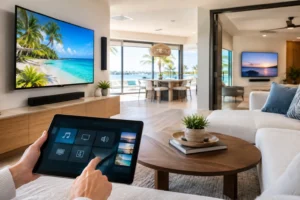
For either option, plan for the components people tend to forget: reliable Wi-Fi or wired networking, streaming devices, gaming consoles, surge protection, ventilation, and one easy-to-use remote or control interface. A system should be simple enough that every member of the household can enjoy it without a lesson each time.
Picture Quality Depends on Lighting Control
The question is not whether a projector or television has the better picture in every situation. Each has a different advantage. A television generally wins on brightness, contrast, and convenience in a typical living room. A projector wins on image size and theater atmosphere in a room designed around viewing.
If you want a projector in a brighter room, the screen choice becomes essential. Ambient-light-rejecting screen materials can help, but they are not magic. They improve the result when used correctly, yet direct sunlight and uncontrolled reflections will still affect the image. Window treatments and properly aimed lighting often deliver a more noticeable improvement than trying to solve every issue with a higher-priced projector.
Choose the Experience You Will Actually Use
A few honest questions usually make the decision clear. If the room is used throughout the day, has lots of windows, and needs a quick, dependable picture, choose a large television. If the room can be darkened and you want movie nights to feel distinctly different from regular TV watching, a projector is worth serious consideration.
There is also a middle ground. Many homeowners use a large TV in the main living area and reserve a projector for a dedicated theater, game room, or enclosed outdoor space. That approach gives the household a reliable daily display and a special place for big-screen entertainment.
The best display is the one that works with the room rather than fighting it. Frequencies USA can help homeowners plan the screen, sound, lighting, controls, and concealed wiring as one polished system, so the finished space feels easy to use from the first movie night onward.
 Previous Post