You Build It, We Engineer It: DIY Home Theater
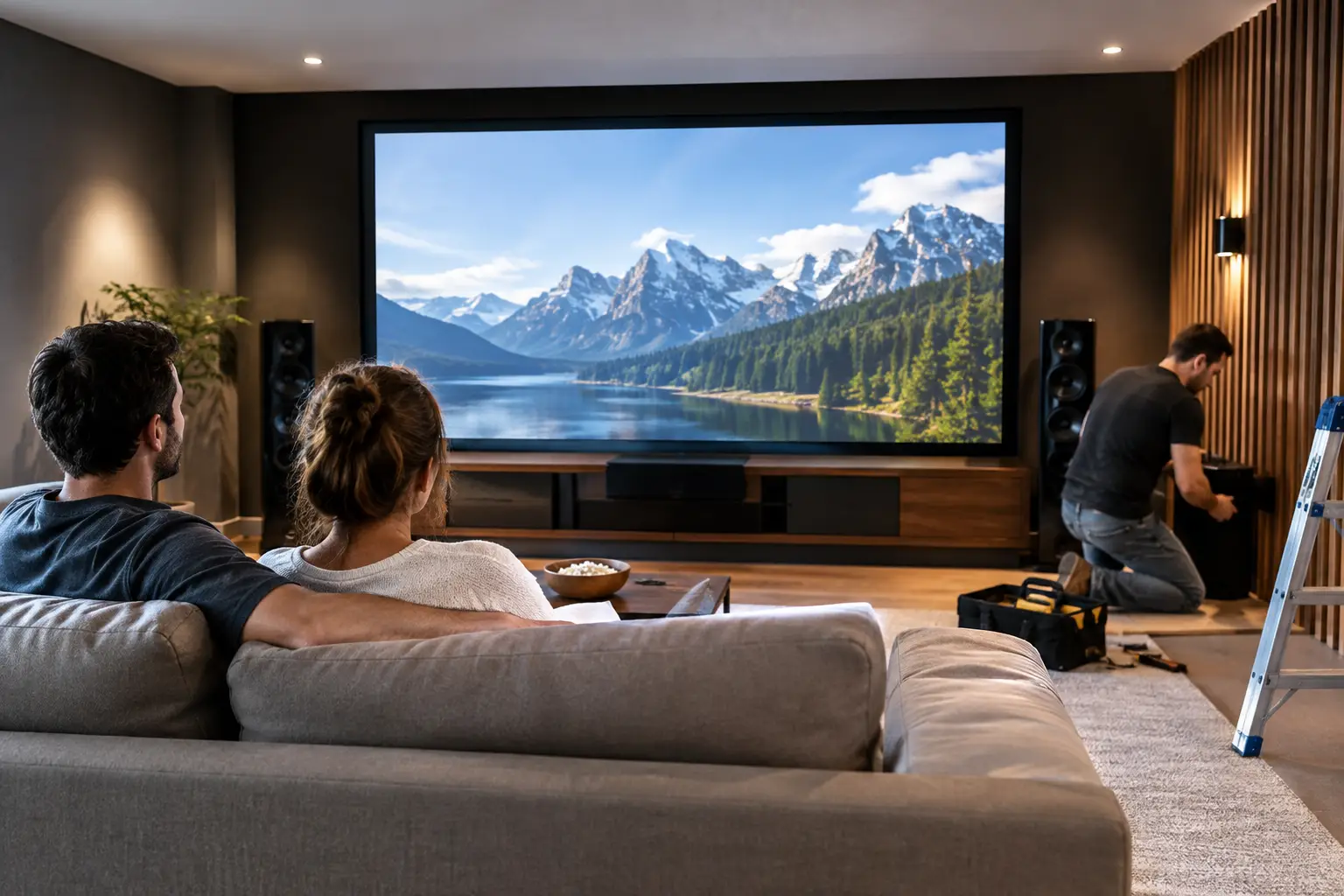
A great home theater can be built with your own hands without looking or sounding like a weekend project. With you build it. we engineer it. frequencies usa free diy home theater program, homeowners can take an active role in creating the room while getting professional guidance on the decisions that have the biggest effect on performance: layout, wiring, speaker placement, display selection, and control.
That combination matters. Framing a room, adding insulation, painting walls, and installing finishes can be rewarding work for a capable homeowner or contractor. But once speaker locations are covered by drywall and cables are pulled through walls, correcting a poor plan becomes expensive. Engineering the theater before construction begins helps protect the investment and gives the finished space the clean, polished feel people expect from a dedicated entertainment room.
What “You Build It, We Engineer It” Means
A DIY home theater does not have to mean figuring out every technical detail alone. The idea is simple: you handle the hands-on construction you are comfortable completing, while a professional AV team helps define the system behind the walls and inside the room.
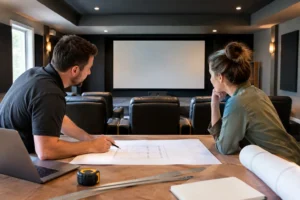
That can include planning where the screen or TV belongs, determining seating distance, mapping speaker positions, identifying equipment locations, and outlining cable paths before the walls are closed. The goal is not to turn your project into an overly complicated build. It is to make sure the room is prepared for the experience you want on movie night, game day, or a quiet evening of streaming.
For many Florida homeowners, this approach is especially useful when converting a bonus room, garage, flex space, man cave, she shed, or unused bedroom. You may already have a clear vision for the finishes. Professional engineering helps ensure the sound, picture, and controls live up to that vision.
Why Engineering Comes Before Equipment
It is tempting to start with a projector, giant television, or speaker package. Those components are exciting, but they should follow the room plan, not lead it. A system that looks impressive on paper can disappoint when the screen is too high, the seating is too close, or the surround speakers are placed wherever there happened to be an open wall.
The room determines many of the right choices. A compact media room may benefit from a large television and carefully selected speakers, while a deeper, light-controlled room may be a better candidate for projection. Open floor plans, low ceilings, windows, and hard tile floors all affect how sound behaves. There is no single equipment list that is right for every theater.
Engineering also prevents small oversights from becoming permanent annoyances. A missing conduit can limit future upgrades. A poorly located equipment rack can create heat and service headaches. Inadequate power planning can leave a room dependent on visible extension cords and power strips. These are rarely the details people think about first, but they are the details that separate a clean installation from a room that always feels unfinished.
A Smart DIY Theater Starts With the Room
Before selecting gear, think about how the room will actually be used. Is it primarily for family movies, sports, gaming, or a mix of everything? Will it need one row of seating or two? Do you want the room to feel fully dedicated to theater use, or should it still function as a guest room or everyday living space?
Those answers guide the design. A room built around movies may prioritize controlled lighting, acoustics, and a larger screen. A multipurpose room may need a display that performs well with lights on and furniture that works for conversation as well as viewing. Neither direction is wrong. The right plan is the one that fits the way your household lives.
Room dimensions are also more valuable than they appear. Accurate measurements help establish practical seating positions, screen sizing, speaker angles, and equipment placement. Even a rough floor plan is a useful starting point. The earlier these details are considered, the more options you have for concealed wiring and clean finishes.
Wiring Is the Part You Only Want to Do Once
If there is one area where homeowners should resist shortcuts, it is prewire. Wireless technology has improved, but a theater still benefits from reliable hardwired connections where they matter most. Running the right cables while walls are open supports consistent audio, strong network performance, and fewer visible wires around the display and equipment.
A thoughtful wiring plan can account for speakers, subwoofers, television or projector connections, network access points, streaming equipment, gaming consoles, control systems, and future expansion. Conduit is often worth considering because it creates a path for later cable upgrades without opening finished walls.
The exact wiring needs depend on the system. A straightforward 5.1 surround setup has different requirements than an immersive multi-speaker theater. A wall-mounted TV requires a different plan than a ceiling-mounted projector. That is why a generic online diagram is not always enough. It may be technically correct while still being wrong for your room.
Speaker Placement Is Not a Decoration Decision
In-ceiling speakers, wall speakers, and hidden wiring can create a refined look, but aesthetics should not override placement. Surround sound works because sound arrives from specific locations around the listener. Moving a speaker simply to match a light fixture or wall feature can weaken the effect.
The front soundstage deserves special attention. The left, center, and right speakers carry much of the dialogue, music, and action. If the center channel is compromised, voices may sound disconnected from the screen or become difficult to understand. Surround and height speakers add immersion, but clear dialogue starts at the front of the room.
Subwoofer placement is another trade-off. A subwoofer produces the low-frequency impact that makes movies feel cinematic, yet room shape and furniture placement affect its results. One location may provide fuller bass at the main seats, while another may be more visually convenient. A professional plan helps balance both priorities before cabinetry, seating, and finishes lock everything in place.
Make Control Easy for Everyone
A theater should not require a tutorial every time someone wants to watch a movie. The best systems keep the experience simple: turn on the room, choose the source, adjust volume, and enjoy it. Behind the scenes, the technology can be sophisticated. At the user level, it should feel natural.
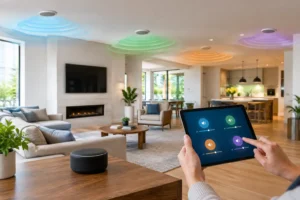
Planning control early allows the room to work as one experience rather than a collection of remotes. Lighting, display power, audio, streaming devices, and even motorized shades may be coordinated based on the design. If the room includes smart-home features, a theater plan can also consider how it fits with the rest of the home instead of operating as an isolated setup.
This is particularly valuable for families. The person who enjoys researching AV equipment may be comfortable with several remotes and settings. Everyone else should be able to use the theater without calling for help.
The Free DIY Home Theater Program Helps Protect Your Budget
DIY can be a smart way to manage a project budget, especially when you already have construction skills or trusted tradespeople. But doing the physical work yourself does not mean every decision needs to be made by trial and error. The value of professional engineering is avoiding costly changes after drywall, paint, cabinetry, and flooring are complete.
A clear plan also helps you spend where it counts. Some rooms need acoustic treatment more than a more expensive receiver. Others benefit more from better display performance than from adding extra channels. In many cases, using existing equipment may make sense if it fits the design and still delivers the experience you want.
Frequencies USA can help homeowners in the Tampa Bay area approach a DIY theater with the confidence of a professional plan and the flexibility of a self-built room. The scope should always match the project, the space, and the level of help you need.
Before you frame the first wall or order the first speaker, bring the room measurements, inspiration photos, and wish list to the conversation. A few well-planned decisions early can give your finished theater the performance, convenience, and clean appearance that makes staying home feel like the best seat in the house.
 Previous Post
 Next Post