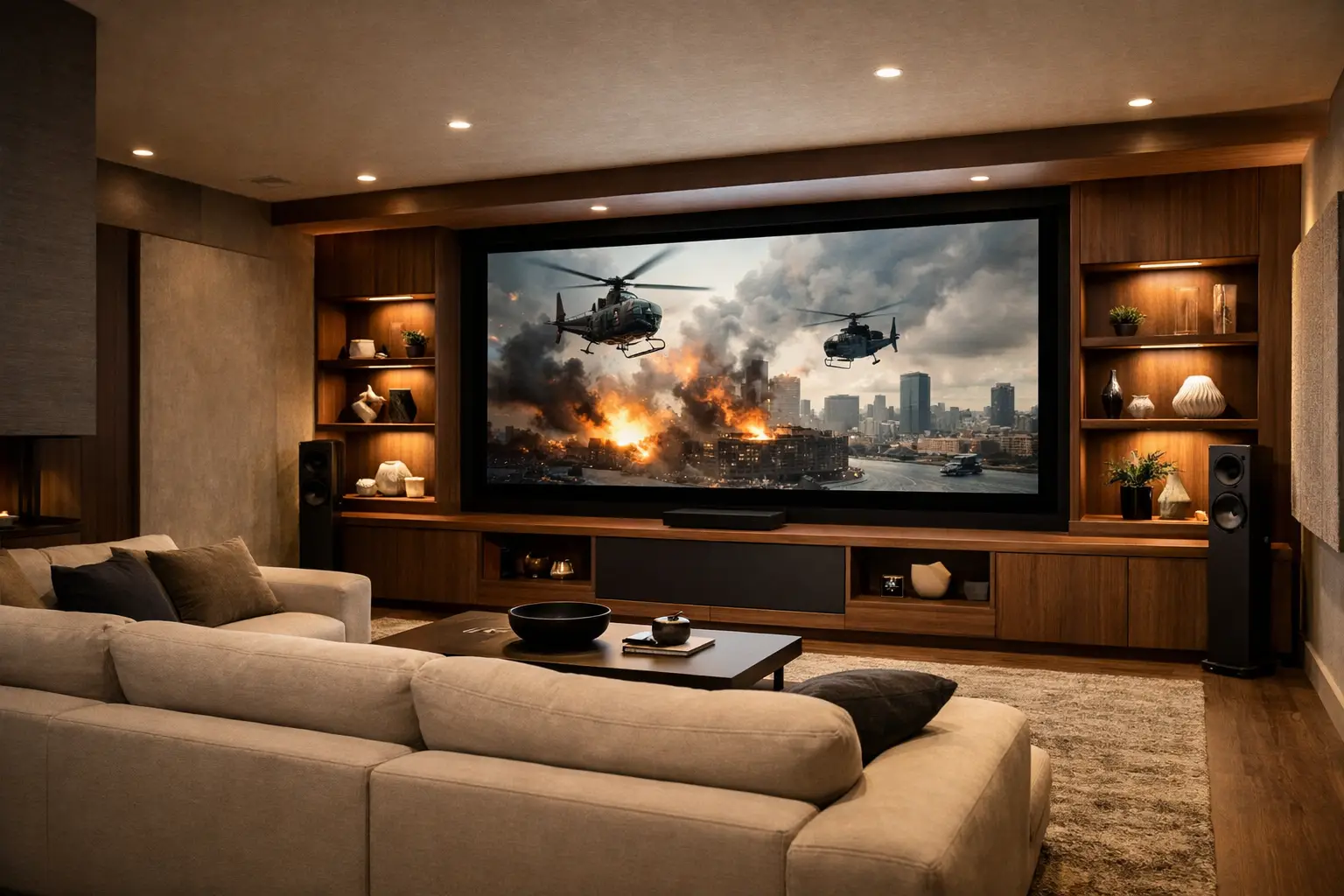
Home Theater Design Trends That Feel Built In
A great theater should disappear when the lights are on and take over the room when movie night begins. That idea is driving the most meaningful home theater design trends: less component clutter, more architectural polish, and technology that feels effortless for the entire family to use. For Florida homeowners, the best designs also account for bright rooms, open floor plans, humidity, and the desire to turn a bonus room, living area, or dedicated media space into a place people genuinely want to gather.
The strongest trend is not a single screen size, speaker brand, or paint color. It is customization. A theater should fit the way you watch, listen, host, and live – while keeping wires, equipment, and complicated controls out of sight.
Home Theater Design Trends Moving Beyond the Black Box
For years, a home theater often meant a dark room packed with visible electronics. Dedicated theaters still have their place, especially for homeowners who want a true cinema experience. But many current projects are designed as refined multipurpose rooms that perform beautifully for movies, sports, gaming, and everyday TV without looking like a retail showroom.
That shift has changed the conversation. Instead of starting with equipment, smart theater design starts with the room: natural light, viewing distance, seating layout, ceiling height, sound behavior, and how the space connects to the rest of the home. The equipment follows the plan, not the other way around.
Large Screens With a More Intentional Fit
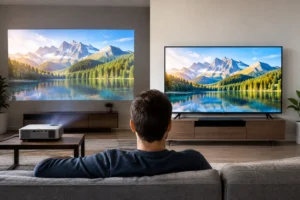
Big-screen TVs remain a popular choice because they are bright, sharp, and easy to enjoy in rooms with windows or ambient light. Modern ultra-large displays can create a highly cinematic experience without requiring a fully darkened room. They are particularly practical in open-concept living rooms and flexible media spaces.
Projectors are still an excellent option when the room supports them. A carefully selected projector paired with a proper screen can deliver a larger image and a more traditional theater feel. The trade-off is light control. In a sunny Florida room, blackout shades, screen selection, and projector placement matter as much as the projector itself.
The best choice depends on the room and viewing habits. A 100-inch screen is not automatically better than an 85-inch display if seating is too close, light is uncontrolled, or the wall cannot accommodate the installation cleanly. Correct sizing makes the experience comfortable rather than overwhelming.
Concealed Technology Is Part of the Design
Visible cables, stacked components, and speaker wire running along baseboards can make an expensive system feel unfinished. One of the most enduring trends is a clean, integrated look: equipment housed in a ventilated cabinet or rack, wiring concealed behind walls, and displays mounted with precise placement.
In-wall and in-ceiling speakers are especially valuable in rooms where aesthetics matter. They can provide room-filling sound without taking up floor space or competing with furniture and décor. For a more performance-focused theater, architectural speakers can be paired with discreet subwoofers and carefully placed surround channels to preserve both impact and visual balance.
Concealment should never mean compromising serviceability. Components still need ventilation, power access, and a practical way to be maintained or upgraded. Professional planning solves these details before drywall is closed or cabinetry is built.
Sound Is Becoming More Immersive and Less Obvious
Picture quality gets attention first, but sound is what makes a movie feel physical. A door closing off-screen, rain moving overhead, a stadium crowd swelling behind the seating area – these details create the sense of being inside the scene rather than simply watching it.
Immersive surround formats have made height channels a standard consideration in higher-end theater design. Ceiling speakers can add overhead effects without crowding the room, while properly positioned surround speakers create direction and depth. A powerful system is not necessarily the best system, though. Clear dialogue, even coverage, and controlled bass usually matter more than raw volume.
Acoustic treatment is also becoming more design-conscious. Fabric wall panels, rugs, upholstered seating, drapery, and purpose-built acoustic materials can reduce unwanted echo and improve clarity. In a dedicated theater, these elements may be more visible. In a living room, they can be incorporated into the décor in a much subtler way.
Better Bass Without the Boom
Subwoofers are often misunderstood. Their job is not simply to make the room shake. Well-designed bass gives music weight, makes action scenes more convincing, and fills out soundtracks at comfortable listening levels.
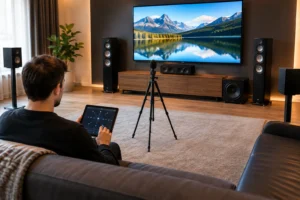
Room layout has a major effect on low frequencies. One subwoofer may be ideal in a compact media room, while a larger or irregularly shaped room may benefit from two units placed strategically. This is one area where professional calibration can make a dramatic difference. It helps avoid the muddy, uneven bass that can happen when equipment is selected and placed by guesswork.
Lighting Is Now a Core Part of the Theater Experience
The room should feel inviting before the movie starts and cinematic once it does. Layered lighting is a practical way to accomplish both. Recessed fixtures can handle general illumination, wall sconces or decorative fixtures add character, and low-level pathway or step lighting supports safe movement during a film.
LED accent lighting behind a display, under risers, or around architectural details remains popular, but restraint matters. The goal is atmosphere, not a permanent light show. Warm white lighting often works best for a polished theater, while color-changing scenes can be reserved for game days, parties, or gaming sessions.
Smart lighting controls make these layers easy to use. A single Movie button can lower shades, dim room lights, activate pathway lighting, and prepare the system for viewing. When controls are thoughtfully programmed, the room feels simple even when the technology behind it is sophisticated.
Comfort Has Replaced the One-Size-Fits-All Theater Row
Classic reclining theater chairs remain a strong choice for dedicated cinema rooms, particularly when there is enough depth for proper walkways and recline clearance. Yet many homeowners are choosing layouts that feel more like a luxury lounge: a sectional in front, a rear bar with stools, flexible ottomans, or a mix of recliners and family-friendly seating.
This approach works well for households that use the room for more than movies. The seating plan should account for sightlines, speaker placement, snacks, charging needs, and how people move through the space. A beautiful row of seats is not useful if it blocks a doorway or leaves guests craning their necks toward the screen.
Consider daily use, not just opening-night excitement. Durable performance fabrics, easy-clean surfaces, cup holders where they make sense, and accessible charging are small decisions that help a theater stay enjoyable over time.
Smart Control Should Make the Room Easier, Not Busier
A theater can include a display or projector, surround sound, streaming services, game consoles, motorized shades, lighting, and climate control. Asking everyone to manage that with six remotes is no longer acceptable.
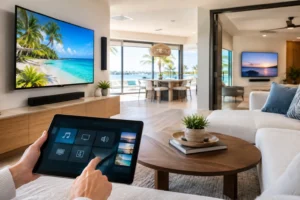
The current preference is for simple control through a professionally programmed remote, wall keypad, touchscreen, or mobile app. A homeowner should be able to press one button to watch a favorite streaming service, switch to a game console, or power everything down at the end of the night. Behind the scenes, the system can manage inputs, audio settings, lights, and network connections.
Reliability is the real luxury here. A polished control experience depends on a strong home network, correct equipment configuration, and a design that considers how the household actually uses the space. The goal is not to add more technology. It is to remove friction.
Flexible Rooms Are Winning Over Single-Purpose Spaces
Not every home has room for a dedicated theater, and it does not need one to achieve a premium result. Converted offices, lofts, bonus rooms, garages, and formal living rooms can all become high-performance entertainment environments with the right plan.
A flexible media room may use a large display instead of a projector, in-wall speakers instead of freestanding towers, and motorized shades to control light when needed. A dedicated cinema room may prioritize acoustic isolation, tiered seating, a projector, and a larger surround system. Neither approach is automatically superior. It comes down to lifestyle, architecture, and budget.
For homes in the Tampa Bay area, planning early is especially valuable during a remodel or new build. It is far easier to conceal wiring, add speaker backing, prepare power locations, and plan lighting zones before finishes are complete. Even in an existing home, a skilled installation team can often create a remarkably clean result without making the project feel disruptive.
The right theater is not the one with the longest equipment list. It is the room that invites you to sit down, press one button, and forget about the technology long enough to enjoy the people and stories in front of you. A free design conversation can turn that idea into a room that looks as good in daylight as it performs after dark.
 Previous Post
 Next Post