Commercial AV That Makes Your Business Work Better
A meeting that starts late because no one can connect a laptop, a restaurant with uneven audio, or a waiting room with a dim, outdated display can quietly affect how people view your business. Commercial AV solves those everyday friction points with professionally designed audio, video, control, and connectivity systems that are easy for staff and customers to use.
For Florida businesses, the right system is not about filling a room with equipment. It is about creating an environment that looks polished, communicates clearly, and supports the way your team actually works. From a conference room in Tampa to a customer-facing space in Clearwater, a tailored AV installation can make the difference between technology that causes delays and technology that simply does its job.
What Commercial AV Includes
Commercial audiovisual systems combine the equipment that helps a business communicate, present, entertain, inform, and collaborate. The exact setup depends on the space and its purpose, but it may include displays, projectors, speakers, microphones, video conferencing equipment, digital signage, control systems, structured wiring, and business-grade Wi-Fi.
A small office may need a conference room display, a clean wireless presentation solution, and a camera and microphone that let remote participants hear every conversation. A retail store may benefit more from distributed background music, promotional displays, and dependable internet coverage for point-of-sale devices. A restaurant, fitness studio, medical office, or showroom each has a different set of priorities.
That is why a commercial AV system should begin with a conversation about use, not a list of products. The best equipment for a boardroom is rarely the best choice for a busy lobby or outdoor dining area.
Commercial AV Should Solve a Business Problem
It is tempting to start by asking whether a business needs a larger screen or better speakers. Those details matter, but the more useful question is: what needs to work better in this space?
Perhaps your sales team needs to present without passing cables around the table. Maybe customers cannot hear announcements over crowd noise, or employees spend too much time troubleshooting different remotes. In a restaurant or bar, the challenge may be controlling multiple TVs and audio zones without changing the sound throughout the entire building.
A well-planned system addresses these practical problems. It can give employees one simple way to start a meeting, allow managers to adjust music by zone, and help guests see and hear content clearly. The result is not just better technology. It is less interruption, more confidence, and a more professional experience for everyone in the room.
Start With the Space and the People Using It
The layout of your business changes almost every AV decision. Ceiling height, window placement, ambient light, wall materials, room acoustics, seating, and walkways all affect equipment selection and placement.
For example, a bright lobby may need a commercial-grade display with enough brightness to remain visible during the afternoon. A conference room with glass walls may need acoustic treatment or carefully selected microphones so speech does not sound hollow. In an open office, speakers may need to be positioned to provide even coverage without forcing the volume too high near individual desks.
People matter just as much as floor plans. Consider who will run the system each day. If multiple team members need to use it, the controls should be obvious and consistent. A complicated system with too many apps, remotes, and input settings can undermine even excellent hardware.
Design for Simple Control
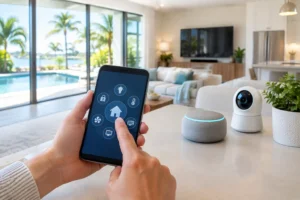
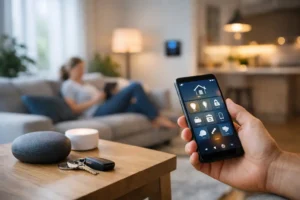
Simple control is often the feature a business appreciates most after installation. Instead of finding the correct remote, selecting an input, turning on an amplifier, and adjusting multiple volume controls, staff can use a wall keypad, touchscreen, or a single clearly labeled control interface.
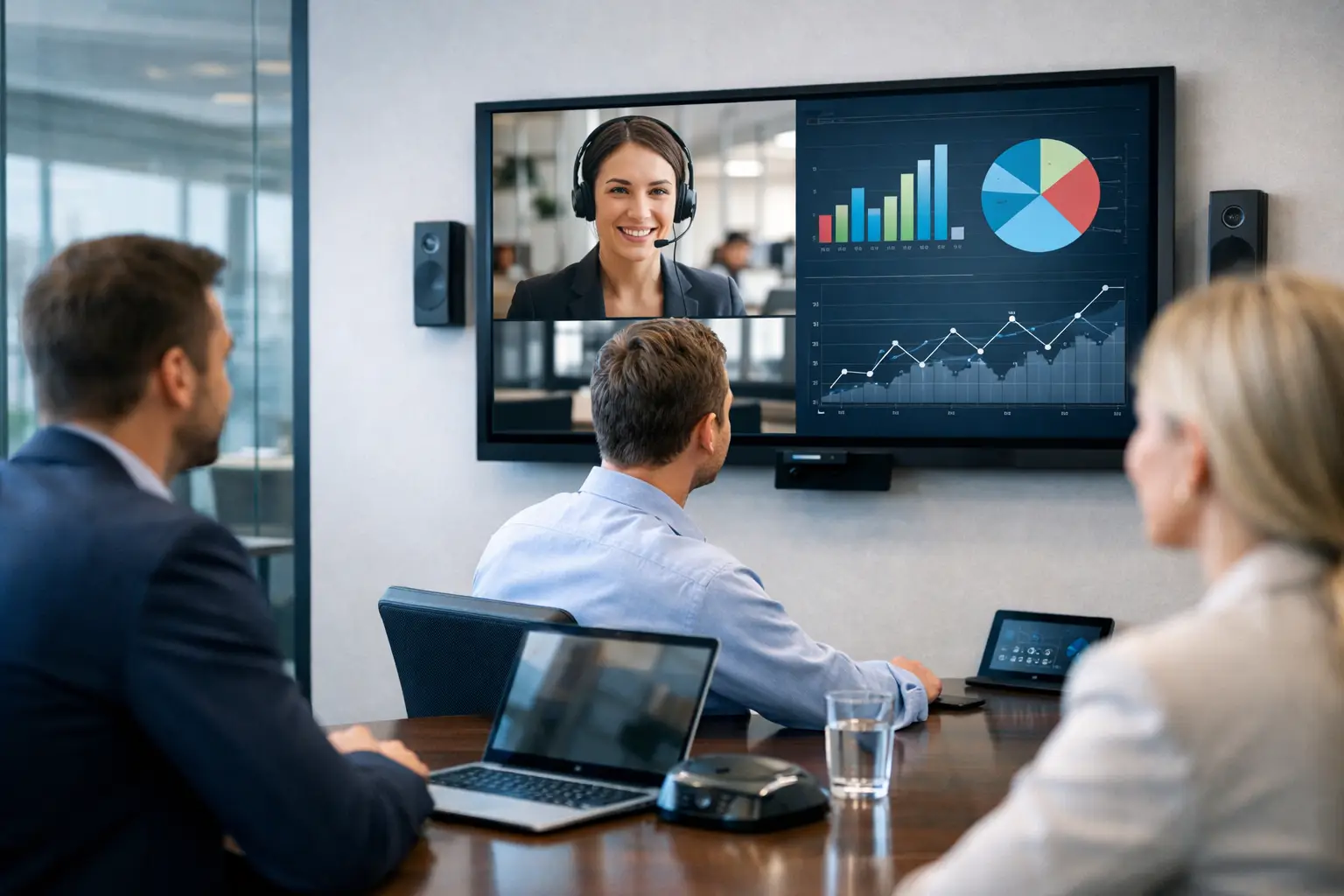
For a conference room, that may mean one tap to turn on the display, launch a video call, and set the correct camera and microphone. For a hospitality space, it may mean selecting a game on designated TVs while keeping music at the right level in separate zones. The goal is convenience without taking control away from the business.
Audio Quality Is More Than Volume
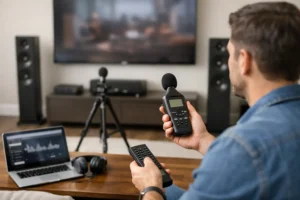
Poor sound is one of the fastest ways to make a commercial space feel unpolished. It may come from speakers that are too few, too loud, poorly placed, or not designed for the environment. In meeting spaces, it can also come from microphones that capture echo, HVAC noise, or conversations from the wrong part of the room.
Professional audio design focuses on coverage and clarity. In a retail environment, customers should hear music consistently as they move through the space. In a training room, every attendee should be able to understand the presenter. In a restaurant, the system should support the energy of the space without making conversation difficult.
Outdoor areas deserve special attention in Florida. Heat, rain, humidity, and open-air acoustics require equipment rated for the environment and an installation plan that protects wiring and connections. Patio audio can be a major customer-experience upgrade, but only when it is designed to perform beyond the first season.
Video and Digital Signage Need a Purpose
Displays can do far more than show a cable channel or a looping slideshow. They can welcome visitors, show menus, promote offers, share safety information, support presentations, or display scheduling and wayfinding details.
The key is choosing the right display for the right job. Consumer televisions may be suitable in limited situations, but commercial displays are often a stronger fit for spaces that operate long hours, need higher brightness, or require portrait mounting and centralized content control. It depends on usage, budget, and the importance of uptime.
Placement is equally important. A display mounted too high can be uncomfortable to view. One placed opposite large windows may suffer from glare. In a conference room, screen size should be based on viewing distance and the kind of content being shared, not simply the largest screen that fits the wall.
Build the Network Into the Plan
Modern AV systems depend on the network more than many businesses realize. Video conferencing, streaming, digital signage, wireless presentation, cloud-based controls, security cameras, and guest Wi-Fi can all compete for bandwidth.
A weak network can make a new AV system feel unreliable even when the displays and speakers are working perfectly. Planning for proper Wi-Fi coverage, wired connections where they matter most, and appropriate network separation helps protect performance. Employee devices, guest devices, AV equipment, and security systems do not always need to share the same access path.
This is especially valuable for businesses in buildings with concrete block walls, metal framing, multiple suites, or outdoor service areas. A site review can identify coverage problems before equipment is installed, rather than after staff and customers begin reporting dead zones.
Clean Installation Protects Your Investment
The finished appearance of an AV project matters. Exposed cords, mismatched wall plates, poorly mounted displays, and equipment stacked in corners can make an otherwise beautiful space look unfinished. More importantly, loose or improvised wiring can create service and safety issues over time.
A professional installation routes wiring neatly, places equipment where it can be accessed for service, and keeps the technology visually quiet. When possible, components can be housed in a dedicated rack or cabinet rather than scattered around the room. This supports cleaner aesthetics while making future adjustments easier.
There is a trade-off to consider. Fully concealed wiring may require access above ceilings or behind walls, which can add labor compared with a quick surface-mounted setup. For businesses that care about a polished customer-facing environment, that added planning is often worth it.
Plan for Change, Not Just Opening Day
Businesses evolve. You may add staff, expand into a neighboring suite, create an outdoor seating area, or begin hosting more hybrid meetings. A system designed with growth in mind can reduce disruption and avoid replacing equipment sooner than necessary.
That does not mean buying every possible feature at once. It means selecting a design that leaves sensible room for additional speakers, displays, inputs, cameras, or network capacity. A phased approach can work well when budget is a concern: start with the rooms that affect daily operations most, then expand from a solid foundation.
Frequencies USA helps businesses evaluate the space, choose equipment that fits the goal, and complete commercial AV installations with clean wiring, practical controls, and professional attention to detail. The right design should feel tailored to your business rather than copied from someone else’s floor plan.
Before you choose equipment, walk through a normal workday in your space and notice every point where technology slows people down. Those small moments are usually the best place to start building a system your staff will genuinely enjoy using.
 Previous Post
 Next Post