Business Security Camera Placement That Works
A camera mounted high in a corner may look like coverage, but it can still miss the face at the door, the transaction at the register, or the vehicle leaving the lot. Effective business security camera placement is about creating useful views of the moments that matter – with clean installation, dependable access, and no distracting visual clutter around your property.
For Florida businesses, placement also has to account for intense sun, summer rain, humidity, glare from glass storefronts, and busy outdoor areas. A professionally planned system gives you a clearer picture of what is happening while fitting naturally into the way your business operates.
Start With the Events You Need to Capture
The best camera plan starts with a simple question: what would you need to see after an incident? That answer is more helpful than choosing a camera based on a broad field of view alone.
A retail shop may need clear identification at the entrance, coverage of point-of-sale activity, and visibility over high-value displays. An office may prioritize front-door access, reception, equipment rooms, and employee-only entrances. A restaurant may need views of the host stand, bar area, cash handling locations, rear delivery door, and exterior walkways.
Think through normal daily activity as well as the exceptions. Where do deliveries arrive? Which doors are used after hours? Where are keys, inventory, tools, or sensitive equipment kept? Are there areas where customers could slip, fall, or dispute what happened? These answers shape a camera layout that supports security, operations, and peace of mind.
Business Security Camera Placement by Area
Entrances and exits
Every public entrance, employee entrance, rear door, and emergency exit deserves close attention. A camera should capture a usable view of a person approaching and entering, rather than only recording the top of a head or a distant figure moving through the frame.
Positioning matters more than simply mounting a camera above the door. A direct overhead angle is helpful for tracking movement, but a second angle at face level or slightly above it often delivers better identification. For a busy main entrance, two complementary views may be worth the investment: one wide shot showing traffic flow and one tighter view aimed at faces.
Avoid placing cameras where strong daylight pours directly into the lens. Florida storefronts can create dramatic contrast between bright outdoor light and darker interiors. Proper camera selection, positioning, and adjustment help prevent visitors from appearing as silhouettes when they step inside.
Reception, sales floors, and customer areas
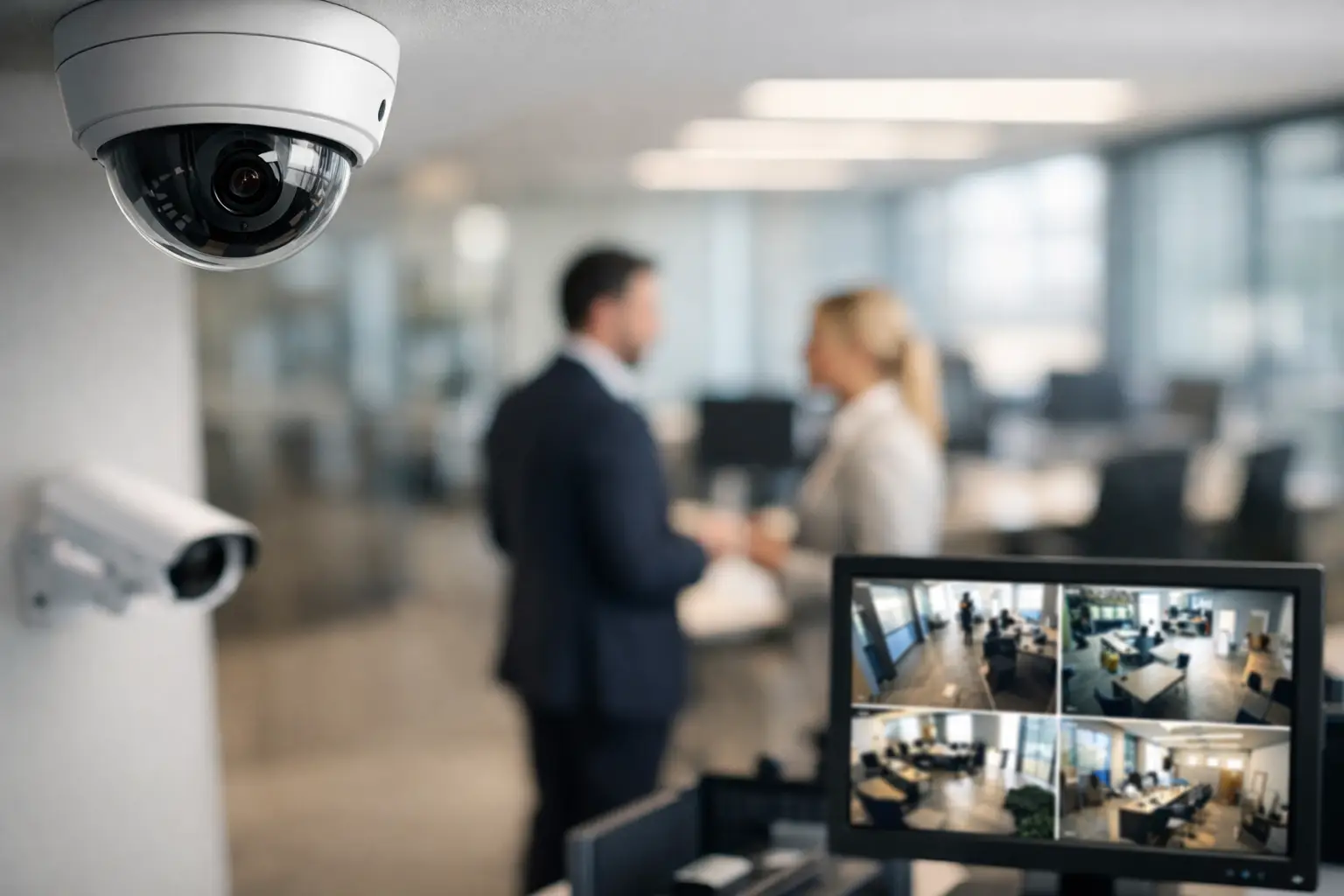
Customer-facing spaces benefit from broad, organized coverage. The goal is usually not to watch every square foot at maximum detail. It is to see who entered an area, where they moved, what happened near important displays or service counters, and how staff responded.
Place wide-angle cameras where they can see aisles, waiting areas, showroom floors, and service zones without being blocked by tall shelving, signage, seasonal displays, or hanging décor. Walk the space from a customer’s perspective before finalizing locations. A camera view that looks perfect during an empty walkthrough can be obstructed once merchandise, furniture, or promotional materials are in place.
For luxury retail, medical offices, salons, and client-focused businesses, appearance matters. Camera placement should support security without making the space feel harsh or improvised. Concealed wiring and carefully selected mounting locations keep the finished system professional and polished.
Registers, payment areas, and cash handling
Cash handling points require more detail than general room coverage. A camera should show the register area, the hands involved in a transaction when appropriate, and the space around the counter without exposing protected customer information.
Do not aim a camera at payment terminals in a way that records PIN entry, card numbers, or sensitive paperwork. The camera should document activity around the transaction, not create a privacy or compliance concern. In offices, apply the same principle around documents, computer screens, and reception desks where personal information may be visible.
For businesses with safes, cash-counting areas, or back-office deposits, a dedicated camera can provide accountability and a clear record of access. These rooms often have uneven lighting, so camera positioning should be tested after normal lights are on and after hours lighting is active.
Hallways, stockrooms, and restricted areas
Hallways are natural choke points, which makes them efficient camera locations. A properly aimed camera can document movement between public and employee-only areas, especially near doors leading to offices, storage rooms, inventory cages, or equipment spaces.
Stockrooms need enough coverage to monitor access and activity around valuable inventory, but placement should account for changing shelves, stacked boxes, and rolling carts. Mounting a camera too low can invite accidental bumps or intentional tampering. Mounting it too high may make identification difficult. The right height depends on the room dimensions, lens choice, and what needs to be recognized.
Restricted areas deserve visible cameras in many cases. A clearly installed system can deter unauthorized access before an incident begins. In other cases, a more discreet placement may be appropriate to protect the camera from damage or preserve the room’s appearance. A site-specific design makes that call easier.
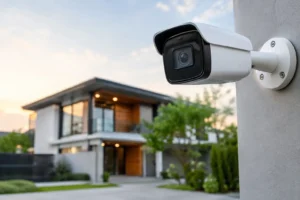
Parking lots, loading zones, and exterior spaces
Exterior coverage is often where a business security system proves its value. Parking lots, rear doors, dumpsters, gates, loading docks, and outdoor storage areas can be vulnerable after hours, yet they are frequently treated as an afterthought.
Start by covering points of entry and exit. Cameras should capture vehicles entering and leaving the property, then provide usable views near the building where people park, walk, load items, or access doors. A single wide camera may show that something happened in the lot, but it may not provide enough detail to identify a person or vehicle. Larger properties often need overlapping coverage from several thoughtfully placed cameras.
Lighting is part of the design. Cameras perform better when exterior areas are evenly lit, but a bright fixture aimed toward the lens can create glare. Landscape and architectural lighting can improve safety and curb appeal while also supporting clearer nighttime video when designed together.
Account for Sun, Weather, and Nighttime Conditions
A camera layout that looks good at noon can struggle at sunset. Test key views during changing light conditions, particularly at west-facing entrances and glass-heavy storefronts. Reflections, headlights, wet pavement, and security lighting all affect image quality.
Outdoor cameras need placement that protects them from direct exposure where possible while maintaining a clear view. Under soffits, covered entryways, and properly positioned exterior mounts can reduce the impact of heavy rain and sun. They still need a line of sight that cannot be easily blocked by landscaping, parked work vehicles, banners, or storm shutters.
Night coverage deserves an on-site review. Some areas need infrared capability, while others benefit more from controlled lighting. The right approach depends on whether the priority is detecting movement, identifying faces, or monitoring a broad exterior zone.
Avoid Common Placement Mistakes
The most common problem is relying on too few cameras with fields of view that are too wide. Wide coverage is useful for context, but it rarely replaces a camera positioned for identification. Another mistake is placing every camera at the highest possible point. Height protects equipment, but excessive height can reduce the detail needed to recognize a person.
Camera views also change as a business changes. New displays, a relocated register, a growing storage area, or an added patio can create blind spots. Review coverage whenever you remodel or reconfigure the space.
Privacy should be considered from the start. Cameras should not be installed in restrooms, changing rooms, or other areas where privacy is expected. In employee spaces, clear policies and appropriate signage can help set expectations. If your business handles medical, financial, or other regulated information, camera views and recording practices may require additional care.
Make the System Easy to Use After Installation
The value of a camera system depends on more than placement. Owners and managers need to be able to find the right footage quickly, view important areas remotely when authorized, and understand how recordings are stored. A clean, professionally installed system should feel like part of the building, not another complicated task for your team.
Frequencies USA designs custom camera systems for businesses that want dependable coverage without exposed wiring or cluttered equipment. The right layout balances detail and broad visibility, security and privacy, performance and appearance – then gives you a finished system that is simple to use.
Before choosing camera locations, walk your property with the real day-to-day scenarios in mind. A focused conversation about entrances, assets, traffic patterns, and after-hours risks can turn a collection of cameras into coverage you can actually rely on.
 Previous Post
 Next Post