Wired Cameras Versus WiFi Cameras Compared
A camera that drops offline at the exact moment you need footage is not providing real security. That is why the choice between wired cameras versus WiFi cameras should start with how your property works day to day, not with whichever camera happens to be easiest to buy.
For Florida homes and businesses, the right answer often comes down to coverage area, construction materials, available power, internet reliability, and how polished you want the finished installation to look. WiFi cameras can be a smart fit for targeted needs and quick additions. Wired systems typically deliver the strongest foundation for whole-property coverage, continuous recording, and long-term confidence.
Wired Cameras Versus WiFi Cameras: The Core Difference
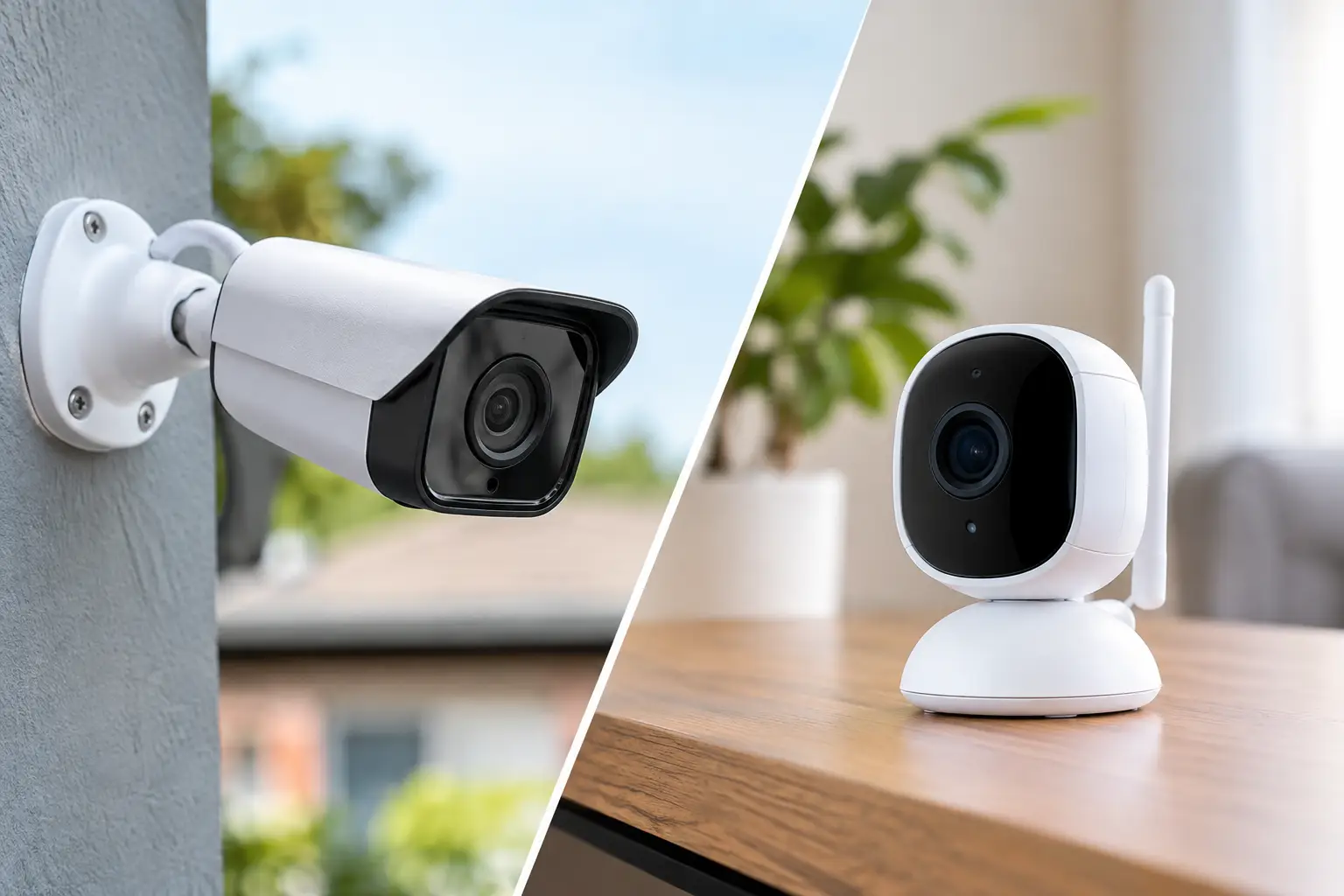
A wired security camera sends its video signal through a physical cable, most commonly Ethernet cable in a modern IP camera system. Many professional systems use Power over Ethernet, or PoE, which lets one discreetly run cable provide both power and network connectivity. The cameras connect to a network video recorder, often called an NVR, that stores footage locally.
A WiFi camera sends video over your wireless network. It still needs power unless it is battery-operated or solar-assisted, but it does not require a data cable back to the recorder or router. Some WiFi cameras record to cloud storage, some use a memory card, and others can work with a local hub.
The practical difference is simple: wired cameras depend on installed cabling, while WiFi cameras depend heavily on the quality and consistency of your wireless network. Both can offer high-resolution video, motion alerts, mobile viewing, and two-way audio. The connection behind those features is what changes the experience.
When Wired Cameras Are the Better Investment
Wired cameras are usually the preferred choice for a permanent security system. They are especially valuable when you want coverage at several points around a home, commercial building, parking area, entrance, pool enclosure, or outdoor living space.
Reliability when the network is busy
A wired camera has a dedicated physical path back to the recorder or network switch. It is not competing with streaming TVs, phones, gaming systems, smart appliances, and guests using your WiFi. That matters when several cameras are recording high-resolution video at once.
For a business, this consistency can be essential. A front entrance camera, point-of-sale coverage, stockroom camera, and exterior camera all need dependable recording without relying on a crowded wireless signal. At home, a wired system is equally reassuring for owners who travel, manage a second property, or simply want reliable coverage around the clock.
Better fit for continuous recording
Many WiFi cameras are designed around motion-triggered clips to conserve bandwidth, cloud storage, or battery power. That can work well for a front door or a side gate. However, motion events do not always capture the full story. A person may be partially obscured, a vehicle may enter before the camera wakes, or a relevant event may begin just outside the detection zone.
Wired camera systems can record continuously to an NVR. Instead of reviewing a short alert clip, you can scrub through a complete timeline. This is particularly useful for driveways, business entrances, delivery areas, and locations where activity is frequent.
A cleaner, more scalable installation
Installing cable requires planning, but it creates a more finished result. Cameras can be placed where they provide the best viewing angle rather than where they happen to receive the strongest WiFi signal. A professional installation can conceal wiring through attics, walls, soffits, and appropriate exterior pathways, protecting both the look of the property and the system itself.
Wired systems also scale well. If you plan to add cameras later, a properly designed network can accommodate the expansion without placing more strain on your household WiFi.
Where WiFi Cameras Make Sense
WiFi cameras are not a lesser option by default. They are often the right solution when flexibility matters more than complete infrastructure.
A single camera covering a porch, nursery, detached shed, or interior room can be quick to deploy and easy to manage from a phone. Renters and homeowners who do not want to run cable may appreciate that convenience. Battery-powered options can also help in locations where no outlet is nearby, though they require periodic charging and tend to rely on motion-based recording.
WiFi cameras can be useful as an addition to a wired system, too. For example, a homeowner may use a professionally installed wired system for exterior entrances and perimeter coverage, then add a WiFi camera inside a room that needs temporary monitoring. The best security plan does not have to be all one type.
The key is being honest about WiFi coverage. A camera at the far end of a driveway, near a pool, behind concrete block walls, or outside a detached garage may have a weaker signal than expected. A strong signal on a phone does not always mean a camera can reliably upload high-quality video all day and night.
Power Is a Bigger Factor Than Most People Expect
“Wireless” often describes the video connection, not the power source. Most WiFi cameras still plug into a standard outlet. That means the camera may avoid an Ethernet cable while still requiring visible power wiring, an outdoor-rated outlet, or a nearby extension solution that can look unfinished.
PoE wired cameras solve this neatly by using one low-voltage cable for both power and data. That allows more freedom in camera placement and eliminates the need for an outlet at every camera location.
Battery cameras offer the most placement flexibility, but that flexibility comes with maintenance. Heat, frequent motion alerts, night vision use, and high activity can shorten battery life. In Florida, outdoor equipment also has to contend with humidity, heavy rain, lightning-prone storms, salt air near the coast, and intense sun exposure. Weather-rated equipment and thoughtful mounting are not optional details.
Video Quality Depends on More Than Resolution
It is easy to compare cameras by megapixels or 4K labels, but resolution alone does not guarantee useful footage. Lens selection, lighting, camera height, viewing angle, night performance, and recording settings all affect whether you can identify a face, read a license plate, or understand what happened.
WiFi limitations can also affect image quality. When bandwidth is inconsistent, some cameras lower their video bitrate, reduce frame rates, or take longer to load live footage. Wired systems are better positioned to maintain higher-quality streams, especially when multiple cameras are active.
That said, a poorly placed wired camera will still underperform. A camera mounted too high may show the top of a hat instead of a face. A wide-angle view may cover a yard but not capture enough detail at the property line. System design matters as much as the camera itself.
Cost: Upfront Simplicity Versus Long-Term Value
WiFi cameras usually have a lower entry cost. You can purchase one or two units, connect them to an app, and gain coverage quickly. But recurring cloud subscriptions, battery replacements, limited local storage, and occasional connectivity troubleshooting can add to the long-term cost.
A wired system generally costs more upfront because it includes professional design, cable routing, recording hardware, and installation. In return, it can provide local recording, larger storage capacity, dependable multi-camera performance, and a more integrated appearance. For a larger home or business, the value often becomes clearer as camera count increases.
There is also a security consideration. Any internet-connected camera should use strong passwords, current firmware, and a properly configured network. A well-designed wired camera system can keep recordings local while still allowing secure remote viewing. For properties with several smart devices, separating cameras onto an appropriately managed network can improve both performance and peace of mind.
Choosing the Right Camera System for Your Property
Choose WiFi cameras when you need flexible, limited coverage, have excellent wireless signal at each location, and are comfortable managing power, charging, or cloud plans. They work well for simple applications and temporary needs.
Choose wired cameras when you want dependable coverage across multiple areas, continuous recording, stronger video consistency, clean cable concealment, and room to grow. They are a natural fit for larger homes, outdoor entertainment areas, offices, retail spaces, and properties where security cannot depend on a fluctuating wireless connection.
For many property owners, the best answer is a customized combination. Frequencies USA can design camera coverage around the way you use your home or business, with carefully placed equipment, concealed wiring, and a network built to support the system properly. The goal is not to add more technology to manage. It is to make checking in, reviewing footage, and protecting the spaces you value feel simple every day.
A camera system should fade into the background until the moment it is needed. Selecting the connection method that matches your property now will make that moment far less stressful later.
 Previous Post