Home Automation That Feels Effortless Every Day
A movie is about to start, the patio lights need to come on, and someone is asking why the Wi-Fi drops near the pool. Home automation is most valuable in moments like these – not because it adds more technology, but because it removes the small frustrations that interrupt your day.
For Florida homeowners, a well-planned smart home can make indoor and outdoor spaces more comfortable, secure, and enjoyable without filling countertops with remotes or leaving cables in view. The difference comes down to design. The right system should feel intuitive for every member of the household, whether they are adjusting music from the kitchen, checking a camera while away, or setting the mood for a backyard gathering.
What Home Automation Should Actually Do
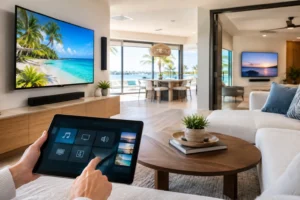
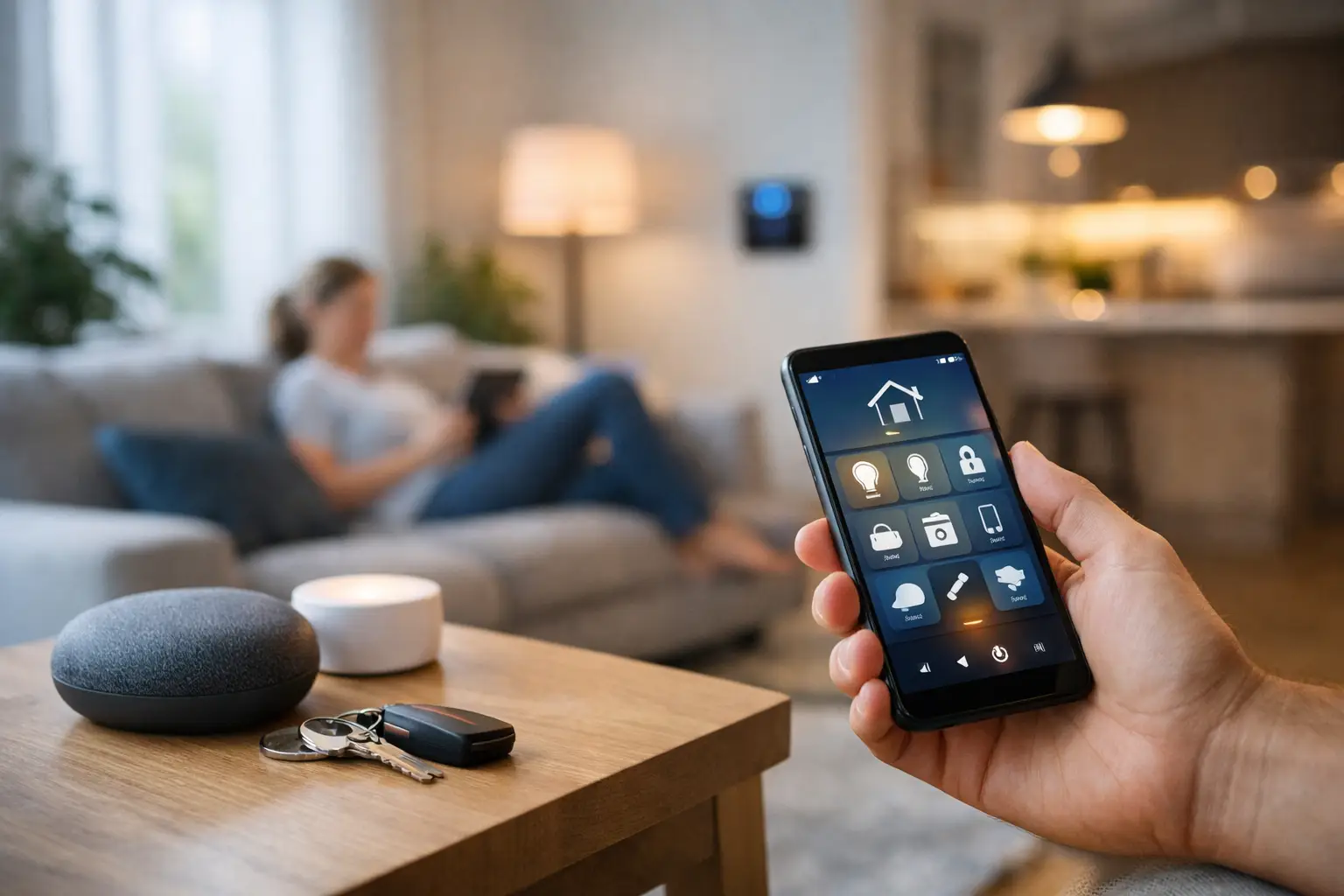
Home automation is the coordinated control of the systems you use most: lighting, entertainment, climate, security, shades, networking, and more. A phone, wall keypad, touch panel, voice command, or simple programmed schedule can control these systems from one convenient place.
That definition sounds straightforward, but the practical goal is more personal. You should not need to remember which app controls which room or explain a complicated routine to guests. A professionally designed system puts commonly used actions within easy reach and keeps the technology working quietly in the background.
For example, one “Goodnight” command can turn off selected lights, lock compatible doors, lower motorized shades, pause music, and arm the security system. A “Pool Time” scene might activate landscape lighting, turn on outdoor audio, and adjust the TV or display in a covered patio area. These are not gimmicks when they match how you actually live in your home.
Start With the Rooms That Create Friction
You do not have to automate an entire house at once. In fact, the best projects often begin with the rooms and routines that create the most daily inconvenience. A media room, main living space, primary bedroom, front entry, pool area, or home office can each be a smart starting point.
Entertainment Without the Remote Pile
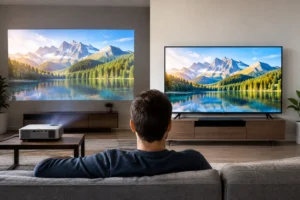
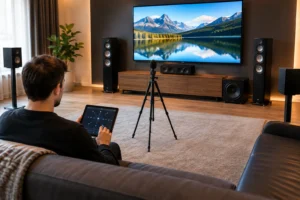
A high-performance entertainment setup becomes much easier to use when the TV, surround sound, streaming devices, and room lighting are organized under one control experience. Instead of cycling through inputs and remotes, you choose “Watch TV,” “Movie Night,” or “Game Day.” The system handles the rest.
This matters particularly in rooms with multiple sources, distributed audio, or concealed equipment. A clean installation keeps the focus on the screen, sound, and room design rather than a cabinet full of blinking components. For homeowners building a theater, upgrading a man cave, or refining a family room, control should be as polished as the equipment itself.
Lighting That Supports How a Room Is Used
Smart lighting is often the most immediately noticeable part of a home automation project. It can make a home feel more welcoming at arrival, improve visibility in hallways at night, and create better settings for dining, entertaining, or watching a movie.
The key is avoiding unnecessary complexity. Not every lamp or fixture needs a smart control, and not every room needs a dozen scenes. In many homes, a few thoughtful settings do more than an oversized list of options. Entry lighting at sunset, a soft nighttime pathway, vacation scheduling, and one-tap entertaining scenes provide real value without making daily use feel technical.
Security That Is Easier to Check
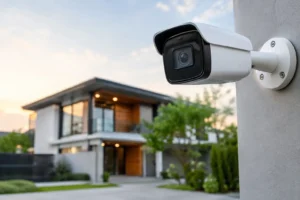
Connected security cameras, video doorbells, smart locks, and monitored entry points can make it easier to know what is happening around your property. Camera access from a phone is useful, but a complete setup should also consider camera placement, image quality, network coverage, recording needs, and privacy.
For a home with a gate, long driveway, detached garage, or outdoor living area, professional placement can matter as much as the camera itself. A camera aimed in the wrong direction or dependent on weak wireless coverage can leave you with footage that is not useful when you need it. Good automation gives you quick access to the right information, rather than more alerts to ignore.
The Foundation Is a Reliable Home Network
Smart devices are only as dependable as the network supporting them. This is especially true in larger Florida homes, properties with concrete block construction, and outdoor areas where Wi-Fi needs to reach patios, pools, garages, and guest spaces.
A mesh Wi-Fi system can improve coverage, but it is not a universal fix. The number and placement of access points, wired connections, internet service, device volume, and physical construction all influence performance. A professional network design evaluates where people actually use devices, then builds coverage around those areas.
This foundation supports more than entertainment. It affects video calls, security camera viewing, streaming, remote work, smart thermostats, gaming, and every connected control in the house. When a smart home feels unreliable, the problem is frequently the network rather than the automation platform.
Choose Control Methods for Real People
The best home automation systems give you options. A homeowner may enjoy using an app, while a guest wants a clearly labeled keypad. Kids may use voice control for music, while a parent prefers a bedside button for lights and shades. These preferences can coexist.
Wall keypads are especially useful because they are always in the same place and do not require a charged phone. They can replace a crowded bank of switches with a clean, personalized interface. In a main living area, one keypad might offer simple commands for lighting, music, shades, and whole-home settings.
Voice control is convenient for simple requests, such as adjusting a light or playing music, but it should not be the only way to run the home. Voices are not always recognized correctly, and some situations call for quiet, immediate control. Physical controls, schedules, and app access create a more dependable everyday experience.
Plan for Privacy, Power, and Future Changes
Smart-home convenience should never come at the expense of privacy or long-term usability. Before selecting equipment, consider who can access cameras, what data is stored, whether accounts are protected with strong passwords and multi-factor authentication, and how firmware updates will be managed.
Power planning also deserves attention. Network equipment, cameras, control processors, and entertainment components benefit from proper surge protection and, in some cases, battery backup. Florida weather makes power protection a practical consideration, not an afterthought.
Future flexibility matters too. Technology changes, families grow, and rooms get repurposed. A system designed with accessible equipment locations, labeled wiring, and room to expand is easier to update than one built around scattered devices and temporary fixes. Concealed wiring can still be serviceable when installed with forethought.
Why Professional Design Changes the Result
Many individual smart devices are easy to buy. The challenge is making products from different categories work together reliably while preserving the look of the home. That is where professional design and installation make a meaningful difference.
An experienced integrator begins with lifestyle questions: Which rooms get used most? Do you entertain outside? Is the priority security, a theater-quality media room, whole-home audio, better coverage, or a combination? From there, the system can be designed around your routines, budget, existing equipment, and visual preferences.
At Frequencies USA, this approach includes custom system design, equipment guidance, clean concealed wiring, and professional installation for homes across the Tampa Bay area. Some homeowners want a complete smart-home plan during a renovation. Others want to improve Wi-Fi first, add cameras next, and create an outdoor entertainment space later. Both approaches can work when the initial design leaves room to grow.
Build the System Around Your Lifestyle
Home automation should make a house easier to enjoy, not give you another system to manage. Start with the moments that matter most: arriving home after dark, gathering friends by the pool, settling into a movie, checking on the property while traveling, or simply getting a stronger signal in the room where everyone works and streams.
The right plan does not have to automate everything. It has to make the things you do every day feel easier, cleaner, and more dependable – with technology that fits naturally into the home you already love.
 Previous Post
 Next Post