Security Cameras That Fit Your Property
A camera above the front door is a start. It is not a complete security plan. The most effective security cameras are positioned around how people actually enter, move through, and use a property – from a family arriving through the garage to a delivery driver approaching a side entrance or an employee opening a business in the morning.
For Florida homes and businesses, camera selection is only part of the decision. Coverage, lighting, network strength, recording access, weather exposure, and clean installation all determine whether a system is useful when it matters. A professionally designed setup gives you confidence without turning your home or workplace into a tangle of visible wires and separate apps.
Start With What You Need to See
Every property has different priorities. A homeowner may want clear views of the driveway, front door, pool area, side gates, and backyard. A business may need coverage of entry points, registers, parking areas, storage rooms, loading zones, and employee-only spaces. The right plan starts by identifying the moments you want documented, not by choosing a camera based on its box.
Think through daily activity and potential blind spots. Can someone reach a side gate without being seen? Is the garage entrance visible at night? Does a service entrance need coverage after business hours? Are packages left in a location that is outside the view of the doorbell camera? These questions help determine the number of cameras, their viewing angles, and whether fixed or adjustable models make sense.
More cameras are not automatically better. A poorly placed group of cameras can still leave key areas uncovered, while a well-planned system can capture the important routes with fewer devices and a cleaner appearance. Camera height, angle, lens type, and lighting all affect what the footage actually shows.
Security Cameras Need More Than a Good View
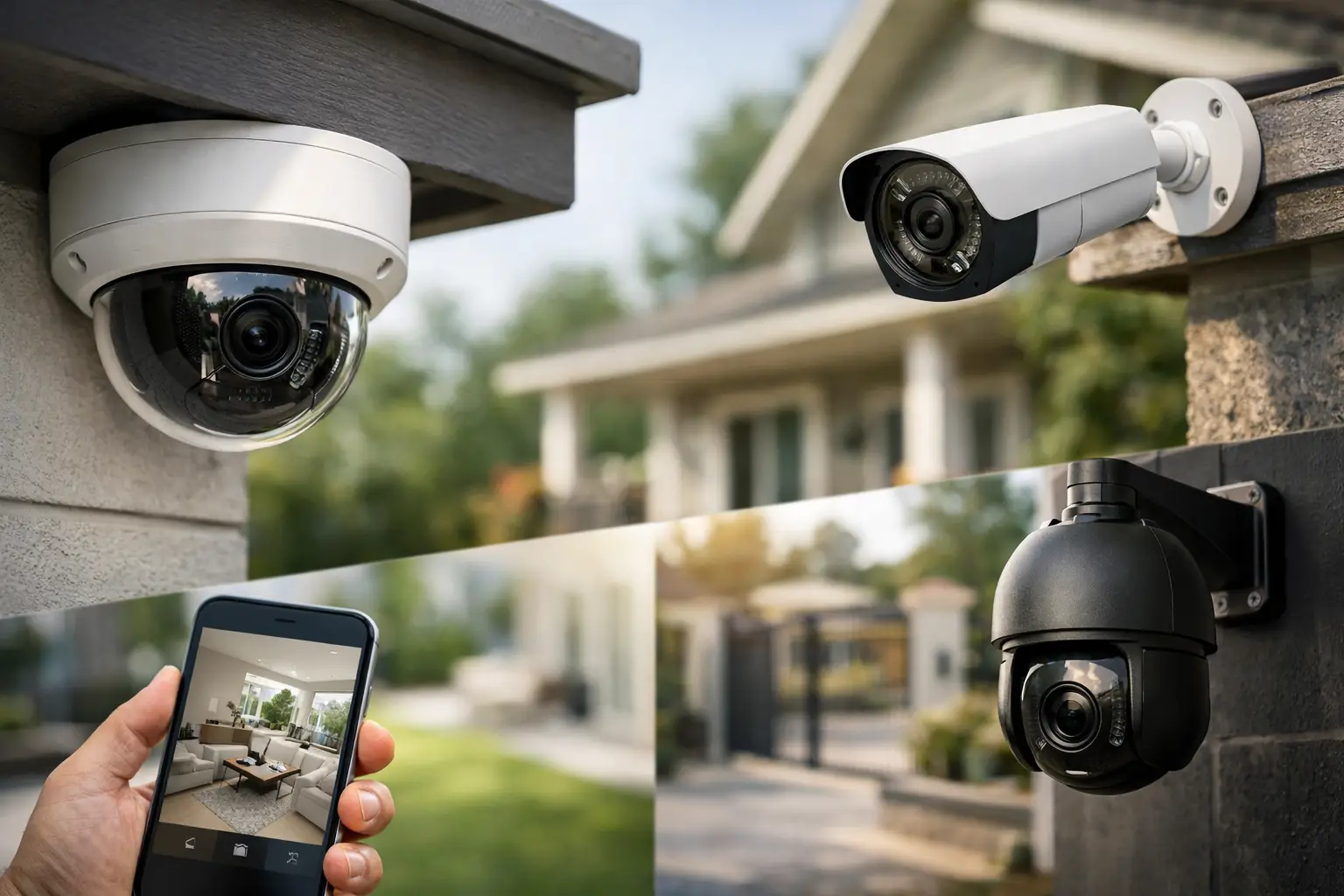
A wide view can be helpful for monitoring a large yard or parking area, but it may not provide enough detail to identify a face or read a license plate at a distance. A narrower field of view can deliver more detail in a specific location, such as a driveway entrance, gate, or point of sale.
This is why placement should match the purpose of each camera. One camera may be intended to monitor general activity around a patio. Another may need to capture a person approaching the front door. A third may be dedicated to a vehicle entrance. Asking one camera to do every job often leads to footage that looks acceptable until you need a clear answer.
Height matters as well. Cameras mounted too high may show the top of a hat instead of a face. Cameras installed too low can be easier to tamper with or blocked by landscaping. A professional site walk helps balance visibility, discretion, and practical protection.
Daylight Is Only Half the Story
Florida sunlight can create hard shadows and bright glare, especially around driveways, glass doors, and west-facing entryways. Then, after sunset, outdoor areas can become extremely dark. A camera should be selected and positioned for both conditions.
Night vision is valuable, but it has limits. Infrared illumination can provide usable black-and-white footage in low light, while cameras with color night viewing may benefit from existing exterior lighting. In some cases, adding thoughtfully placed landscape or security lighting improves both visibility and the look of the property.
Avoid aiming cameras directly into headlights, reflective windows, or bright porch lights whenever possible. The goal is a usable image, not simply a camera pointed toward an area.
Wired, Wireless, or a Hybrid System?
Wireless cameras are convenient in the right situation. They can be a practical option for a detached structure, a temporary need, or an area where running cable would be unusually disruptive. However, they rely on dependable Wi-Fi coverage and power. If the signal is weak, footage may lag, drop, or fail to upload when activity occurs.
For permanent, comprehensive systems, wired cameras are often the stronger choice. Power over Ethernet, commonly called PoE, delivers power and data through a single low-voltage cable. This approach supports dependable connectivity, centralized recording, and a cleaner long-term installation. It also avoids frequent battery changes and reduces dependence on wireless signal strength at the camera location.
A hybrid design can work well, too. A property may use wired cameras at primary entrances and high-priority exterior zones, with wireless devices added where they make practical sense. The best choice depends on the building layout, existing infrastructure, desired recording quality, and how much coverage the property needs.
Recording and Alerts Should Be Easy to Live With
A security system should provide useful information, not constant interruptions. Motion alerts can be helpful when they distinguish between a person at the front door and a tree branch moving in the wind. Smart detection features can reduce unnecessary notifications, but settings should be adjusted for the environment.
For example, a home near a busy sidewalk may need activity zones that exclude the street. A business parking lot may need different alert rules during operating hours than overnight. The point is to receive notices that deserve attention rather than silence an app because it sends too many false alarms.
Recording storage deserves the same consideration. Cloud storage offers convenient remote access, but it may involve ongoing subscription costs and depends on internet connectivity. Local recording can provide greater control and continuous storage without a monthly plan, depending on the system design. Many property owners prefer a combination: dependable on-site recording with the ability to view cameras remotely from a phone or tablet.
Before installation, decide how long footage should be retained and who needs access. A family may only need a few weeks of recordings. A business handling transactions, inventory, or customer incidents may need longer retention. Access permissions also matter. Not every employee needs the same ability to review, download, or change camera settings.
Protect the Network Behind the Cameras
Modern cameras are network devices, which means the network supporting them matters. A weak or overcrowded Wi-Fi system can affect camera performance along with streaming, video calls, and everyday device use. This is especially common in larger homes, concrete block construction, outdoor living areas, and businesses with many connected devices.
A properly designed network can separate security equipment from general guest or employee traffic, improve coverage where it is needed, and provide a more reliable foundation for remote viewing. This is one reason security, Wi-Fi, outdoor entertainment, and smart-home features are often best planned together rather than added one device at a time.
Privacy should be part of the design, too. Cameras should focus on your property and legitimate areas of concern, not a neighbor’s private spaces. Indoors, cameras require extra judgment. Entryways, common areas, and business operations may warrant monitoring, while private rooms and sensitive spaces generally should not. Clear policies are particularly important for commercial properties.
A Clean Installation Protects the Look of the Property
The best camera system does not need to look like an afterthought. Visible cables, mismatched mounting hardware, and cameras placed wherever a nearby outlet happens to exist can distract from a well-kept home or professional business environment.
Professional installation allows wiring to be concealed where possible, equipment to be mounted securely, and camera locations to be selected for both performance and appearance. It also creates an opportunity to account for rooflines, soffits, landscaping, pool areas, exterior finishes, and future upgrades before anything is installed.
For commercial spaces, clean installation supports a more polished customer experience while helping protect the areas that keep the business running. For homeowners, it preserves the curb appeal and comfort that made the property worth investing in.
When Professional Design Makes the Difference
A single doorbell camera can be set up in an afternoon. A property-wide system is different. It has to account for cable routes, network capacity, outdoor exposure, storage, mobile access, camera angles, and the way the building will change over time.
Frequencies USA designs security camera systems around the property rather than pushing a one-size-fits-all package. That may mean a discreet wired system for a waterfront home, dependable exterior coverage for a pool and patio, or a commercial layout that protects entrances, inventory, and parking areas without creating unnecessary complexity.
The most valuable camera footage is the footage that answers a question quickly: Who was there? When did they arrive? Which direction did they go? A thoughtful design makes those answers easier to find, while a clean installation lets you enjoy stronger protection without compromising the space you have worked hard to create. A free on-site estimate is a practical first step toward seeing what your property actually needs.
 Previous Post
 Next Post