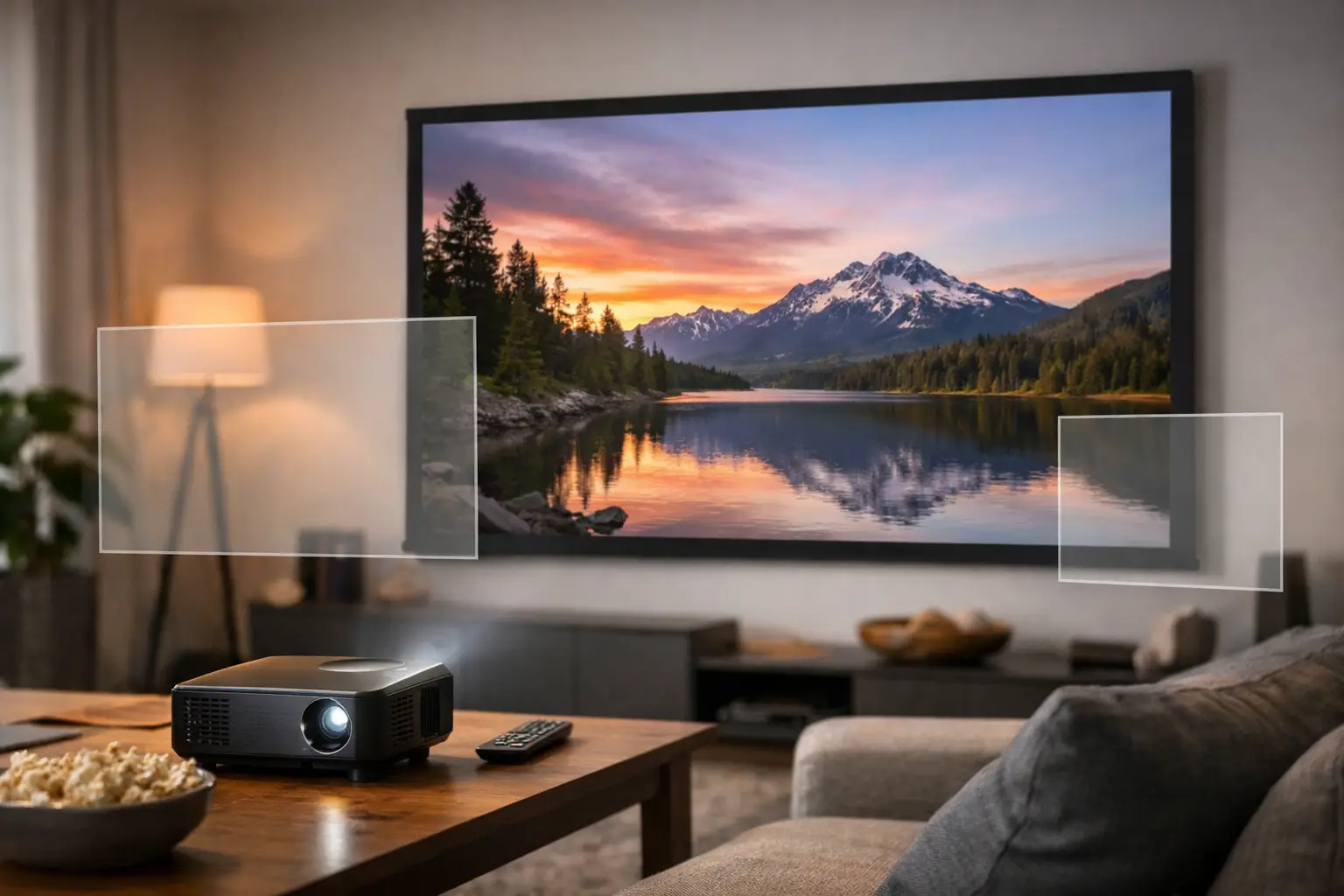
What Size Projector Screen Fits Your Room?
A projector screen that is too small can make a well-designed media room feel underwhelming. One that is too large can create eye strain, expose image flaws, and overwhelm the room. So, what size projector screen is right? The answer comes down to where people sit, how the room is used, the screen format, and the projector you plan to install.
For a polished home theater, family room, bonus room, or covered outdoor entertainment space, screen size should be part of the overall system design – not an afterthought once the paint, furniture, and wiring are in place.
What Size Projector Screen Should You Choose?
Start with the distance from the primary seating position to the screen. For most homes, a comfortable 16:9 screen diagonal is roughly 0.6 to 0.8 times the viewing distance in inches. The smaller end of that range feels relaxed and works well for casual TV watching. The larger end creates a more cinematic, immersive experience for movies and sports.
If your main seats are 10 feet from the screen, that is 120 inches away. A screen between 75 and 100 inches can work, while a 100-inch screen is often the sweet spot for a dedicated media room. At 12 feet, many homeowners are comfortable with a 100- to 120-inch screen. At 14 feet or more, a 120- to 135-inch screen may feel appropriately dramatic, assuming the wall and projector support it.
These are useful starting points, not hard rules. A family that watches movies with the lights low may prefer a larger image. A household that uses the same room for news, gaming, and everyday TV may be happier with a slightly more moderate size.
Quick screen size examples
| Primary viewing distance | Common 16:9 screen range | Typical fit | | — | — | — | | 8-10 feet | 80-100 inches | Living rooms and compact media rooms | | 10-12 feet | 100-120 inches | Most dedicated home theaters | | 12-14 feet | 110-135 inches | Larger media rooms and theater spaces | | 14-16 feet | 120-150 inches | Large rooms with controlled lighting |
The diagonal measurement gets the attention, but the screen width matters during installation. A 100-inch 16:9 screen is about 87 inches wide. A 120-inch model is roughly 105 inches wide. Before choosing a size, confirm that the usable wall area leaves room for speakers, trim, doors, sconces, and a clean border around the screen.
Viewing Distance Matters More Than Room Size
A large room does not automatically need a huge screen. The location of the couch, recliners, or theater seats is the real deciding factor. If the main seats are grouped 10 feet from the wall in a 20-foot-long room, size the screen for those seats rather than the farthest empty corner.
A screen that fills more of your field of view feels cinematic, but there is a practical limit. Sitting too close to a very large screen can make viewers constantly move their eyes across the image. That is especially noticeable during fast sports, gaming, or content with subtitles. Conversely, sitting too far away can make a projector feel less impressive than a quality television.
For homes with multiple seating rows, design around the primary row. The second row will still have a good view if the seating is tiered or positioned carefully, but trying to make every seat equally ideal can lead to an oversized screen for the people who use the room most.
Choose the Right Aspect Ratio Before Buying
Most projector screens are 16:9, the standard shape for streaming, cable, sports, gaming, and modern television. For a versatile room, 16:9 is usually the smartest choice because it fills the screen with the content people watch every day.
A wider 2.35:1 or 2.40:1 screen is designed for a true cinema-style presentation. It can be an excellent choice in a dedicated theater built primarily for movies, but standard TV content will appear with unused space on the sides unless the system is designed to manage multiple aspect ratios. That is a worthwhile trade-off for serious film enthusiasts, but it is not always practical for a multipurpose family room.
The question is not simply what size projector screen looks impressive. It is what shape and size make the room enjoyable on a Tuesday night as well as during a big movie premiere.
Check Projector Throw Distance and Mounting Position
Every projector has a throw ratio, which determines how far it must be from the screen to create a specific image size. A 120-inch screen may look perfect on paper, but the projector needs a suitable mounting point to fill it correctly. Ceiling height, joists, fans, ducts, and seating placement all affect the final design.
Short-throw and ultra-short-throw projectors offer more placement flexibility, though they come with their own considerations. Ultra-short-throw models sit close to the wall and can be ideal where ceiling mounting is not desirable. They generally require an especially flat wall or a screen made specifically for ultra-short-throw projection. A standard screen surface can reduce contrast or show unevenness with these projectors.
For a traditional ceiling-mounted projector, professional planning keeps the equipment aligned, level, and visually discreet. It also allows power, video connections, control wiring, and audio components to be concealed rather than routed across the room. The result is a theater that looks intentional from every seat.
Ambient Light Can Change the Best Screen Size
Florida homes often have beautiful natural light, large windows, and open floor plans. Those features are great for daily living, but they can affect projector performance. In a bright room, a giant screen may produce a less satisfying image than a slightly smaller screen paired with the right projector and screen material.
A larger image spreads the projector’s available light across more surface area. If the room has lots of daylight or bright recessed lighting, picture brightness and contrast can suffer. Blackout shades, lighting control, and a higher-brightness projector can help. So can an ambient-light-rejecting screen, which is engineered to better handle light coming from the side or above.
Screen material should match the room. A matte white screen is a strong all-around option in a dark or light-controlled theater. Gray and ambient-light-rejecting materials can improve perceived black levels and contrast in brighter spaces, though they may narrow viewing angles or require more precise projector placement. The best choice depends on the room, not a one-size-fits-all product claim.
Leave Space for Sound, Furniture, and Clean Design
The best theater experience is not only about the picture. A screen should work with the sound system, seating layout, lighting, and room architecture. If you want front speakers flanking the screen, make sure there is enough width to place them properly. If you prefer speakers hidden behind the image, an acoustically transparent screen can create a clean, cinema-inspired layout, although it requires careful speaker placement and calibration.
Screen height matters too. Mounting the screen too high is one of the most common comfort mistakes. In most rooms, the lower portion of the image should sit at a natural viewing height from the primary seats. A low media console, fireplace, or architectural feature can complicate this. A screen installed above a fireplace may look dramatic, but it can force viewers to look up for long periods and may require a different approach to keep the room comfortable.
Motorized screens are a practical option in rooms that serve more than one purpose. They can disappear into a ceiling recess or housing when not in use, preserving windows, artwork, or a clean living-room wall. Fixed-frame screens typically provide the most refined theater appearance and a consistently flat viewing surface in dedicated spaces.
Plan the Screen and Projector Together
Choosing a screen first and a projector later can create expensive limitations. Resolution, brightness, lens capabilities, throw ratio, and projector location should all be verified before installation. The same is true for surround sound, streaming sources, lighting scenes, and simple control from one remote or keypad.
A professionally designed system removes the guesswork. Frequencies USA can evaluate the room, seating, lighting, wall dimensions, and intended use before recommending equipment and creating a clean, concealed installation. That planning is especially valuable when a room includes custom cabinetry, in-wall speakers, motorized shades, or a ceiling-mounted projector.
The right screen is the one that makes every seat feel inviting, every movie look larger than life, and the room itself feel finished rather than filled with equipment. Start with your preferred seats, build around how you actually watch, and let the room guide the final size.
 Previous Post
 Next Post