Indoor vs Outdoor Security Cameras: Which Fits?
The camera above your front door and the one watching a hallway may look similar, but they are built for very different jobs. Choosing between indoor vs outdoor security cameras affects what your system captures, how long it lasts, and whether it provides useful evidence when you need it. For Florida properties, heat, rain, humidity, salt air, landscaping, pool activity, and intense sunlight all make placement especially important.
A well-designed camera system is not about placing a camera in every corner. It is about covering the moments and areas that matter: who approaches an entry, where a package was left, what happened near a vehicle, whether someone entered a restricted room, or why a motion alert was triggered after hours. Indoor and outdoor cameras work best when they are planned together.
Indoor vs Outdoor Security Cameras: The Main Difference
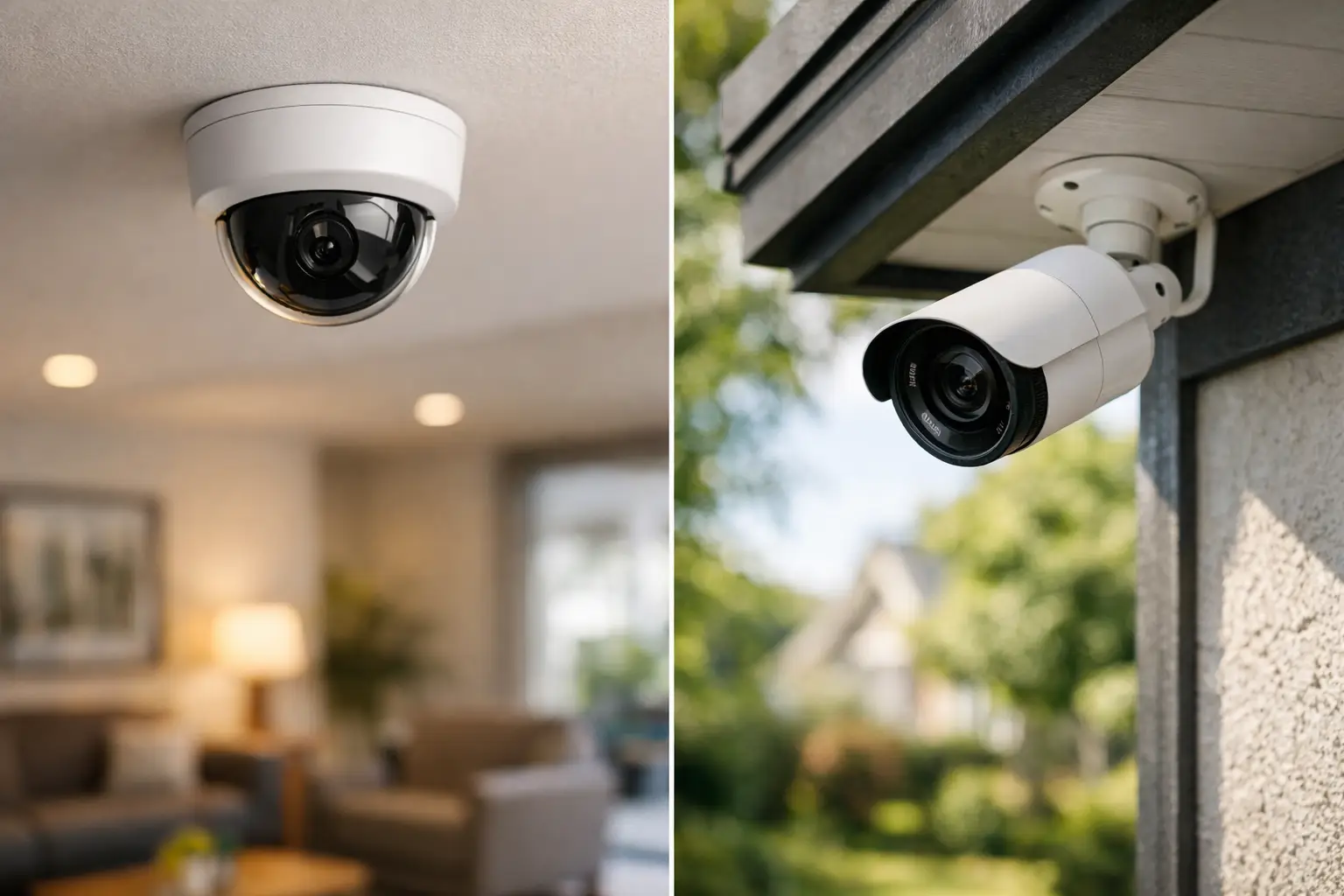
The simplest distinction is exposure. Outdoor cameras are designed to withstand weather, changing temperatures, moisture, and airborne debris. Indoor cameras are designed for protected spaces, where appearance, discreet placement, and viewing angles often matter more than weather resistance.
That does not mean every outdoor-rated camera belongs outside or that an indoor camera is always the right choice indoors. An outdoor-rated model can be a smart option for a garage, covered patio, pool lanai, workshop, or humid utility area. Its tougher housing offers extra peace of mind in spaces that are technically indoors but still deal with heat, moisture, dust, or open-air conditions.
Indoor models, meanwhile, can be smaller and easier to blend into a room. They are useful for monitoring interior entrances, common areas, inventory rooms, offices, reception desks, and spaces where a low-profile installation is the priority. The best choice comes down to the environment, the view you need, and how you want the system to look when the work is complete.
When Indoor Cameras Make the Most Sense
Indoor cameras are ideal when you need visibility inside a protected structure. At home, that may mean a main living area, an interior garage entry, a nursery, a hallway connecting bedrooms, or a room that stores valuable equipment. For a business, interior coverage often focuses on point-of-sale areas, employee entrances, stockrooms, office corridors, and customer-facing spaces.
The value of an indoor camera is context. An exterior camera may show someone entering through a door, but an interior view can show where they went and what occurred next. Indoor coverage is also useful for verifying non-emergency alerts, such as whether a pet set off motion detection or whether a delivery was brought inside.
Visual discretion is a major advantage. Compact dome cameras can sit neatly on a ceiling, while carefully positioned turret or fixed-lens models can provide a broad view without becoming a design distraction. For finished homes, media rooms, offices, and upscale retail environments, clean placement and concealed wiring preserve the look of the space.
There are limits, however. Indoor cameras should not be installed in bathrooms, changing areas, or any space where people reasonably expect privacy. In workplaces, camera use should be clearly considered in light of employee expectations and applicable policies. Good security design protects people and property without creating unnecessary discomfort.
When Outdoor Cameras Are Worth the Investment
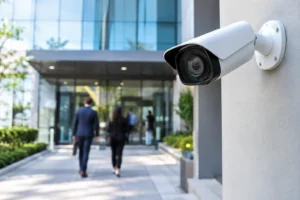
Outdoor cameras are the first line of awareness around a property. They help capture activity before someone reaches a door, window, vehicle, gate, or outdoor amenity. For many Florida homeowners, the highest-priority areas are front entries, driveways, side yards, backyard access points, pool areas, detached buildings, and waterfront or dock approaches where applicable.
Businesses commonly benefit from exterior coverage at entrances, parking areas, loading zones, dumpsters, rear doors, equipment enclosures, and perimeter gates. A visible, professionally mounted camera can also discourage opportunistic activity. The goal is not simply to record an incident. It is to make the property feel monitored and easier to manage.
Outdoor cameras need a weather-resistance rating appropriate for their exposure. A camera under a deep covered entry faces a different environment than one mounted on an open soffit, fence line, or pole. Direct rain, wind-driven water, sprinkler overspray, and salt exposure near the coast can all shorten the life of equipment that is not selected and installed correctly.
Florida sun deserves special attention. Strong backlighting can turn a person at a front door into a silhouette if the camera is aimed poorly. A professional plan accounts for sunrise, afternoon glare, reflective pavement, glass doors, and landscape lighting. Night performance matters just as much. Infrared illumination can help in darkness, but it must be positioned to avoid glare from walls, eaves, or nearby objects.
Weather Ratings Matter, but Installation Matters More
It is easy to focus on the camera specification sheet and overlook the mount, wiring path, network connection, and power source. Those details are often what separate a reliable system from one that produces intermittent alerts and poor footage.
For exterior cameras, connections should be protected from moisture, cabling should be routed cleanly, and mounting surfaces should provide a stable, long-term anchor. Cameras also need enough height to avoid casual tampering, but not so much height that faces become unrecognizable. A wide view may cover more area, yet a narrow, intentional view may identify a person more effectively.
Hardwired camera systems are often preferred for permanent installations because they avoid frequent battery charging and can offer dependable video transmission. Wireless options can be useful in select situations, but they still rely on strong Wi-Fi coverage and practical power planning. If the camera is at the far edge of a driveway or behind a detached garage, improving the network may be part of the security solution.
Build Coverage Around Events, Not Just Locations
A common mistake is selecting cameras by room count or square footage. A better approach is to identify the events you want to see. For example, a homeowner may want to know who approached the front door, whether a vehicle entered the driveway, how someone accessed the backyard, and what happened if an alarm is triggered inside.
That may require one camera at the entry, another covering the driveway, a third aimed at a side gate, and an indoor unit covering the path from the garage or main door. The system should create a useful sequence of views rather than isolated video clips.
For commercial properties, event-based planning can address customer entry, cash handling, employee-only access, deliveries, parking activity, and after-hours movement. Cameras should support day-to-day operations, not create a frustrating pile of false alerts. Motion zones, smart detection settings, retention preferences, and remote viewing should be tailored to how the property is actually used.
Do You Need Both Indoor and Outdoor Cameras?
Most complete systems benefit from both. Outdoor cameras provide early awareness and help document activity around the property. Indoor cameras add verification and coverage where exterior views stop. Together, they create a clearer picture without requiring excessive equipment.
Still, the right answer depends on the property. A condominium owner may prioritize an entry door and interior common space, while a homeowner with a pool, multiple access points, and a detached garage may need a broader exterior plan. A small office may only need exterior entry coverage and a few targeted interior views, while a retail location may need more detailed coverage around transactions and inventory.
The best system also fits the building aesthetically. Camera placement, wire concealment, and equipment selection should feel intentional, especially in a finished home or customer-facing business. Frequencies USA designs security camera solutions around coverage goals, reliable connectivity, and a polished installation that does not clutter the property with visible cables.
Before choosing equipment, walk the property at the times problems are most likely to occur: after dark, during heavy rain, when the driveway is full, or when sun hits the front entry. Those real conditions will tell you far more than a product photo. A camera system that is planned around your routines, blind spots, and environment will be easier to use and far more valuable when a moment needs to be seen clearly.
 Previous Post
 Next Post