Surround Sound Installation That Feels Built In
A great movie room should not make you think about speakers. You should hear a door close behind you, feel the pressure of a concert crowd, and catch every line of dialogue without turning the volume up and down. Professional surround sound installation makes that possible by designing the room around the experience, not simply placing equipment wherever there is an open wall.
For Florida homeowners, that often means turning a living room, media room, bonus room, man cave, or poolside entertainment area into a space that looks polished and performs beautifully. The difference comes down to planning: the right speaker locations, clean concealed wiring, proper calibration, and controls that everyone in the household can use.
Surround Sound Installation Starts With the Room
A surround system is not a boxed product with one correct setup. The same equipment can sound remarkably different from one room to another. Ceiling height, open floor plans, hard flooring, windows, furniture placement, and the distance between seats all influence what you hear.
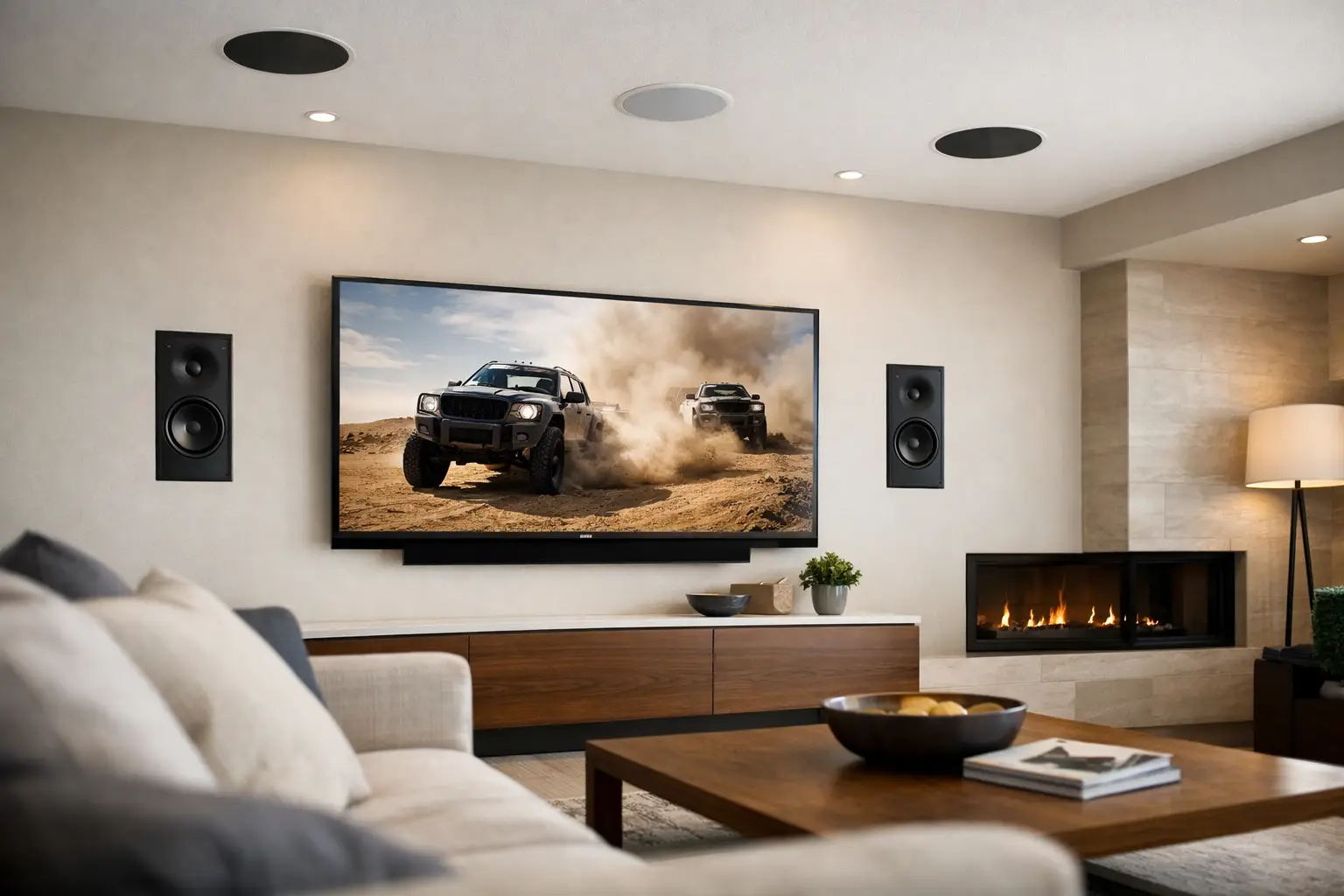
A dedicated theater gives an installer more freedom to position speakers around the seating area. A family room may require a more discreet design, with in-wall or in-ceiling speakers that preserve the look of the space. Neither approach is automatically better. The right choice depends on whether your priority is the most cinematic performance possible, the cleanest appearance, or a thoughtful balance of both.
Before selecting components, a professional should look at where people actually sit, where the television or projector will go, and how the room is used the rest of the week. A system built only for one perfect seat can disappoint when friends and family spread across the couch. Good design creates a convincing sound field for the people who will enjoy it most often.
Choosing the Right Speaker Layout
Most homeowners recognize terms like 5.1 and 7.1, but the numbers only tell part of the story. The first number refers to the main and surround speakers, while the second refers to subwoofers. Systems with an additional height channel number, such as 5.1.2, add ceiling or height speakers for formats like Dolby Atmos.
A well-designed 5.1 system can be a major upgrade over a soundbar, especially in a standard living room. It uses left, center, and right speakers across the front, two surround speakers to the sides or behind the seating area, and a subwoofer for low-frequency impact. In larger rooms or dedicated media spaces, a 7.1 or Dolby Atmos layout can create more precise movement overhead and around the audience.
More speakers are not always the answer. A poorly placed 7.1.4 system can sound less convincing than a carefully calibrated 5.1 setup. Speaker count should follow the room plan, listening distance, budget, and the content you enjoy most.
Speaker Placement Is What Creates the Effect
The center channel deserves special attention because it carries much of the dialogue in movies and television. When it is too low, too high, hidden in a cabinet, or blocked by furniture, voices can sound detached from the screen. Proper placement keeps dialogue anchored to the action and makes late-night viewing easier at lower volumes.
Front left and right speakers need enough separation to create a wide soundstage, but they should still work with the screen location and room dimensions. Surround speakers should wrap sound around the seating area without calling attention to themselves as individual boxes. Height speakers, when included, need deliberate positioning to create a sense of space rather than a vague effect from above.
Subwoofer placement also requires more thought than placing it beside the television console. Bass interacts with walls and corners, and one position can create powerful low end at one seat while leaving another seat thin and uneven. In many rooms, two properly placed subwoofers provide smoother bass across a larger seating area than one oversized unit. That is particularly valuable for families and anyone who entertains regularly.
Concealed Wiring Protects the Finished Look
Visible cables can make even premium equipment feel temporary. Clean wiring is one of the biggest reasons homeowners choose professional surround sound installation. Speaker wire, HDMI runs, network cables, and power planning should be handled before walls are closed whenever possible, but finished homes can also be upgraded with careful routing and low-profile solutions.
The goal is a room that feels intentional. Speakers can be color-matched or selected to blend into walls and ceilings. Equipment can be organized in a cabinet, media console, or dedicated rack location rather than piled beneath the television. Cables should be protected, labeled, and accessible for future service without becoming part of the room’s decor.
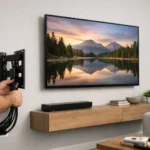
This is especially important with wall-mounted TVs and projectors. A professional installation can account for signal paths, ventilation, power needs, and service access from the beginning. It avoids the frustrating situation where a finished wall has to be reopened later because a necessary cable or outlet was overlooked.
Calibration Turns Equipment Into a System
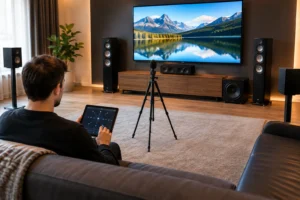
After the speakers are installed, the job is not finished. Receivers and processors need to be configured for the room, speaker locations, listening levels, and crossover settings. Calibration ensures that sound reaches the primary seating area at the right time and at balanced levels.
This step is where an expensive system can either come alive or fall flat. If the surrounds are too loud, every effect becomes distracting. If the subwoofer is too aggressive, bass overwhelms dialogue and music. If the center channel is not dialed in, viewers may still reach for the remote during quiet conversations.
Automatic room-correction tools can be helpful, but they are most effective when paired with correct speaker placement and professional verification. A skilled installer listens beyond the measurements, checks real-world content, and adjusts the system for how the room feels during movies, games, sports, and music.
Make Control Easy for Everyone
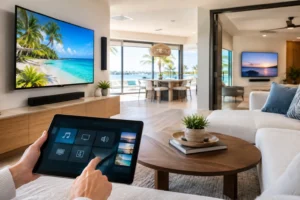
The best AV system is the one your household uses without hesitation. A surround setup should not require a stack of remotes or a written set of instructions taped inside a cabinet. One control interface can power on the display, select the right source, set the appropriate sound mode, and manage volume in a few simple steps.
Smart control also makes it easier to connect gaming consoles, streaming devices, cable boxes, and music services without confusion. For a whole-home entertainment plan, the theater or living room system can work alongside multi-zone audio, outdoor speakers, lighting, and Wi-Fi coverage. The technology stays capable, while the everyday experience stays simple.
Florida Homes Need Practical Planning Too
Florida spaces bring their own considerations. Open-concept homes can make it harder to contain sound, while tile floors, glass doors, and high ceilings can create reflections that affect clarity. Strategic speaker placement, acoustic treatments where appropriate, and proper calibration can improve the result without making a room feel like a recording studio.
For covered patios, pool areas, and outdoor living spaces, equipment must be chosen for heat, humidity, and exposure. Outdoor audio can create a welcoming atmosphere for a cookout or game day, but it needs weather-rated components and thoughtful volume planning that respects your property and neighbors.
Why Professional Design Pays Off
DIY surround systems can work in straightforward rooms, particularly when equipment placement is flexible and wires can remain visible. But once a project involves in-wall speakers, ceiling speakers, mounted displays, hidden wiring, multiple sources, or smart control, professional design prevents expensive corrections later.
A qualified AV team can help you decide what to keep from your existing gear, where it makes sense to invest, and which upgrades will have the biggest impact. Frequencies USA designs systems around the way each client lives, with clean installation practices and equipment choices that suit the room rather than a one-size-fits-all package.
The best time to plan a sound system is before a renovation or new build, but a finished room is never too late to improve. Start with the space you use most, describe how you want it to feel on movie night, and let the design follow the experience you want to create.
 Previous Post
 Next Post