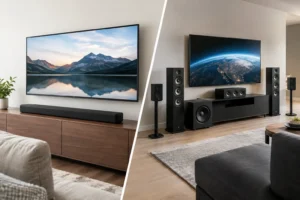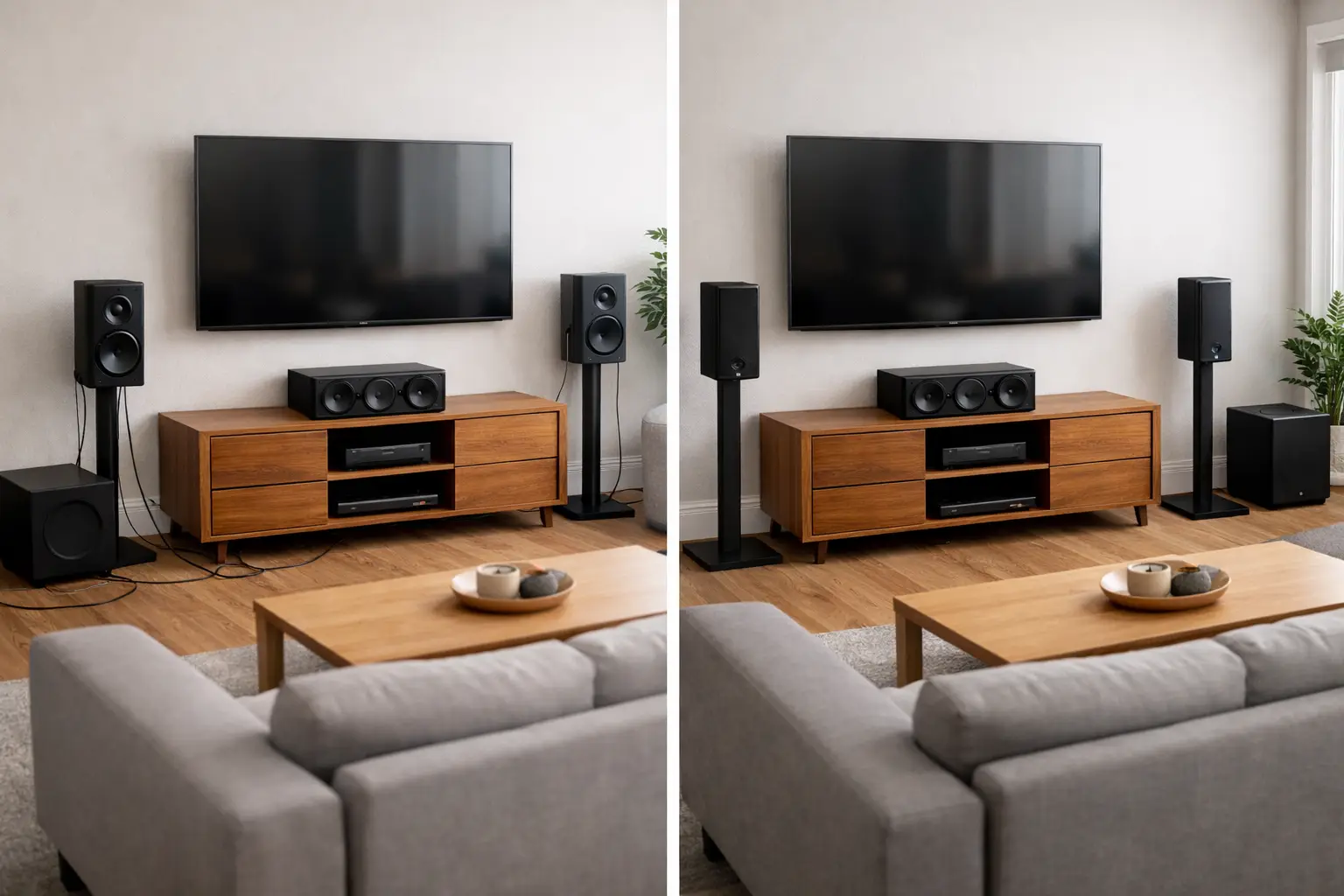
Wired vs Wireless Surround Sound for Your Home
A movie night can expose every weak point in a sound system. Dialogue gets buried, effects feel locked to the TV wall, and the room never delivers the impact the screen promises. When homeowners compare wired vs wireless surround sound, the real question is not simply which option sounds better. It is which system will perform reliably in the room, fit the home’s design, and stay easy to use long after installation day.
Both approaches can create an exciting, immersive experience. The better fit depends on your room layout, the equipment you choose, how finished the space is, and how much flexibility you want for future upgrades. A well-designed system matters more than a label on the box.
What Wireless Surround Sound Actually Means
Wireless surround sound is often described as wire-free, but that is rarely the complete picture. Most wireless rear speakers still need power from a nearby outlet. Wireless subwoofers need power as well. What they eliminate is the speaker wire running from the receiver or soundbar to those speakers.
For a finished living room where opening walls is not appealing, that distinction can be valuable. A soundbar with wireless surrounds and a wireless subwoofer can add convincing movie and sports audio without major construction. It can also be a smart choice for homeowners who prefer a simpler system with fewer components and a compact remote or app-based control experience.
Wireless systems generally use a dedicated radio connection or Wi-Fi-based communication between components. They are not the same as a Bluetooth speaker paired to a phone. Quality home theater brands build their surround packages to keep audio synchronized with the screen, but performance can still vary based on the product, the room, nearby electronics, and the strength of the home network where Wi-Fi is involved.
The biggest benefit is convenience. The biggest limitation is that many wireless systems are designed as closed ecosystems. You may get excellent performance within that brand’s lineup, but fewer options to mix and match speakers, add channels, or make major upgrades later.
When Wired Surround Sound Makes More Sense
A wired surround system uses in-wall rated speaker cable between an AV receiver or amplifier and each speaker. The cables may be run through walls, ceilings, attics, crawl spaces, or conduit, then terminated cleanly behind speakers and equipment. When planned properly, the finished room does not have to show the wiring at all.
For a dedicated media room, home theater, or a living room receiving a larger renovation, wired is usually the stronger long-term choice. It supports a wider range of speakers and formats, from a straightforward 5.1 setup to Dolby Atmos systems with ceiling speakers and additional subwoofers. It also gives the system more room to grow as viewing habits, equipment, and budgets change.
Wired speakers do not depend on a wireless signal to receive audio. That does not mean every wired system automatically sounds better than every wireless one. Speaker quality, room acoustics, placement, calibration, and amplification all affect the final result. Still, a wired system offers a highly dependable signal path and more freedom to select premium components that match the space.
For Florida homes with concrete block construction, high ceilings, open floor plans, or challenging room shapes, professional planning becomes especially useful. Cable routes, speaker locations, equipment ventilation, and access points need to be considered before installation begins. The result can be a theater-level experience without visible cords, surface raceways, or speakers placed wherever an outlet happens to be available.
Wired vs Wireless Surround Sound in a Real Room
The right decision becomes clearer when you look beyond product claims and consider how the room is actually used.
Choose wireless when speed and simplicity matter
Wireless surround sound is a practical fit for a finished family room where the TV is the center of entertainment but the room still needs to look like a living space. If you want a meaningful upgrade over TV speakers, do not want equipment racks or wall work, and value a compact setup, a premium soundbar package can be an excellent answer.
This option also works well for renters or homeowners who expect to rearrange furniture or move within a few years. The system can often come with you, and setup changes are less involved than relocating wired speakers.
Be realistic about power. Rear speakers placed behind a sofa may still require cords to outlets, and those cords need a thoughtful plan. In some rooms, hiding power connections can become nearly as important as hiding speaker cable.
Choose wired when performance and customization lead
Wired surround sound is ideal when the goal is a true home theater rather than a basic audio upgrade. It is especially valuable for homeowners who want clear, enveloping sound at both quiet and energetic listening levels, plus the option to add ceiling speakers for Atmos effects.
A wired design also makes sense for rooms with unusual seating arrangements. Perhaps the sofa is centered in the room rather than against a rear wall, or the space has a vaulted ceiling and large windows. Custom speaker placement and professional calibration can make the sound feel intentional instead of improvised.
The best time to install wired surround is during new construction, a remodel, or before drywall is closed. Retrofitting a completed room is still possible, but the labor required to fish cable through walls and ceilings can increase the project cost. That investment often pays off in visual polish and a system that remains relevant for years.
Sound Quality Is About More Than Wires
It is easy to assume wired equals superior sound and wireless equals compromise. The truth is more useful than that. A high-quality wireless surround package can outperform a poorly selected or poorly installed wired system. Conversely, a carefully engineered wired theater can deliver a scale, dynamic range, and channel separation that compact wireless packages may not match.
Start with the experience you want. If your priority is stronger dialogue, fuller music, and convincing surround effects for everyday streaming, wireless may meet the need beautifully. If you want the helicopter in an action scene to travel overhead, the score to fill a larger room, and every seat to feel included, a wired system gives an installer more tools to achieve that result.
Subwoofer placement deserves special attention in either setup. Low-frequency sound interacts with the room, so the most convenient corner is not always the best location. A professional can test placement, tune levels, and integrate the subwoofer with the other speakers so bass feels powerful without becoming boomy or distracting.
The Hidden Cost Question: Installation, Power, and Upgrades
Wireless systems usually cost less to install because they need less cable routing. However, that does not automatically make them the better value. Premium wireless packages can be expensive, and their upgrade path may be limited to the manufacturer’s approved components.
Wired systems often involve more upfront labor, especially in an existing home. Yet they can offer better long-term value if you plan to keep the room, expand the system, or upgrade individual components over time. A receiver can be replaced without replacing every speaker. Speakers can be improved gradually. New sources can be added without rebuilding the entire setup.
Do not overlook the value of clean installation. A television mounted perfectly but surrounded by loose cords, extension cables, and exposed equipment can make an upgraded room feel unfinished. Concealed wiring, properly placed outlets, and organized equipment are part of the experience, not cosmetic extras.
Network Reliability Still Matters
A strong Wi-Fi network is essential for streaming video, music services, control apps, and smart-home integration. It can also affect certain wireless speaker systems. If a home has dead zones, overloaded equipment, or inconsistent coverage near the theater, address that issue before blaming the audio system.
That said, do not assume every wireless surround package depends entirely on the home Wi-Fi network. Many use their own connection between the soundbar or hub and the speakers. The exact design depends on the manufacturer. A qualified installer can identify potential interference, confirm outlet locations, and recommend equipment that fits the home rather than forcing a one-size-fits-all package.
A Better Way to Plan Your Surround System
Before choosing products, decide where people sit, where the TV will be mounted, and how the room should look when the system is off. Consider whether the space will remain a casual living room or become a dedicated entertainment area. Those answers should guide the system design.
For a quick, attractive upgrade in a finished room, wireless surround can be an excellent choice. For a custom theater, a major renovation, or a homeowner who wants maximum flexibility, wired remains hard to beat. Frequencies USA designs both types of systems around the room, the equipment, and the level of finish each client expects.
The best surround setup is the one you will use without thinking about it: clear dialogue during weeknight shows, room-filling music when friends visit, and movie sound that makes the screen feel bigger than the wall it is mounted on. Start with the room and the lifestyle you want from it, then choose the technology that supports both.
 Previous Post
 Next Post