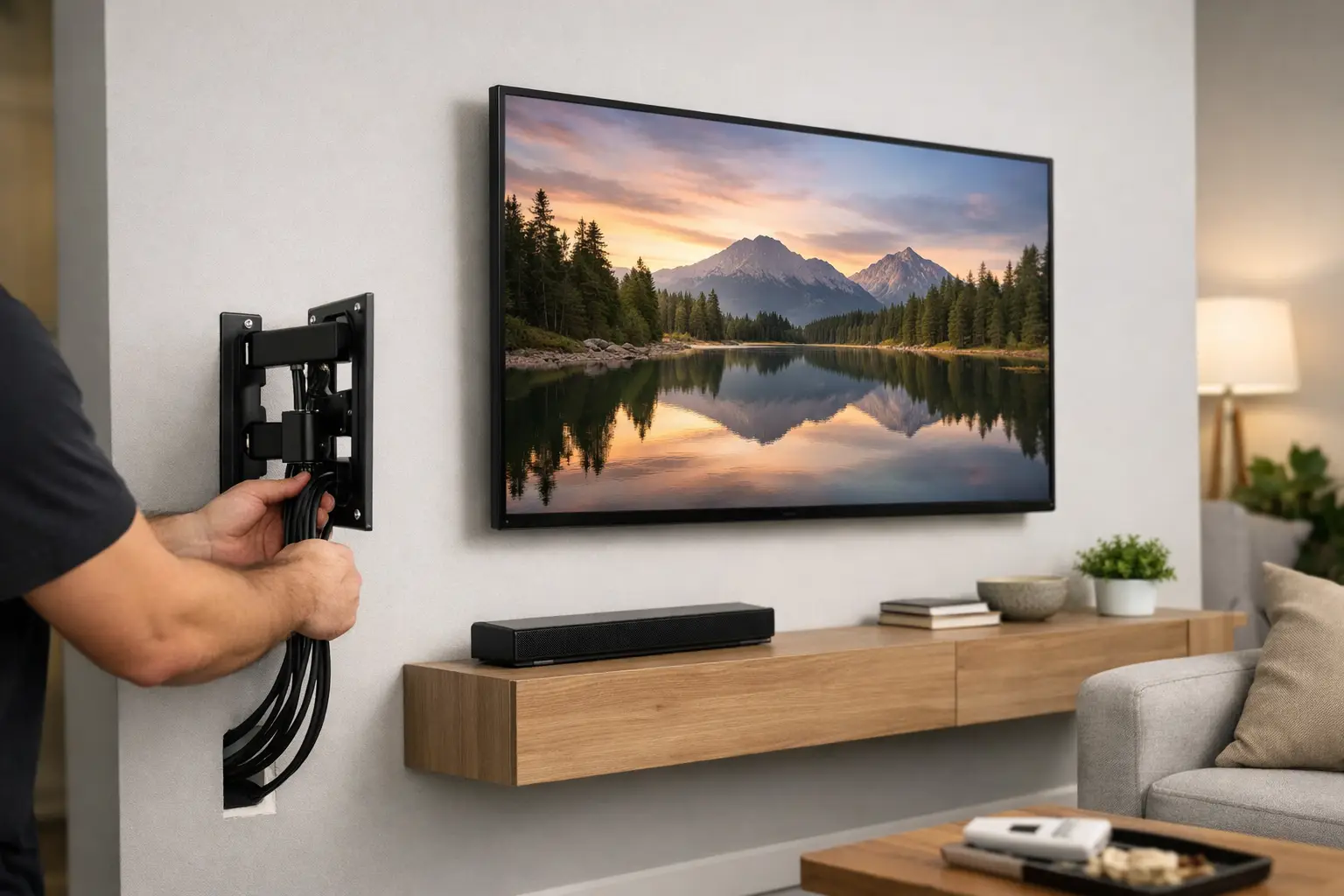
TV Wall Mounting With Hidden Wires Done Right
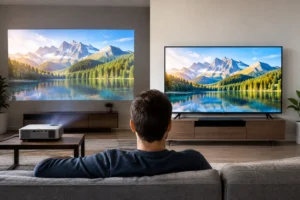
A beautiful TV can still make a room feel unfinished when a power cord, HDMI cable, and streaming-device wires hang below it. TV wall mounting with hidden wires solves that visual problem while making the entire entertainment area easier to enjoy, easier to clean, and better suited to the way your space is used.
The best result is not simply a television attached to drywall. It is a planned installation where screen height, wall structure, power, equipment location, audio, and future upgrades all work together. For Florida homeowners, that planning matters even more in rooms with concrete block walls, open-concept layouts, outdoor living areas, or high-glare windows.
What a Hidden-Wire TV Installation Really Includes
Concealed wiring means more than tucking cords behind the TV. A professional installation creates a safe path for power and low-voltage cables inside the wall or through an approved surface-routing solution when in-wall access is not practical.
The TV mount is secured to the wall structure, the screen is positioned for comfortable viewing, and cables are routed to a clean termination point. That may be a recessed media box behind the TV, a nearby cabinet, an equipment closet, or a low-profile outlet location below the display. The goal is to leave the wall looking intentional, not like technology was added as an afterthought.
A polished setup can conceal HDMI connections, Ethernet, antenna or coaxial cable, speaker wire, control cables, and power. It can also account for a soundbar, game console, cable box, Apple TV, Roku, or a receiver located elsewhere in the room.
Why TV Wall Mounting With Hidden Wires Takes Planning
Every wall tells a different story once the installation begins. Standard wood studs are straightforward in many homes, but Florida properties may also have masonry, metal studs, tile, shiplap, fireplace surrounds, or plumbing and electrical lines behind the surface. The right mount and wire-routing approach depend on what is actually inside that wall.
Screen size also changes the plan. A large TV may need a full-motion mount, which lets the display pull away from the wall and turn toward a seating area. That flexibility is useful in living rooms and open floor plans, but it requires enough cable slack to move safely without showing wires or stressing connections. A fixed mount sits closer to the wall and delivers a more gallery-like look, although it offers less adjustment after installation.
Viewing height deserves the same attention. Mounting a TV too high is one of the most common mistakes, especially above a fireplace. The center of the screen should generally align near seated eye level, unless the room layout requires a different solution. If the fireplace is the only logical location, a specialized mount may help bring the screen down for viewing and raise it back when not in use.
Start With the Room, Not the Mount
Before selecting hardware, consider how the room functions. Is this the family room where everyone watches movies? A bedroom where the TV needs to sit low and discreet? A poolside patio that needs a weather-rated display? Or a commercial waiting area where reliability and a clean presentation matter every day?
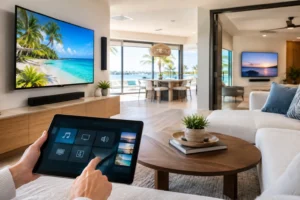
The answer affects screen placement, mounting style, cable management, and equipment selection. In a main living area, a wall-mounted TV may become part of a larger system with distributed audio, stronger Wi-Fi coverage, and simple control of streaming services and sound. In a bedroom, the priority may be a slim profile and one easy remote. For a business, the focus may be on protecting equipment, limiting exposed connections, and making the system simple for staff to operate.
It also helps to decide where your source equipment will live. Keeping a streaming device directly behind the television is convenient, but it can limit access and may create heat buildup in a very tight recessed space. Placing equipment in a cabinet or AV closet keeps the display area cleaner and makes upgrades easier, though it may require longer HDMI runs, network cabling, or a control solution.
Safe Power Is Not Optional
The most important distinction in a concealed installation is between low-voltage cable and electrical power. HDMI, Ethernet, speaker wire, and similar low-voltage cables can be routed through rated in-wall pathways. A standard TV power cord should not simply be run loose inside a wall. Doing so can create a safety issue and may not meet electrical requirements.
A proper installation typically uses an approved in-wall power relocation kit or has a licensed electrician add an outlet behind the TV when needed. This lets the television plug into a code-appropriate receptacle while preserving the clean, wire-free appearance homeowners want.
This is one area where a shortcut can cost more later. A visible cord cover may be acceptable in a temporary setup or on a surface where in-wall work is impossible. But if you are remodeling, installing a premium display, or building a media room meant to last, handling power correctly from the beginning protects both the investment and the finished look.
The Cables Worth Running Now
A wall is easiest to access before the TV goes up. Even if your current system is simple, planning for the next few years can prevent another round of wall work later.
For most installations, a high-quality HDMI connection and reliable network access are the essentials. Wi-Fi works well for many streaming setups, but a hardwired Ethernet connection can be a smarter choice for 4K streaming, gaming, and areas where wireless coverage is inconsistent. If a soundbar, receiver, subwoofer, security camera display, or whole-home audio system may be added later, the cable path should be designed with that possibility in mind.
Rather than burying a single cable with no room to change it, many professional installations use a dedicated in-wall conduit. This creates a protected route that can accept replacement cables as technology changes. It is a small design choice with a major long-term benefit, particularly when a TV is mounted over stone, tile, or a finished feature wall that would be difficult to open again.
Sound Deserves a Place in the Design
Thin TVs produce impressive pictures, but their built-in speakers are often a compromise. A soundbar can dramatically improve dialogue and movie sound without filling the room with equipment. When it is mounted directly below the TV, its power and audio connections can be concealed in the same installation plan.
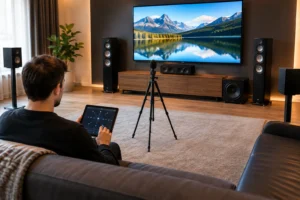
For a more immersive experience, a receiver and in-wall or in-ceiling speakers can create theater-quality sound while keeping the room visually calm. The right choice depends on how seriously you use the room. A soundbar is often ideal for everyday television. A dedicated media room, man cave, or large entertaining space may benefit from surround sound and a properly placed subwoofer.
The key is to avoid treating audio as an afterthought. A TV installed at the perfect height can still feel awkward if a soundbar blocks the screen, sits too low, or leaves its cables exposed.
When a Professional Installation Makes Sense
A basic fixed mount on an accessible interior wall can be a manageable project for an experienced homeowner with the right tools. The situation changes when there is masonry, a fireplace, a large display, custom cabinetry, multiple components, hidden power, or a need for a truly finished appearance.
Professional installation brings more than labor. It provides a clear plan for the wall, the right mounting hardware, safe wire routing, clean cable termination, and testing before the job is complete. It also reduces the risk of mounting a heavy television into inadequate backing, damaging a wall finish, or discovering too late that the equipment will not fit where it was planned.
Frequencies USA designs installations around the room and the way you use it, whether that means a clean living-room TV setup, a full home theater, or an outdoor entertainment space built for Florida weekends. A free estimate can clarify the options before any holes are made.
A Clean Wall Should Still Be Easy to Service
The best hidden-wire work is nearly invisible, but it should not be impossible to maintain. Leave reasonable access to streaming devices, use labeled connections where practical, and make sure the TV can be removed from its mount without cutting wires. If equipment is stored in a cabinet, allow ventilation and enough space to reach power supplies and ports.
A finished TV wall should make technology feel simpler, not more mysterious. With the right mount, safe power, thoughtful cable routing, and sound designed into the same plan, the room stays focused on the picture, the people in it, and the experience you built it for.
 Previous Post
 Next Post