What Does a Multi Room Audio System Cost?
A kitchen playlist that follows you onto the patio, clear game-day audio around the pool, and relaxing music in the primary suite all sound simple. The real multi room audio system cost depends on how many spaces you want to cover, how refined you want the finish to be, and whether the system needs to work with equipment you already own.
For Florida homeowners, the right investment is rarely about placing a speaker in every room. It is about creating reliable, easy-to-control sound that fits the way your home is used – indoors, outdoors, and everywhere in between – without visible wires, app confusion, or mismatched audio quality.
Typical Multi Room Audio System Cost Ranges
A professionally designed multi-room audio system can range from roughly $2,500 for a focused two- or three-zone setup to $20,000 or more for a larger home with premium speakers, concealed wiring, outdoor coverage, and centralized control. Large estates, commercial spaces, or projects tied into a full smart-home system can go beyond that range.
The range is broad because a “room” and a “zone” are not always the same thing. A zone is an area that can play its own source and volume level. Your kitchen and family room may be one open-concept zone, while the lanai, pool deck, office, and bedrooms each operate independently.
A modest system might serve the main living area, kitchen, and patio. A more complete installation may include six to 10 zones, each with in-ceiling, in-wall, or outdoor speakers selected for that specific environment. The best starting point is to decide where music will genuinely improve daily life, rather than paying for audio in rooms that will rarely use it.
What Shapes the Price of a Multi Room Audio System?
Number of zones and speakers
More listening zones require more amplification, more speaker wire, and more installation time. A single zone with two quality in-ceiling speakers is straightforward. Add independent music and volume control for several rooms, and the hardware and programming become more involved.
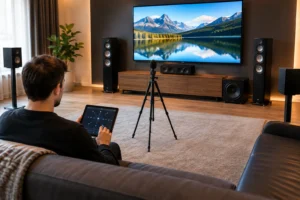
Speaker count also depends on the room. A compact bedroom may sound excellent with one stereo speaker or a pair of in-ceiling speakers. A large great room, covered patio, or pool area often needs additional speakers to provide even coverage at comfortable volume. This prevents the common problem of turning one speaker up too high just to hear it across the space.
Speaker quality and placement
Entry-level architectural speakers can provide a meaningful improvement over portable speakers, but premium models deliver better clarity, stronger bass response, and more consistent sound at higher volumes. The difference is especially noticeable in open rooms and outdoors, where sound has more space to dissipate.
Placement matters just as much as the speaker itself. Professionally positioned in-ceiling speakers can blend into the room while delivering balanced coverage. For patios and landscape areas, weather-rated speakers, burial-rated wire, and correctly planned locations protect the investment from heat, humidity, rain, and lawn maintenance.
Wiring and construction conditions
Concealed wiring is one of the biggest factors in a multi room audio system cost. In a new build or renovation, installers can often run cable before drywall is complete, which is efficient and keeps the finished look exceptionally clean. Retrofitting an existing home requires more planning to route wire through attics, walls, and ceilings without unnecessary cuts or visible surface-mounted cable.
Florida homes also come with practical considerations. Concrete block construction, limited attic access, high ceilings, and separate outdoor structures can all affect labor. A professional site visit identifies these details before installation begins, so the estimate reflects the real work instead of a vague package price.
Sources and control
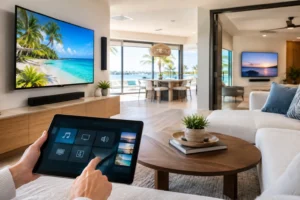
Most homeowners want to stream music from familiar services and control each zone from a phone or tablet. That can be simple and cost-effective, but control options can expand depending on your preferences.
A system may use an easy app, discreet wall keypads, handheld remotes, voice control, or integration with a broader smart-home platform. Dedicated controls are helpful for families, guests, and commercial settings because anyone can start music or adjust volume without locating the right phone or app. They add cost, but they can make the system more convenient every day.
Existing equipment and integrations
If you already own an AV receiver, speakers, or streaming components, some of that equipment may be worth integrating. In other cases, it can limit reliability, zone flexibility, or sound quality. A thoughtful design assesses what should stay and what will create unnecessary compromises.
Audio can also be tied into televisions, home theaters, outdoor displays, and smart-home scenes. For example, a “pool time” scene might turn on patio audio, select a favorite station, and set the volume to a comfortable level. Those integrations require programming and compatible equipment, but they create a more polished experience than a collection of disconnected devices.
Where to Spend and Where to Save
The smartest systems prioritize the elements that cannot be easily changed later. Invest in properly installed wire, suitable speakers for each environment, and enough amplification to run the system without strain. These foundational choices protect sound quality and prevent expensive revisions.
You can often save by beginning with the areas you use most and choosing an expandable platform. It is reasonable to start with the kitchen, family room, primary bedroom, and lanai, then add guest rooms or a garage later. Planning the wiring and equipment location for future zones during the first installation keeps expansion far easier than starting over.
Avoid choosing solely by the lowest speaker price. A low-cost component installed in the wrong location may disappoint more than a well-selected midrange speaker installed correctly. Likewise, buying individual wireless speakers room by room can look affordable at first, but it may become frustrating when devices lose connection, require separate charging, or do not cover outdoor areas well.
Indoor, Outdoor, and Commercial Audio Have Different Needs
Indoor whole-home audio is usually designed around clean aesthetics and even room coverage. In-ceiling speakers are popular because they preserve wall space and complement a finished interior. In rooms where sound quality is the priority, bookshelf, in-wall, or custom speaker options may be a better fit.
Outdoor audio needs a different approach. A pair of patio speakers may be enough for a small covered area, while a larger yard benefits from distributed landscape speakers and a discreet subwoofer. Distributed sound keeps the volume pleasant near the house and property line while still delivering full sound where people gather.
For restaurants, offices, salons, fitness studios, and retail spaces, the cost is shaped by square footage, ceiling type, zoning requirements, and the need for dependable day-to-day operation. Commercial systems may need separate audio levels for customer areas, private offices, waiting rooms, and outdoor seating. The goal is not just louder music – it is a consistent atmosphere that supports the business.
What a Professional Estimate Should Include
A useful estimate should explain the number of zones, speaker locations, equipment, wiring approach, control method, and installation labor. It should also clarify whether programming, cleanup, system walkthrough, and future expansion options are included.
Be cautious with a price that lists only a number of speakers. That does not tell you whether the system can play different music in different areas, whether it will cover the patio evenly, or how it will be controlled. The finished experience comes from the design and installation details, not the speaker count alone.
At Frequencies USA, a free estimate starts with how you want to use each space. That conversation helps identify whether your home calls for a simple streaming setup, a concealed multi-zone system, or audio that connects with a larger entertainment and smart technology plan.
The right system should feel natural from the first use: press play in the kitchen, take the music outside, and enjoy the space without thinking about the equipment behind it.
 Previous Post
 Next Post