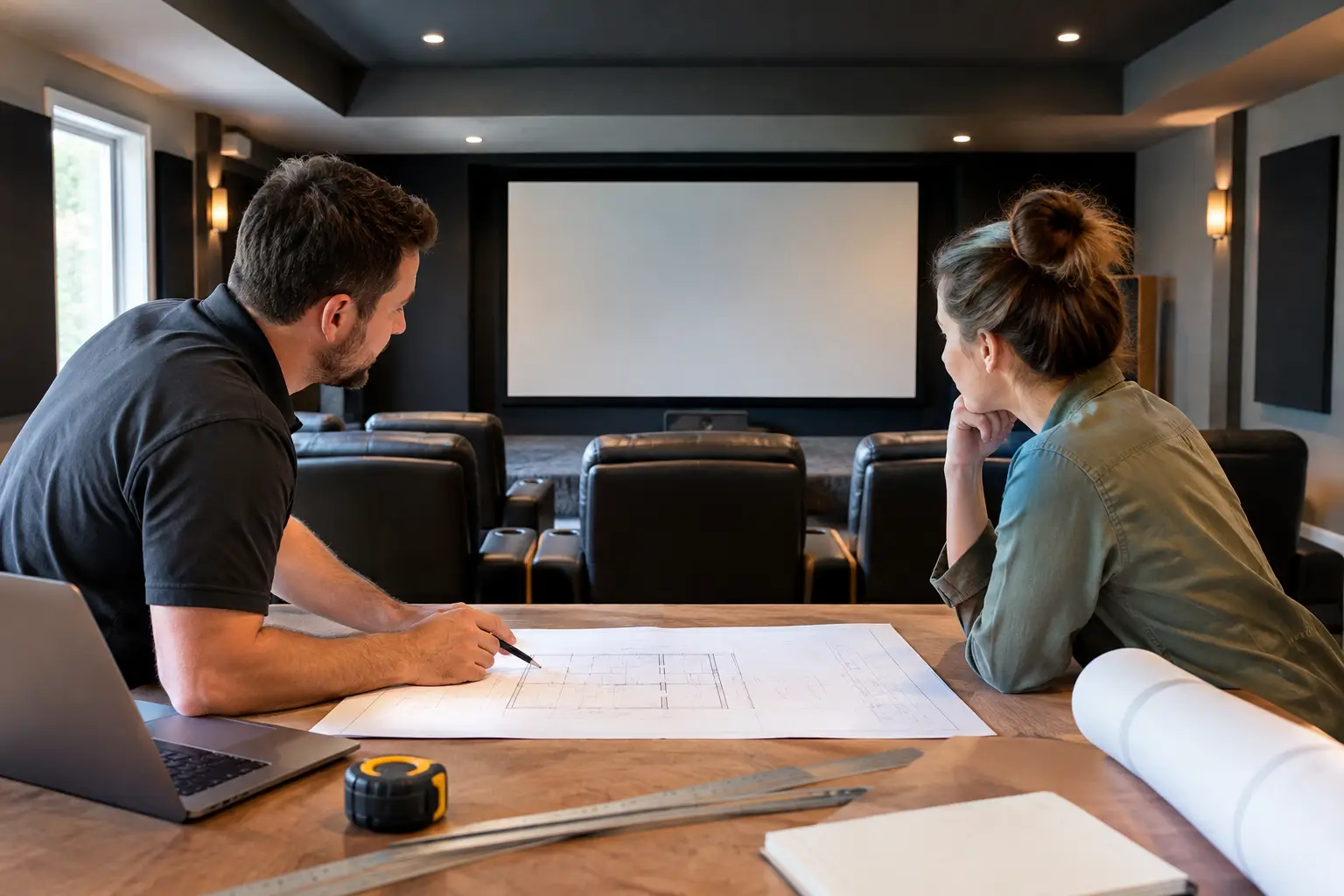
You Build It, We Engineer It: Free DIY Theater Consult
A DIY home theater can look simple on paper: choose a large TV or projector, add speakers, mount everything, and press play. The reality is that the decisions made before the first bracket goes on the wall determine whether the room feels cinematic or frustrating. With you build it. we engineer it. Frequencies USA free diy home theater consultation program, homeowners can take on the hands-on work while getting professional input where it matters most: room layout, equipment compatibility, speaker placement, wiring paths, and system performance.
This is not about turning a DIY project into a full-service installation. It is about helping you avoid the expensive mistakes that can hide behind a clean-looking setup. You stay in control of the project, the budget, and the pace. Our team helps you build a plan that makes sense for the room you actually have.
A Better Starting Point for DIY Home Theaters
Most home theater problems are not caused by bad equipment. They happen when good equipment is placed in the wrong location, paired with the wrong components, or installed without considering how the room affects sound and picture quality.
A television mounted too high can cause neck strain during a movie. A projector selected without measuring throw distance may not produce the image size you expected. Speakers placed wherever there is open wall space can make dialogue hard to understand and surround effects feel disconnected. These are avoidable issues, but they are much easier to address before drywall, paint, shelving, and furniture are in place.
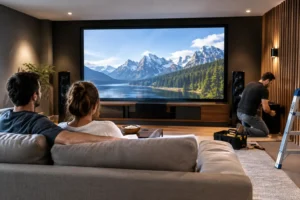
A free consultation gives your project a professional foundation. We look at how you plan to use the room, whether that means family movie nights, big-game weekends, console gaming, dedicated media viewing, or a flexible living-room system. From there, we can help identify a practical direction for the display, audio layout, source equipment, controls, and cable management.
You Build It, We Engineer It for Your Room
Every room comes with trade-offs. A dedicated theater room with blackout shades allows for a projector and screen that would not make sense in a bright great room. A compact media room may benefit more from a high-performance TV and properly placed compact speakers than from trying to force a large projector setup into limited space.
The consultation begins with the room itself. Dimensions, ceiling height, seating distance, window placement, lighting, wall construction, and furniture all influence the final design. Even the location of a door can affect where surround speakers, subwoofers, and equipment cabinetry can realistically go.
We also consider the level of involvement you want. Some homeowners enjoy running low-voltage wire, mounting speakers, and assembling equipment racks. Others want to handle the visible pieces while leaving difficult cable pulls or final calibration for a professional. The right approach depends on your comfort level, the construction of the home, and how polished you want the finished space to feel.
That is the value behind “you build it, we engineer it.” You are not buying a one-size-fits-all package. You are getting guidance based on the room, your goals, and the work you genuinely want to do yourself.
Plan the Screen Before Buying the Display
The screen is usually the first thing people picture, but it should not be the first purchase. Viewing distance, room brightness, content preferences, and mounting options all come first.
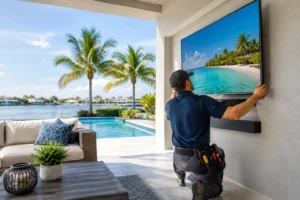
For a TV, the key questions are how far the main seating position is from the wall and whether the room receives significant daytime light. Larger is often better for immersion, but a display that overwhelms the seating distance can make lower-resolution content less comfortable to watch. A properly selected TV can also outperform a projector in bright multipurpose spaces.
For a projector, planning becomes more detailed. The projector must match the desired screen size and installed distance. Ceiling height, lens position, power access, ventilation, and the path for HDMI or network cabling all matter. A consultation can help you determine whether the room supports the projector experience you want before you purchase equipment that may be difficult to return or relocate.
Sound Is About Placement, Not Just Speaker Count
A speaker package may advertise 5.1, 7.1, or Dolby Atmos capability, but the room decides how much of that performance you will actually hear. The center speaker needs a clear path to the primary seating area because it carries much of the dialogue. Front speakers should be positioned with intention, not pushed into corners or hidden in cabinets that restrict their sound.
Surround and height speakers require similar consideration. In-ceiling speakers can offer a clean, low-profile look, especially in Florida homes where a media room may serve multiple purposes. But they must be placed according to the listening positions, not simply where the ceiling framing is most convenient. A professional plan helps you work around structural limitations while preserving the effect you are trying to create.
Subwoofer placement is another common surprise. A subwoofer does not always sound best beside the TV stand. Depending on the room, moving it even a few feet can improve bass consistency across the couch or eliminate a distracting boom in one seating position. You do not need a laboratory to make smart choices, but you do need a layout that respects how sound behaves in an enclosed space.
Wiring Is the Difference Between Clean and Complicated
A great theater should not look like a tangle of power strips, HDMI cords, and exposed speaker wire. Planning cables early gives DIY homeowners a chance to create a cleaner finish without making future upgrades difficult.
Before construction or mounting begins, think through where each device will live. Will the receiver sit under the TV, in a cabinet, or in a nearby closet? Where will game consoles, streaming devices, and cable boxes be accessed? How will you get a reliable network connection to the equipment? Will you want additional speakers, a second subwoofer, or a future projector later?
It is usually wise to run more low-voltage cable than you need today, especially if walls are open. A conduit path can make future upgrades much easier. Label every cable at both ends, leave reasonable service loops, and avoid running low-voltage signal wire tightly alongside electrical wiring for long distances. These details take little extra effort during planning and can save hours of troubleshooting later.
The same principle applies to power. Low-voltage wiring can be planned by a DIYer, but electrical work should be handled appropriately and in accordance with local requirements. If a display, projector, or equipment cabinet needs new power, plan that work before the finish stage rather than relying on visible extension cords.
Equipment Guidance Without the Guesswork
Home theater gear is not automatically better because it has the longest feature list or highest price tag. The best system is one whose components work together and suit the way your household watches, listens, and controls entertainment.
A consultation can help sort through practical questions. Is a soundbar enough for the room, or will a receiver-based system make a meaningful difference? Is the existing TV worth keeping? Do you need a gaming-friendly display with specific performance features? Is Wi-Fi dependable enough for streaming in that area of the home, or should the theater equipment have a wired network connection?
There is also no requirement to replace gear you already own. If you have speakers, a receiver, or a display that still performs well, we can help determine how it fits into the new design. If something is holding the system back, you will know why before spending money on an upgrade.
For homeowners in Tampa Bay and surrounding communities, Frequencies USA can bring a local perspective to the process. Florida homes often have open floor plans, bright rooms, concrete block construction, and outdoor entertaining areas that change the way AV systems should be planned. A design that looks good online may not be the best fit for your home.
What to Have Ready for Your Free Consultation
You do not need a finished blueprint or a complete equipment list to get useful guidance. A few details can make the conversation more productive: room photos, basic measurements, the primary seating location, an approximate budget range, and any equipment you already own.
It also helps to be honest about priorities. Some homeowners care most about movie sound. Others want a clean TV wall, easy controls for the whole family, or a system that performs equally well for sports and gaming. Knowing what matters most allows the design to focus investment in the places where you will notice it every day.
A well-planned DIY theater is not defined by who held the drill. It is defined by how the room feels when the lights go down, the dialogue is clear, the picture fills your view, and every component works the way it should. Start with a conversation, build with confidence, and give your home theater the thoughtful engineering it deserves.
 Previous Post
 Next Post