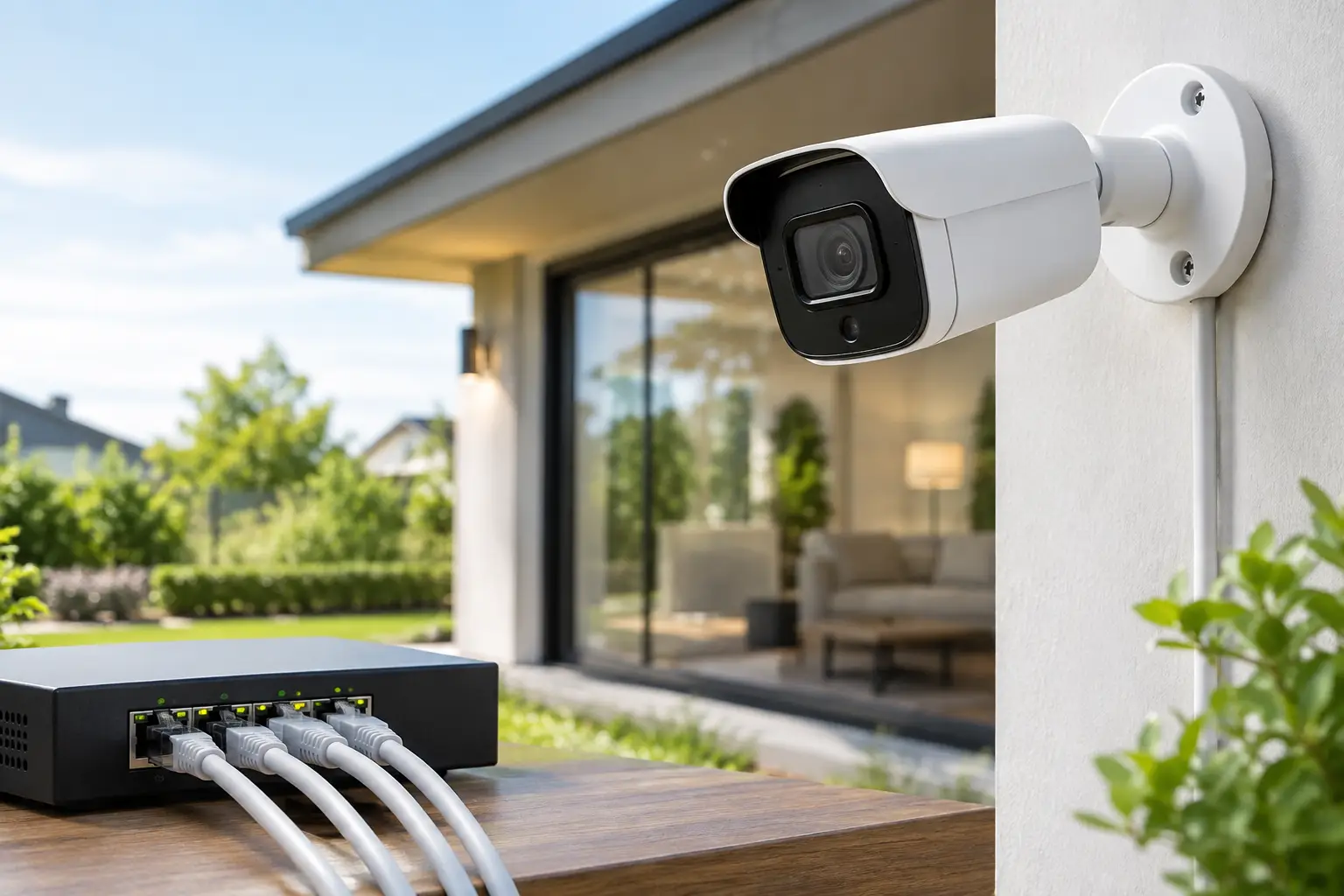
PoE Cameras for Cleaner, Smarter Home Security
A security camera should protect your property without leaving a tangle of power cords, unreliable Wi-Fi connections, or awkward equipment in plain view. PoE cameras offer a cleaner, more dependable approach by delivering power and data through a single network cable. For Florida homeowners and businesses, that can mean sharper footage, more consistent coverage, and an installation that looks as polished as the rest of the property.
What Are PoE Cameras?
PoE stands for Power over Ethernet. A PoE camera uses one Ethernet cable to receive electrical power and transmit video data to a network video recorder, PoE switch, or compatible network. Instead of running one cable for power and another for video, or depending on a nearby outlet, the installer runs one low-voltage cable from the camera back to the central equipment location.
That simple design solves several common problems. Cameras can be placed where they provide the best view, not merely where an outlet happens to be available. Hardwired connections are generally more stable than wireless links, especially around masonry, metal framing, dense landscaping, and larger homes. The finished installation can also be far cleaner, with discreet cable routing and properly placed equipment rather than exposed cords around the exterior.
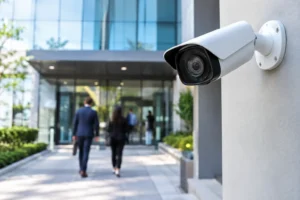
For a home, PoE cameras are often used at entry doors, driveways, side yards, pool areas, gates, and rear patios. Businesses may use them to monitor parking areas, entrances, service counters, warehouse doors, and exterior walkways. The right locations depend on how people move through the property and where visibility matters most.
Why Homeowners Choose PoE Cameras
The first benefit is reliability. Wi-Fi cameras have improved, but they still depend on signal strength, router performance, and wireless conditions that can change as devices are added to the network. A wired PoE connection gives each camera a direct path back to the recording system. That is especially valuable when a camera is positioned at the edge of a large property or outside near thick stucco walls.
Power is another advantage. Battery cameras are convenient in limited situations, but they require charging, can miss activity between recording events, and may reduce features to preserve battery life. A properly installed PoE camera is continuously powered, allowing for consistent recording schedules, motion alerts, night vision, and higher-quality video settings.
Image quality also benefits from good system design. Many PoE cameras support high-resolution video, wide-angle views, optical zoom, color night vision, and smart detection features that can distinguish among people, vehicles, and general motion. More resolution is not automatically better, though. A very wide camera mounted too high may capture a large area but fail to provide usable facial detail. Camera selection and placement must work together.
There is also a visual benefit. A professional low-voltage installation keeps wiring concealed whenever practical and places cameras intentionally, rather than making the home look like it was covered in equipment as an afterthought. Security should add confidence, not clutter.
A Better Camera Plan Starts With Coverage
Buying several cameras without a plan can create expensive blind spots. The goal is not to record every inch of the property at maximum resolution. The goal is to capture useful footage at the points where it matters.
A driveway camera, for example, may need to identify vehicles entering and leaving. A front entry camera should capture visitors approaching the door, while a backyard camera may need a broad view of a patio, pool gate, or outdoor living space. An overview camera can establish what happened, but a tighter angle may be needed to identify who was involved.
Height and angle make a difference
Cameras mounted extremely high are harder to tamper with, but they often look down at hats, hair, and shoulders rather than faces. Mounting height should balance security, coverage, lighting, and identification needs. Glare from windows, landscape lights, reflective driveways, and vehicle headlights should also be considered before the camera is permanently installed.
Florida weather adds another consideration. Exterior cameras should be selected and positioned for heat, humidity, heavy rain, and sun exposure. A camera aimed toward a sunrise or sunset path may produce poor images at key times of day. A covered location can help, but it should not block the camera’s intended view.
Do not ignore lighting
Cameras can see more with better lighting. Motion-activated landscape lighting, soffit lighting, or properly planned exterior fixtures can improve color footage and make a property feel more welcoming after dark. The best results often come from treating security cameras and lighting as parts of one exterior plan rather than unrelated projects.
The Equipment Behind the Cameras Matters
A PoE camera system is more than the cameras themselves. The network video recorder, storage capacity, PoE switch or injector, cabling, surge protection, and network configuration all affect the final experience.
The recorder determines how many cameras the system can support, how long footage can be retained, and which recording modes are available. Continuous recording provides the most complete record, while event-based recording can conserve storage. Many properties benefit from a combination: continuous recording at critical access points and smart motion recording in lower-priority areas.
Storage needs vary widely. A small system recording a few cameras at moderate settings may retain footage for weeks, while a larger system with high-resolution cameras and continuous recording can use the same capacity much faster. It depends on camera count, resolution, frame rate, recording schedule, compression, and how much activity occurs in each scene.
Cabling deserves attention as well. Quality Ethernet cable supports dependable power and data transmission, while neat routing protects the installation and preserves the property’s appearance. For larger homes and commercial spaces, equipment may need to be organized in a dedicated network area so future upgrades, service, and troubleshooting are straightforward.
Remote Viewing Should Be Simple, Not Complicated
A camera system is most useful when it is easy to check. Homeowners commonly want a simple app for live views, alerts, playback, and sharing clips when needed. Business owners may need different permissions for managers, staff, or off-site decision-makers.
Remote access should be configured carefully rather than treated as an afterthought. Strong account passwords, multi-factor authentication when available, current firmware, and a properly secured home or business network all help protect the system. A camera that is installed for security should not become an easy point of entry into the network.
Smart alerts also need tuning. If every passing car, palm frond, insect, or pool reflection triggers a notification, most people start ignoring the app. Proper motion zones and person or vehicle detection can reduce false alerts while keeping attention on meaningful activity.
When Wireless Cameras May Still Make Sense
PoE is an excellent choice for permanent, high-priority coverage, but it is not the answer to every camera need. A wireless or battery-powered camera may be practical for a detached structure, a temporary monitoring need, or a location where running cable would require major construction. The trade-off is typically less consistent connectivity, more maintenance, or reduced recording options.
Some properties also benefit from a hybrid approach. Hardwired PoE cameras can cover entrances, driveways, exterior perimeters, and key common areas, while a wireless camera fills a secondary gap. The decision should be based on the view required, cable access, network conditions, and how critical it would be to have footage from that location.
Professional Installation Protects the Investment
A camera system can look simple after it is installed, but the planning behind it matters. Cable routes need to be considered before walls are opened or exterior surfaces are penetrated. Cameras need appropriate mounting hardware, weather protection, and sightlines. The network needs enough capacity to support recording and remote viewing without affecting the devices people use every day.
Frequencies USA designs camera systems around the way each property is used, with careful equipment placement and clean, concealed wiring where possible. That approach helps homeowners enjoy security technology without turning the home into a technical project they have to manage.
The right PoE camera system should fade into the background until you need it. When a package arrives, a visitor approaches, a vehicle enters the drive, or something does not look right, clear footage and easy access can make all the difference. A thoughtful camera plan gives your property that confidence while keeping the finished space clean, comfortable, and unmistakably yours.
 Previous Post
 Next Post