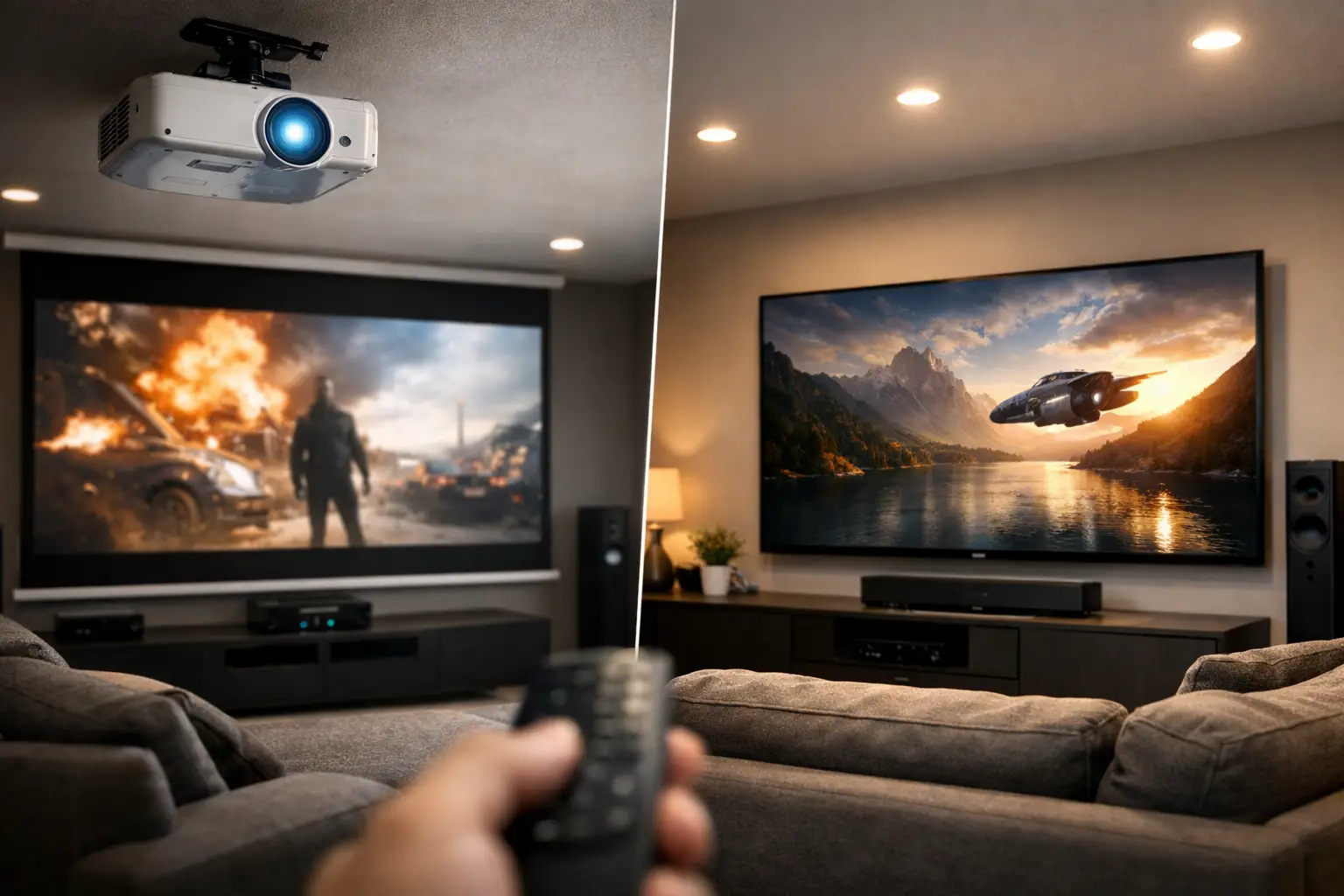
Projector or TV for a Media Room at Home?
A media room should feel like the best seat in the house, whether it is hosting Sunday football, family movie night, or a late-night gaming session. Choosing a projector or TV for a media room is less about picking the biggest screen and more about matching the display to how the room is actually used. Ambient light, seating distance, ceiling height, sound goals, and the desired finished look all matter.
For many Florida homeowners, the answer changes from room to room. A dedicated, light-controlled theater can make a projector spectacular. A multipurpose media room with windows, everyday TV viewing, and kids coming in and out may be better served by a large TV. The right choice delivers a polished, easy-to-use experience without clutter, visible wiring, or constant adjustment.
Projector or TV for a Media Room: Start With the Room
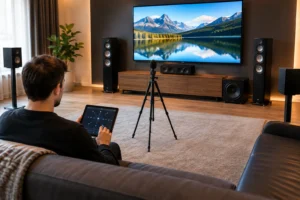
The room itself usually makes the decision clearer. Projectors perform best when they can control light. If your media room has blackout shades, few windows, dark wall colors, and a layout built around movie watching, a projector can create the kind of cinematic scale that a standard television cannot match.
A TV is more forgiving. Modern large-format TVs are bright enough to stay clear and colorful with lights on, during daytime viewing, or in rooms with wide Florida windows. That makes them a strong choice for a media room that also functions as a family lounge, game room, or entertaining space.
Think honestly about when the room will be used. If the household watches news in the morning, plays games in the afternoon, and streams shows with lamps on at night, brightness matters more than theater-style darkness. If the room is reserved for movies, sports, and intentional viewing after dark, screen size may become the bigger priority.
Ambient Light Is the Deciding Factor for Many Homes
Even a high-quality projector cannot fully ignore sunlight. Bright projectors and ambient-light-rejecting screens improve the picture considerably, but they do not eliminate the effect of direct light washing over the screen. Window coverings can be part of the AV plan, especially when they are integrated into a simple control system.
A TV’s brightness gives it a practical advantage in rooms with lots of daylight. It also offers consistent performance without having to lower shades before every show. For homeowners who want a beautiful screen that works instantly at any hour, that convenience is valuable.
When a Projector Is the Better Choice
A projector is about immersion. With a properly selected screen, it can produce a 100-inch, 120-inch, or larger image without turning one wall into a permanent black panel. That scale changes the experience of movies, concerts, major sporting events, and multiplayer gaming.
Projectors also suit rooms where aesthetics matter. A motorized screen can disappear into the ceiling when not in use, leaving the room open and refined. In some designs, the projector itself can be ceiling-mounted with concealed wiring, so the technology supports the space rather than taking it over.
The trade-off is that projector systems need more planning. Screen placement, projector throw distance, ceiling structure, ventilation, wiring routes, and lighting control should all be considered before installation. A projector can be a better value per inch of screen size, but the complete system includes more than the projector alone.
Picture quality depends heavily on the environment. In a dedicated media room, a premium projector with a quality screen can deliver rich contrast, a natural large-screen image, and a true theater feel. In a bright, open-concept room, those same strengths may be harder to appreciate during the day.
There is also maintenance to consider. Some projector models use lamps that eventually need replacement, while many current laser projectors offer long operating life with less upkeep. The right equipment choice should reflect how often the system will be used and how hands-off the homeowner wants it to be.
When a Large TV Makes More Sense
A large TV is the practical luxury choice for many active media rooms. It starts quickly, handles bright spaces well, and delivers sharp detail for sports, streaming, and gaming. For rooms where people gather throughout the day, that reliability can outweigh the appeal of a larger projected image.
Today’s 75-inch, 85-inch, and larger TVs create a substantial viewing experience when the seating is appropriately positioned. In a room where the main seats are eight to 10 feet from the screen, an 85-inch TV can feel impressively large while maintaining the brightness and contrast people expect from premium displays.
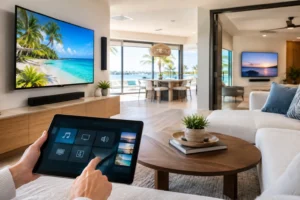
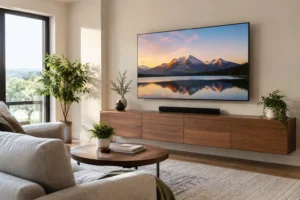
TVs are also easier to integrate around. They can be wall-mounted with hidden cabling, paired with a soundbar or full surround-sound system, and controlled from one remote or touch interface. A professionally installed TV can look clean and intentional, especially when power, source equipment, and speaker wiring are concealed.
The main limitation is scale. Once a room is designed for a 120-inch image, an 85-inch or even 98-inch TV may not create the same cinematic impact. Large TVs also remain visible when powered off. Depending on the design, that can be perfectly acceptable or a reason to consider a retractable projection screen instead.
Screen Size and Seating Distance Matter More Than You Think
Bigger is not always better if the seating layout is wrong. A screen that is too large for the viewing distance can make fast sports action tiring and reveal imperfections in lower-quality streaming content. A screen that is too small can leave a spacious media room feeling underwhelming.
As a starting point, many homeowners find that an 85-inch TV works well from roughly eight to 12 feet away. A 100-inch to 120-inch projector screen is often more comfortable when the primary seating is around 10 to 15 feet away. These are useful guidelines, not fixed rules. Content type, personal preference, and the number of seating rows can change the ideal size.
A thoughtful design considers every seat. The goal is not simply to give the person in the center a great view. It is to make sure family members and guests can see the picture comfortably without craning their necks or competing with glare from a window or lamp.
Do Not Let the Display Decide the Sound System
A great image without great sound leaves a media room unfinished. TVs have limited space for built-in speakers, and even a projector system needs a separate audio plan. The display should be chosen alongside the room’s surround sound, subwoofer placement, acoustic needs, and control options.
For a TV-based media room, a soundbar may be enough for casual viewing, while a properly installed surround system adds clearer dialogue and greater impact. A projector-based room often benefits from a more complete theater audio design because the screen size invites a more immersive experience.
Speaker placement should be planned early. In-wall and in-ceiling speakers can provide strong performance while preserving clean sightlines. Equipment can be tucked into cabinetry or a dedicated rack, keeping the room organized and making future service easier.
Choose Based on Daily Use, Not Just the Demo
A showroom projector in a dark room can be captivating. A huge TV with a bright, high-contrast image can be equally impressive. What matters is which setup will still feel right on an ordinary Tuesday afternoon when the shades are open, the room is busy, and someone wants to watch a game in seconds.
Choose a projector if your priority is a theater-like experience, very large screen size, and a room where lighting can be controlled. Choose a TV if you want excellent daytime performance, everyday convenience, gaming responsiveness, and a straightforward installation in a flexible room.
There is a middle ground as well. Some homes use a large TV for everyday viewing and reserve a projector for a dedicated theater or outdoor entertainment area. Others pair a projector with motorized shades and lighting scenes, making the transition to movie mode as simple as pressing one button.
Frequencies USA helps homeowners design media rooms around the way they live, from the display and screen to concealed wiring, surround sound, lighting, and simple control. A free estimate can help turn rough room dimensions and wish-list ideas into a system that looks as good when it is off as it performs when it is on.
Before choosing, stand in the room at the times you expect to use it most. Notice where daylight lands, where people naturally sit, and whether the space should feel like a dedicated theater or an elevated everyday retreat. That quick reality check often points to the display you will enjoy for years.
 Previous Post
 Next Post