Flush Mount Ceiling Speakers Installation Tips
A great room can have a beautiful TV, comfortable seating, and carefully chosen finishes, yet still feel incomplete when sound comes from a single soundbar. A properly planned flush mount ceiling speakers installation brings music, TV audio, and entertaining into the room without adding speaker cabinets, visible wiring, or clutter to the design. The finished system should feel simple: clear sound where people gather, easy control, and ceilings that still look clean.
That result depends on more than cutting a few holes and connecting speaker wire. Placement, speaker selection, amplifier power, construction details, and system tuning all influence what homeowners hear every day. For Florida homes in particular, ceiling height, open-concept layouts, humidity, and nearby HVAC equipment deserve attention before installation begins.
Start With How Each Room Will Be Used
The right speaker layout begins with the room’s purpose. A kitchen and dining area often need even, low-to-moderate background music while people move around. A family room may need more focused audio for television, sports, and movie nights. A covered patio or pool area needs equipment rated for the environment and a plan that keeps sound enjoyable without overwhelming neighbors.
Ceiling speakers are especially effective for whole-home audio because they distribute sound across a room instead of concentrating it in one corner. They can play the same music throughout the house or different sources in different zones. For example, someone may listen to a playlist in the kitchen while another family member watches a game in the media room.
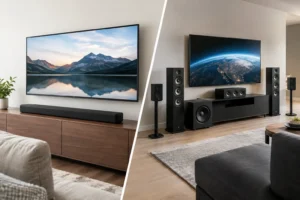
For TV-focused spaces, ceiling speakers can support a larger system, but they are not always the best standalone answer. Dialogue usually sounds more natural when the front speakers are closer to the screen. In a room where visual simplicity is the priority, discreet ceiling speakers may still be the right choice, especially when paired with thoughtful tuning and a properly located subwoofer. The best approach depends on whether the room is built around casual viewing or a more immersive theater experience.
Plan Speaker Placement Before the First Cut
The most common installation mistake is treating speaker placement as an afterthought. Ceiling joists, recessed lights, air vents, plumbing, and electrical wiring all compete for space above the drywall. A professional site review identifies these obstacles early and creates a layout that works acoustically and visually.
In a typical room, speakers should be spaced to create even coverage rather than placed only around the perimeter. The exact distance depends on ceiling height, the speaker’s dispersion pattern, and listening goals. Higher ceilings usually require wider coverage or additional speakers to avoid weak spots. Large open rooms may benefit from separate zones so the kitchen, living area, and dining area can each be adjusted independently.
Visual alignment matters, too. Speakers should look intentional in relation to recessed lighting, architectural lines, ceiling fans, and furniture placement. Small details make a major difference in a finished home. A pair of speakers centered over a seating area can look polished; speakers placed randomly around obstructions can make an otherwise premium installation feel improvised.
Avoid lights, vents, and structural surprises
Recessed can lights and HVAC vents can create unwanted noise or interfere with speaker performance. Avoid placing a speaker immediately next to an air supply, where moving air can affect sound and dust can collect on the grille. Ceiling fans introduce another consideration: their motion and operating noise can compete with audio, so speakers should be positioned outside the fan’s direct path.
Joists are non-negotiable. Cutting or modifying structural framing to force a speaker into a preferred location is not the answer. A careful installer adjusts the layout, uses a different speaker size, or selects a model designed for challenging spaces.
Choose Speakers That Match the Space
Not every in-ceiling speaker is built for the same job. Entry-level models can work well for simple background music in smaller rooms. Larger drivers and higher-quality tweeters generally produce fuller sound, better detail, and stronger output in bigger living areas. For rooms with higher ceilings, angled or pivoting tweeters can direct high-frequency detail toward the listening area instead of straight down.
Speaker size also affects the look of the ceiling. A larger speaker may deliver more low-end presence, while a smaller model can be easier to place around lighting and framing. In many homes, a compact speaker paired with a concealed subwoofer delivers more balanced results than oversized ceiling speakers working too hard to produce bass.
For bathrooms, lanais, garages, and covered outdoor spaces, confirm that the speakers are rated for moisture and temperature changes. Indoor speakers may look fine at first but can deteriorate when exposed to humid air. Marine-grade or weather-resistant equipment is often the smarter long-term investment for Florida environments.
Wiring Is What Keeps the System Flexible
Concealed wiring is the foundation of a clean installation. Speaker wire should be properly rated for in-wall use, routed safely through the home, and labeled at both ends. Labels may seem minor, but they make future service, upgrades, and troubleshooting dramatically easier.
A centralized equipment location, such as a media cabinet, rack, closet, or structured wiring panel, keeps amplifiers and networked audio components accessible without putting them on display. It also gives the system room to grow. A homeowner may start with four speakers in the main living area and later add audio to bedrooms, an office, or the patio. Planning pathways and spare wire during the initial project can reduce future disruption and cost.
Electrical separation matters as well. Speaker cables should not be run carelessly alongside high-voltage electrical lines, which can introduce hum or interference. Installers also need to follow local building requirements and use appropriate fire-stopping methods when wiring passes through rated assemblies.
Power and Control Make the Difference
Speakers do not create sound on their own. The amplifier must provide sufficient clean power for the number of speakers, their impedance, and the desired listening volume. Underpowered systems can sound thin or become distorted when turned up. More power is not automatically better, but appropriately matched amplification provides headroom for clear, comfortable listening.
Control should fit the household, not complicate it. Many multi-room audio systems can be managed from a phone or tablet, while others include wall keypads, handheld remotes, or integrated smart-home controls. The goal is not to fill the house with apps. It is to make everyday actions easy, whether that means selecting a favorite station, adjusting patio volume, or turning off music from bed.
For commercial spaces, control can be even more valuable. A salon, office, showroom, or restaurant may need scheduled music, separate volume levels by area, and equipment that staff can operate without technical training. Properly designed ceiling audio gives the space a more finished guest experience while keeping technology out of sight.
What a Professional Flush Mount Ceiling Speakers Installation Includes
A polished project is about more than speaker cutouts. It begins with an on-site assessment of the room, existing equipment, ceiling access, Wi-Fi performance, and preferred control method. From there, the system design should account for the way the space is actually used, not simply the number of speakers that can fit overhead.
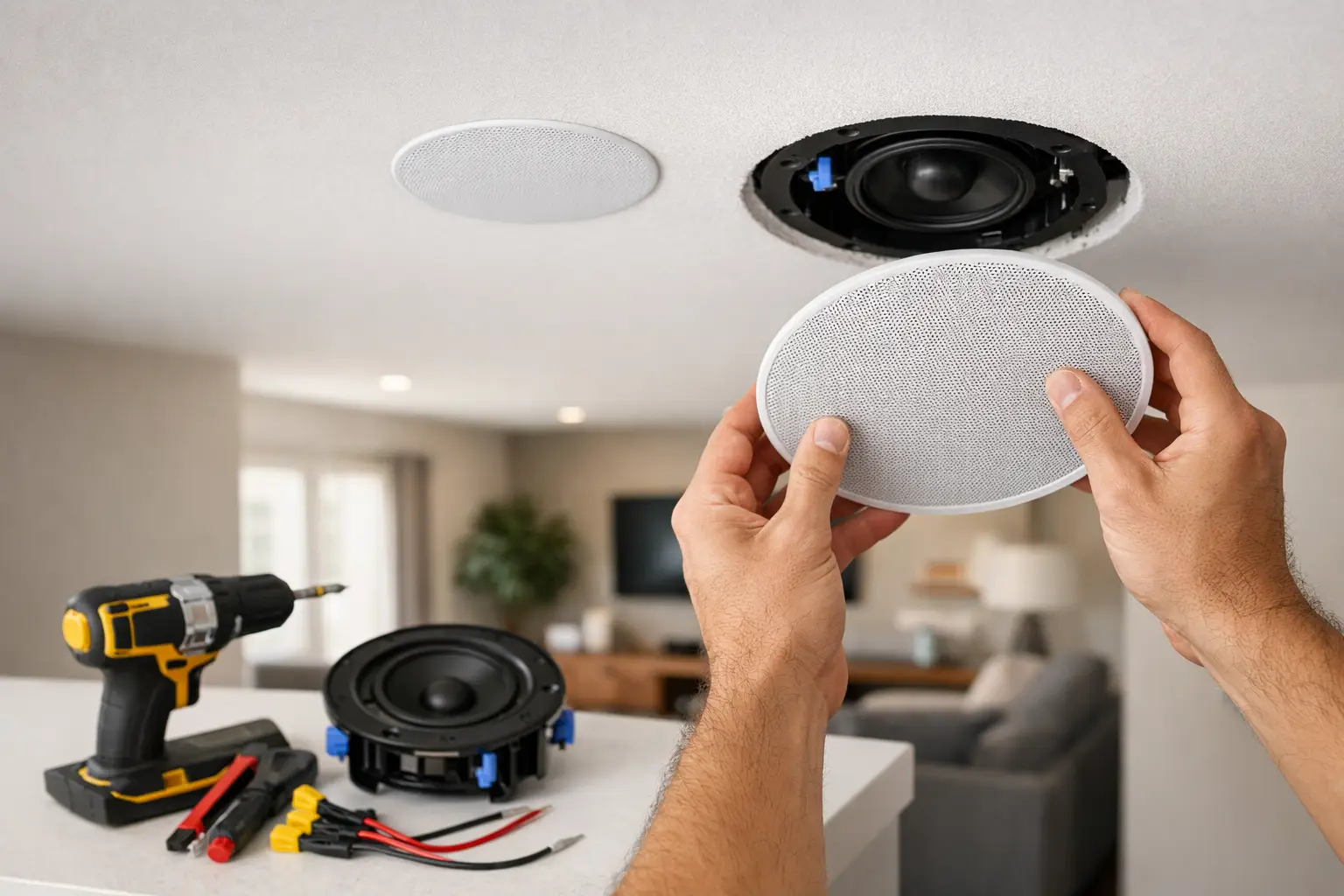
During installation, a professional team protects the home, confirms each cut location, runs and terminates wiring neatly, tests every channel, and leaves the grilles aligned and clean. Final tuning matters. Balancing volume across zones, setting crossover points when a subwoofer is used, and checking for rattles or uneven coverage turns good equipment into a system that feels complete.
Frequencies USA designs concealed audio systems for homeowners and businesses that want stronger entertainment without sacrificing the look of the space. Whether the project is a single room, a whole-home music system, or audio integrated with a theater and smart-home controls, the focus remains on dependable performance and an easy experience after the installers leave.
A Ceiling That Looks Finished and Sounds Exceptional
Flush-mount speakers are one of the few upgrades that can improve a room every day without demanding attention. They can make morning routines more enjoyable, bring energy to a gathering, and give a quiet evening at home a richer soundtrack. When the layout, wiring, equipment, and tuning are handled with care, the technology disappears and the experience stays front and center.
 Previous Post
 Next Post