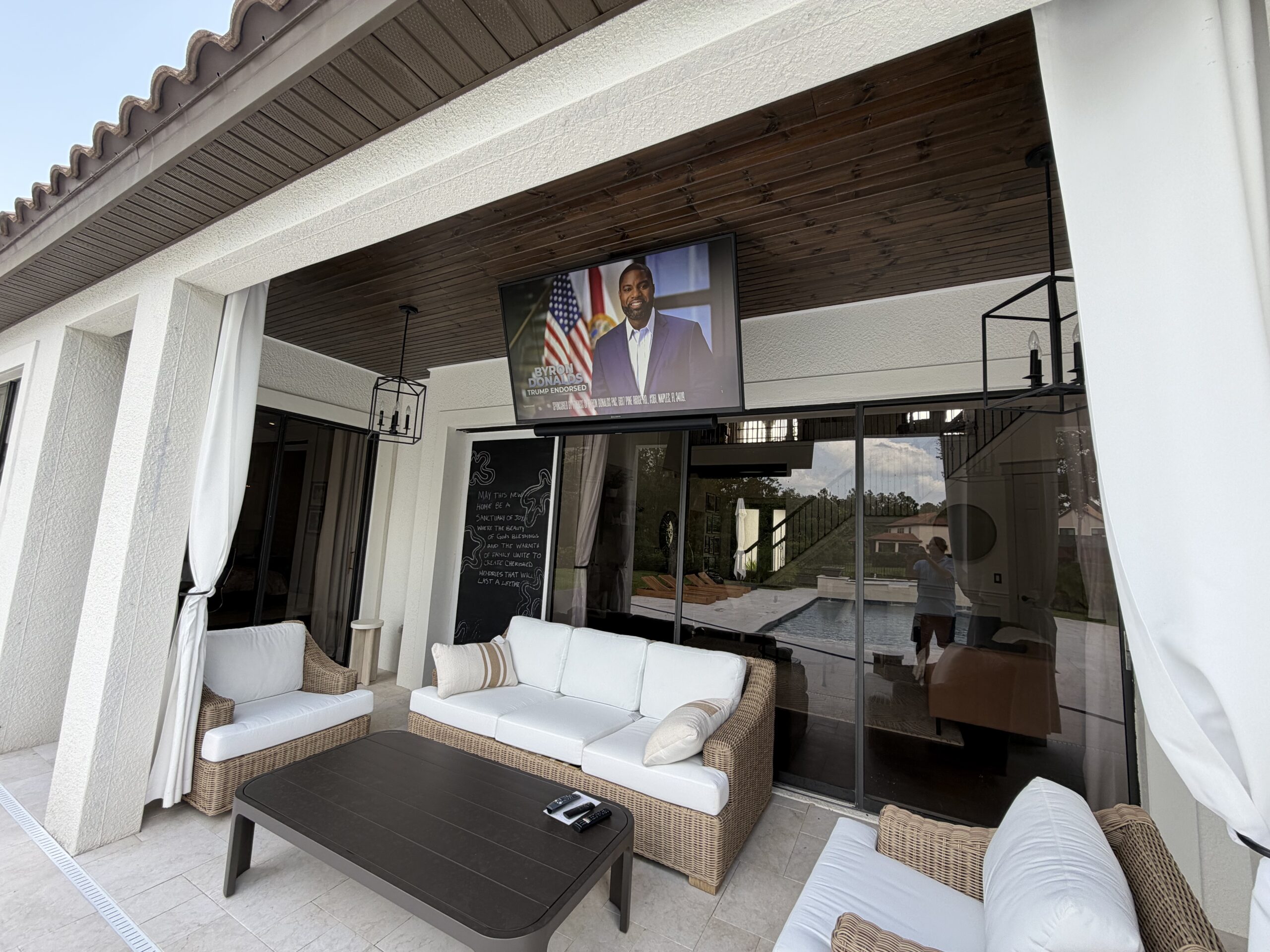
Outdoor TV Installation for Patio Spaces
A patio TV should make the space more inviting, not turn it into a collection of exposed cords, glare-filled screens, and remotes nobody can find. The best outdoor tv installation for patio living starts with the way you actually use the area: weekend games by the pool, family movies after sunset, casual music during dinner, or a comfortable place to follow the news with morning coffee.
For Florida homeowners, the design has to account for more than entertainment. Heat, humidity, rain, salt air near the coast, bright sunlight, and changing seasonal use all affect where the television goes and what equipment belongs around it. A professional plan keeps the technology protected, easy to operate, and visually clean.
Start With the Patio Experience You Want
Before selecting a screen size or mount, consider the viewing zone. Where do people naturally sit? Is the patio covered, screened, open to the pool deck, or exposed to afternoon sun? A television that looks ideal from one chair may be too high, too small, or too reflective for the rest of the space.
Viewing distance gives you a useful starting point. A 55-inch TV can work well in a compact covered lanai, while a 65- or 75-inch screen often makes more sense for a larger seating area. Bigger is not always better, though. If the screen is mounted near a dining table or in a narrow outdoor kitchen, an oversized TV can dominate the space instead of complementing it.
It also helps to decide whether television is the patio’s main attraction or one part of a larger outdoor entertainment system. A poolside area may benefit from audio that carries across the deck, while a quiet screened porch might only need a focused soundbar. Planning the complete experience early prevents costly additions later.
Outdoor TV Installation for Patio Weather
Not every television belongs outdoors. Standard indoor TVs are built for climate-controlled rooms, and even a well-covered patio can experience moisture, heat swings, wind-driven rain, and insects. An outdoor-rated television is designed with a weather-resistant enclosure, brighter display performance, and components intended to operate in more demanding conditions.
The right rating depends on placement. A fully shaded, covered patio may call for a partial-sun model, while an uncovered wall or a space that receives direct afternoon light needs a full-sun display. Brightness matters because sunlight can overpower a typical indoor screen, leaving viewers with a dark, reflective picture even when the TV is technically working.
A weatherproof enclosure can sometimes protect an indoor television, but it is not always the best long-term answer. Enclosures add bulk, can affect viewing angles, and may create heat-management concerns. They are often useful for certain budgets or specialized locations, but a purpose-built outdoor TV usually delivers a cleaner look and more dependable performance when the patio is used often.
The television should also be positioned away from direct water exposure whenever possible. A covered wall, recessed niche, or protected masonry area gives the equipment a better environment without sacrificing sightlines. In coastal communities such as Clearwater, Dunedin, Indian Rocks Beach, and Madeira Beach, salt air deserves extra attention because it can speed up corrosion on mounts, connectors, and exposed hardware.
Choose the Right Mount and Viewing Height
An outdoor mount must support the TV’s weight, fit its mounting pattern, and withstand exterior conditions. The wall material matters just as much. Stucco over block, wood framing, stone veneer, brick, and exterior cabinetry each require a different installation approach to create a secure result.
Fixed mounts offer the lowest-profile appearance and work well when the seating position is predictable. Tilt mounts can help reduce overhead glare or improve viewing when the TV must sit slightly higher. Full-motion mounts give more flexibility, allowing the screen to turn toward the pool, grill, dining table, or conversation area. The trade-off is that articulating mounts extend farther from the wall and require more careful cable management.
Mounting height is where many patio installations go wrong. Above a fireplace, outdoor kitchen counter, or bar may seem convenient, but it can force guests to look upward for long periods. Whenever practical, center the screen close to seated eye level. If a higher placement is unavoidable, use a tilt mount and choose a screen size that remains comfortable to watch.
Plan Power, Streaming, and Hidden Wiring Before the TV Goes Up
A polished patio installation does not rely on extension cords or cables draped along the wall. Outdoor-rated electrical work should be planned first, with a properly located, protected outlet behind or near the display. Power connections, low-voltage wiring, and any conduit should be selected for exterior use and installed in accordance with local code requirements.
Reliable streaming is equally important. A beautiful outdoor TV cannot deliver much enjoyment if the Wi-Fi signal drops every time several people are connected inside the house. Depending on the patio’s distance from the router and the home’s construction, a professionally positioned Wi-Fi access point or mesh network expansion may be needed to provide consistent coverage.
Hardwired network connections are an excellent option when construction access allows. Ethernet can provide stable performance for streaming devices, smart TV features, and control systems, especially in areas where wireless signal must travel through block walls, metal framing, or outdoor kitchen structures.
Conduit is one of the smartest choices during a new build, remodel, or patio upgrade. It creates a protected pathway for HDMI, network, speaker, and control wiring, while leaving room for future changes. Technology evolves quickly. A little planning now can prevent a wall from being opened later just to replace a cable.
Bring Sound to the Entire Patio, Not Just the Screen
Outdoor sound has to compete with open air, pool equipment, traffic, and conversation. A built-in TV speaker may be fine for occasional use in a small enclosed porch, but it rarely provides the clear, full sound people expect for a game, concert, or movie night.
For compact patios, a weather-resistant soundbar can improve dialogue and give the TV a more complete presence. For larger areas, outdoor speakers can be placed strategically around the seating zone so sound reaches guests evenly without needing excessive volume. This is more comfortable for your family and more considerate of nearby neighbors.
If the patio is part of a multi-zone audio system, you can keep the TV sound independent from the music playing near the pool, outdoor kitchen, or landscape seating area. That flexibility is especially valuable when one person wants to watch a game while everyone else is enjoying a playlist.
Make Control Simple Enough for Everyday Use
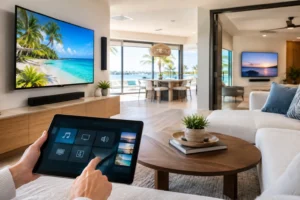
The system should not require a stack of remotes or a complicated routine. A well-designed setup can bring the TV, streaming service, audio, and lighting together through a single remote, wall keypad, or familiar mobile device.
Simple control is not just a convenience feature. It encourages people to use the space. When switching from music to a movie takes a few taps instead of a troubleshooting session, the patio becomes a natural extension of the home. Equipment can also be placed in protected locations, keeping streaming devices and connections out of sight while still allowing easy service access.
Why Professional Design Makes a Visible Difference
Outdoor installations combine electrical planning, mounting safety, network coverage, AV integration, weather protection, and finish work. It is possible to buy a TV and attach it to a wall, but the details determine whether the result still looks and performs great after a Florida summer.
Frequencies USA designs patio entertainment systems around the home, the architecture, and the way each customer plans to enjoy the space. That can mean integrating existing equipment, supplying outdoor-rated components, concealing cables in conduit, extending Wi-Fi coverage, or coordinating TV audio with landscape speakers and lighting. The goal is a clean finished result that feels intentional rather than added on.
A free estimate is a practical first step when you are weighing screen placement, equipment options, and budget. With the right plan, your patio can stay ready for the next kickoff, family gathering, or quiet night outside without asking you to compromise on picture quality, sound, or curb appeal.
The best outdoor TV is the one you can enjoy without thinking about the wiring, weather, or Wi-Fi. Plan the patio around that feeling, and the technology will earn its place in the space.
 Previous Post
 Next Post