Outdoor Sound Systems for Pools That Perform
A pool deck can look finished long before it feels finished. The difference is often sound. Well-designed outdoor sound systems for pools make music, game-day audio, and movie nights feel present without forcing anyone to shout over a single portable speaker. The goal is not maximum volume. It is clear, even coverage that reaches the water, patio, grill area, and lounge chairs while keeping equipment discreet and easy to control.
For Florida homeowners, that means designing for more than a playlist. Heat, rain, humidity, sun exposure, landscaping, pool chemicals, and changing outdoor layouts all affect how an audio system should be planned. A professional installation turns those variables into a backyard entertainment system that looks as polished as it sounds.
What Outdoor Sound Systems for Pools Need to Handle
A pool environment is one of the toughest places for consumer-grade electronics. A speaker that sounds acceptable under a covered patio may struggle once it is placed near open water, competing with wind, splashing, conversation, and outdoor traffic. It may also deteriorate quickly if its materials are not rated for constant moisture and UV exposure.
The right system begins with equipment made for the outdoors, but speaker durability is only one part of the equation. Placement, wiring, amplification, network coverage, and control all matter just as much. When those pieces are planned together, the result feels effortless: select music from your phone, set the volume, and enjoy the space without moving speakers, charging batteries, or dealing with tangled cords.
Clear coverage beats one loud speaker
One oversized speaker mounted near the house is rarely the best answer. It creates a hot spot near the patio while leaving the far side of the pool underpowered. To hear it at the water, the volume climbs, and the sound becomes harsh for anyone sitting close to the house.
A distributed layout uses multiple speakers positioned around the entertainment area. Each speaker works at a comfortable level, creating more consistent sound across the entire yard. This approach also gives the system a more refined feel. Music stays enjoyable during a quiet afternoon, yet has enough presence for a birthday party or weekend gathering.
The pool zone should be designed around how you use it
Every backyard has its own priorities. Some homeowners want relaxed background music by the tanning ledge. Others want a full entertaining setup with a television at the outdoor kitchen, separate audio at the fire pit, and stronger sound around the pool.
A thoughtful design considers where people actually gather. The grill station may need clear television dialogue, while the pool deck benefits from broader music coverage. If the lanai is enclosed, it may be treated as its own zone so people inside can listen at a different volume than guests in the yard. Separate zones make the system more useful without making it more complicated.
Choosing Speakers for a Pool Area
Outdoor speakers come in several formats, and the best choice depends on the architecture, landscaping, and desired visual style. A clean installation should complement the property rather than add visible boxes and exposed cables around a carefully finished pool area.
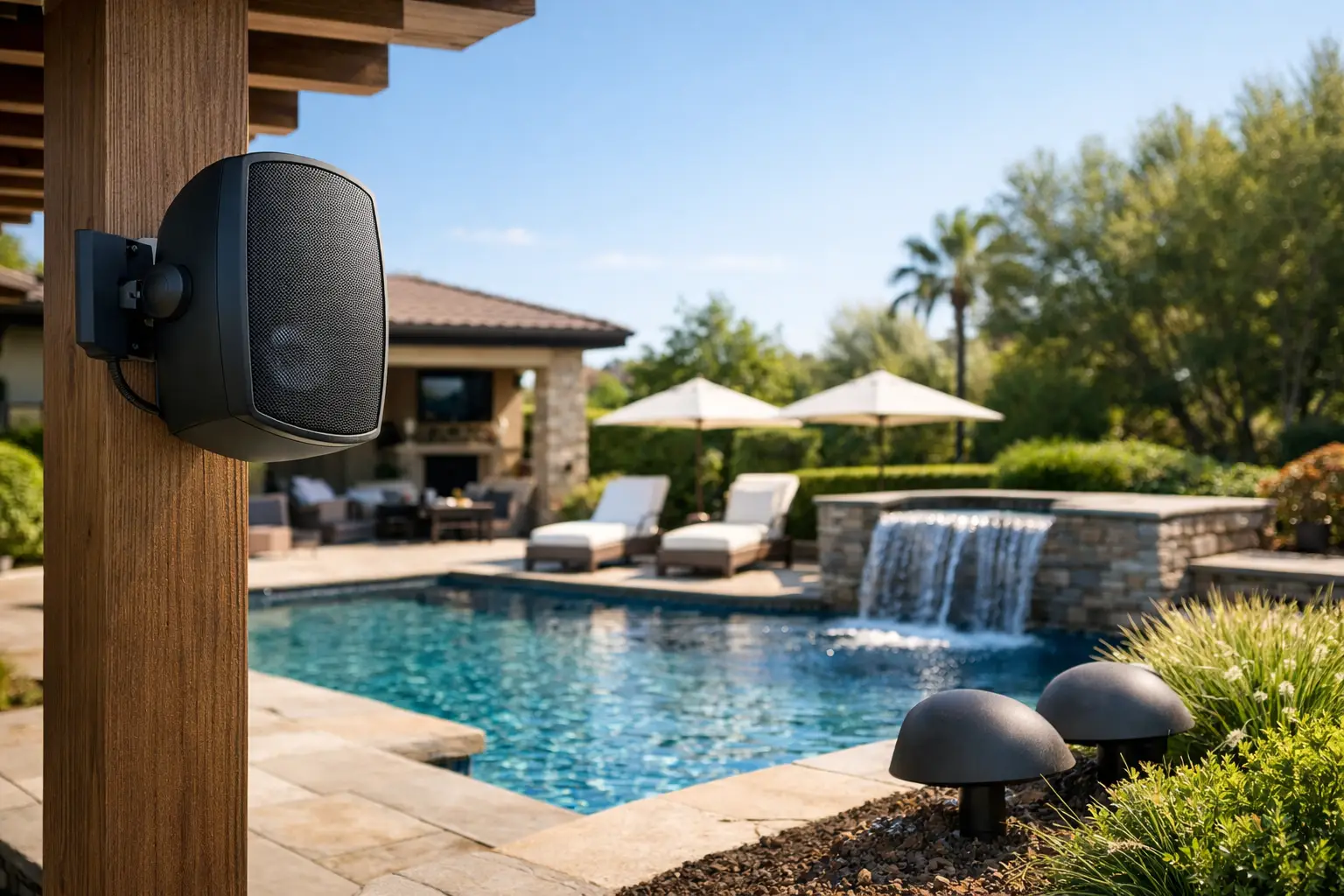
Surface-mounted speakers work well under covered areas
Weather-rated surface speakers are a practical choice for lanais, covered patios, pergolas, and outdoor kitchens. They can be aimed toward seating areas, which helps direct audio where it is wanted. They are also a good fit when homeowners want quality sound without modifying landscaping.
Their trade-off is visibility. Even compact models remain noticeable on posts, soffits, or exterior walls. Proper color matching, thoughtful placement, and concealed wiring help them blend in much more naturally.
Landscape speakers offer a more discreet backyard experience
For open pool decks and landscaped yards, satellite-style landscape speakers can be placed among planting beds, palms, and hardscape features. Their low-profile design helps distribute sound closer to listeners, often producing better coverage at lower volume than wall-mounted speakers alone.
Landscape systems are especially effective for larger yards because they can extend beyond the pool. Music can continue naturally from the patio to the fire pit, putting green, dock, or outdoor seating area. A buried outdoor subwoofer can add warmth and depth without placing a large cabinet beside the pool.
Architectural speakers suit clean, modern outdoor spaces
Some covered patios and cabanas can accommodate in-ceiling or in-wall speakers designed for high-moisture environments. This option delivers an exceptionally clean appearance, particularly when paired with a ceiling-mounted television or recessed lighting plan. It depends on the construction, available space, and whether the area is truly protected from direct rain.
A professional site visit can identify the right combination. Many of the best systems use more than one speaker type, with patio speakers for focused listening and landscape speakers for wider poolside coverage.
Keep Electronics Protected and Wiring Hidden
The speakers may be outdoors, but much of the system’s intelligence should live in a protected location. Amplifiers, streaming equipment, network hardware, and control components are typically installed inside the home, in a conditioned equipment area, or in a properly rated weather-protected enclosure. This protects performance and makes future service far easier.
Concealed wiring is equally important. Visible cable runs can undermine an otherwise beautiful backyard, create tripping hazards, and invite damage from lawn equipment. During installation, wiring can be routed through walls, attics, conduit, landscaping, or planned hardscape pathways based on the property. The finished result should look intentional, not added as an afterthought.
For homes with a new pool build or major renovation underway, it is smart to plan audio before pavers, coping, planting beds, and outdoor kitchens are complete. Running the right wiring early reduces disruption later and opens more placement options. Existing backyards can still be upgraded beautifully, but early planning gives the design more flexibility.
Reliable Wi-Fi Makes Control Easier
Streaming audio depends on a dependable network. If Wi-Fi weakens near the pool, music may cut out, control apps may lag, and guests may struggle to connect. This is a common frustration in larger Florida homes, particularly where concrete block walls, metal framing, or distance from the main router reduce signal strength.
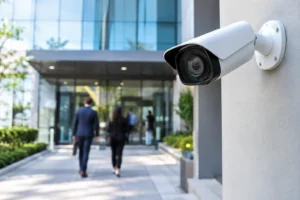
A properly planned Wi-Fi mesh network can extend strong coverage to the patio and pool area. That supports not only music streaming, but also outdoor TVs, security cameras, smart lighting, and connected pool equipment. Rather than treating each device as a separate project, it makes sense to build an outdoor technology plan that supports the whole property.
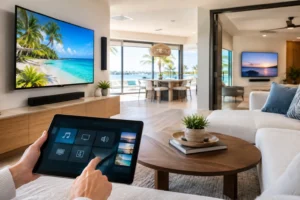
Control should be simple enough for every member of the household to use. Depending on the system, that may mean a phone or tablet app, a wall-mounted keypad, a handheld remote, or integration with a larger smart home control system. The best option is the one that matches your routine. If you mainly play music from a phone, a straightforward app may be ideal. If the backyard has multiple entertainment zones, dedicated controls can be more convenient when hosting.
Plan for Your Neighbors, Not Just Your Guests
A quality sound system should fill your backyard, not the entire neighborhood. Speaker placement and tuning have a major effect on how audio carries beyond the property line. Aim speakers toward seating and pool areas rather than toward fences or neighboring homes. Distributed speakers also help because they reduce the need for excessive volume.
Bass deserves special attention. A subwoofer can make music feel fuller, but too much low-frequency output travels through structures and outdoors more easily than midrange sound. The right system includes enough bass for an enjoyable experience, calibrated for the size of the space and the way the property is used.
This is one reason professional tuning matters. Equipment specifications do not reveal how a system will interact with a particular backyard. After installation, speaker levels, equalization, zone balance, and volume limits can be adjusted to create sound that feels lively near the pool without becoming intrusive.
Build a System That Can Grow With the Backyard
Pool audio often becomes the foundation for a broader outdoor entertainment plan. You may start with music around the deck, then later add an outdoor television, landscape lighting, security cameras, stronger Wi-Fi, or a second zone at a new gazebo. Choosing expandable equipment from the start can prevent unnecessary replacement later.
It also helps to think about source options. A system can stream music from popular services, play television audio during a game, or connect to existing equipment you already enjoy. The right installer will evaluate what you own, what you want to add, and where spending delivers the most noticeable improvement.
Frequencies USA designs poolside audio around the way each property is used, with professional equipment guidance, concealed wiring, clean installation, and easy everyday control. Whether your backyard is built for quiet evenings or full weekends with family and friends, a custom design keeps the technology in the background and the experience front and center.
A free on-site estimate is a practical first step before choosing speakers or starting a pool-area upgrade. Walk the space at the time of day you use it most, point out where people gather, and consider what you want to hear from the water, the patio, and the kitchen. That conversation often reveals a better system than simply placing a speaker near the nearest outlet.
 Previous Post
 Next Post