Best Low Voltage Landscape Lights for Florida
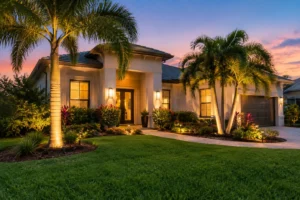
A beautifully lit driveway, pool deck, or patio should feel effortless after sunset. The best low voltage landscape lights do more than brighten a path: they add curb appeal, make outdoor spaces safer, and let you enjoy the areas you invested in long after the Florida sun goes down. The right system is subtle in the daytime, impressive at night, and built to handle heat, rain, irrigation, and coastal air.
For most homes, low-voltage lighting is the smart place to start. It offers a polished, custom appearance without the harsh glare or complicated infrastructure associated with line-voltage fixtures. But choosing fixtures from a shelf is only part of the decision. Light placement, beam spread, color temperature, wire sizing, transformer capacity, and controls all affect how the finished space looks and performs.
What Makes the Best Low Voltage Landscape Lights?
The best system is not necessarily the one with the highest fixture count or the brightest bulbs. It is the system that gives each outdoor area a clear purpose. Path lights should guide guests without creating a runway effect. Uplights should reveal the texture of a palm, oak, stone wall, or architectural column without shining into windows. Patio and pool lighting should create a comfortable atmosphere while maintaining safe visibility.
Quality begins with the fixture material. In Florida, solid brass and copper fixtures are excellent long-term choices because they resist corrosion and develop a natural patina over time. Powder-coated aluminum can be a more budget-friendly option, especially in protected areas, but it may not hold up as well near the coast or in heavily irrigated landscaping. Plastic fixtures often look appealing at first because of their price, yet they can become brittle, fade, or fail sooner under intense sun and humidity.
LED performance also matters. Look for integrated LEDs or replaceable LED lamps with warm white color temperatures, typically around 2700K to 3000K. This range flatters landscaping, stucco, stone, and outdoor living areas. Cooler white light can make a property look stark and commercial, while overly warm light may make certain surfaces appear yellow. The goal is a natural, inviting glow.
Start With the Way You Use Your Outdoor Space
A strong lighting plan follows how your family and guests move through the property. Before selecting fixtures, consider the route from the driveway to the front door, the transition from the house to the pool or patio, and the places where people naturally gather after dark.
A front-yard design usually benefits from a mix of path lighting and selective uplighting. Rather than placing a path light every few feet, use fewer fixtures with intentional spacing. This prevents glare and creates gentle pools of light that define the walkway. Uplighting at entry columns, specimen trees, and front-facing architectural details adds depth and makes the home feel welcoming from the street.
In a backyard, the priorities may shift toward entertaining and safety. A covered patio can benefit from downlighting, discreet step lights, or lighting integrated into hardscape features. Around a pool, lighting should help people see edges, steps, gates, and changes in elevation without overpowering the relaxing atmosphere. If you have outdoor audio, a television, or a kitchen, the lighting should support the experience rather than compete with it.
Commercial properties follow a similar principle, although safety and wayfinding become even more important. Entry paths, signage, landscaping, seating areas, and building features can all benefit from controlled, professional lighting that improves the customer experience after business hours.
Choose Fixtures by Function, Not Just Appearance
Every fixture style has a job. Matching the fixture to the job is what separates a polished installation from an assortment of bright spots in the yard.
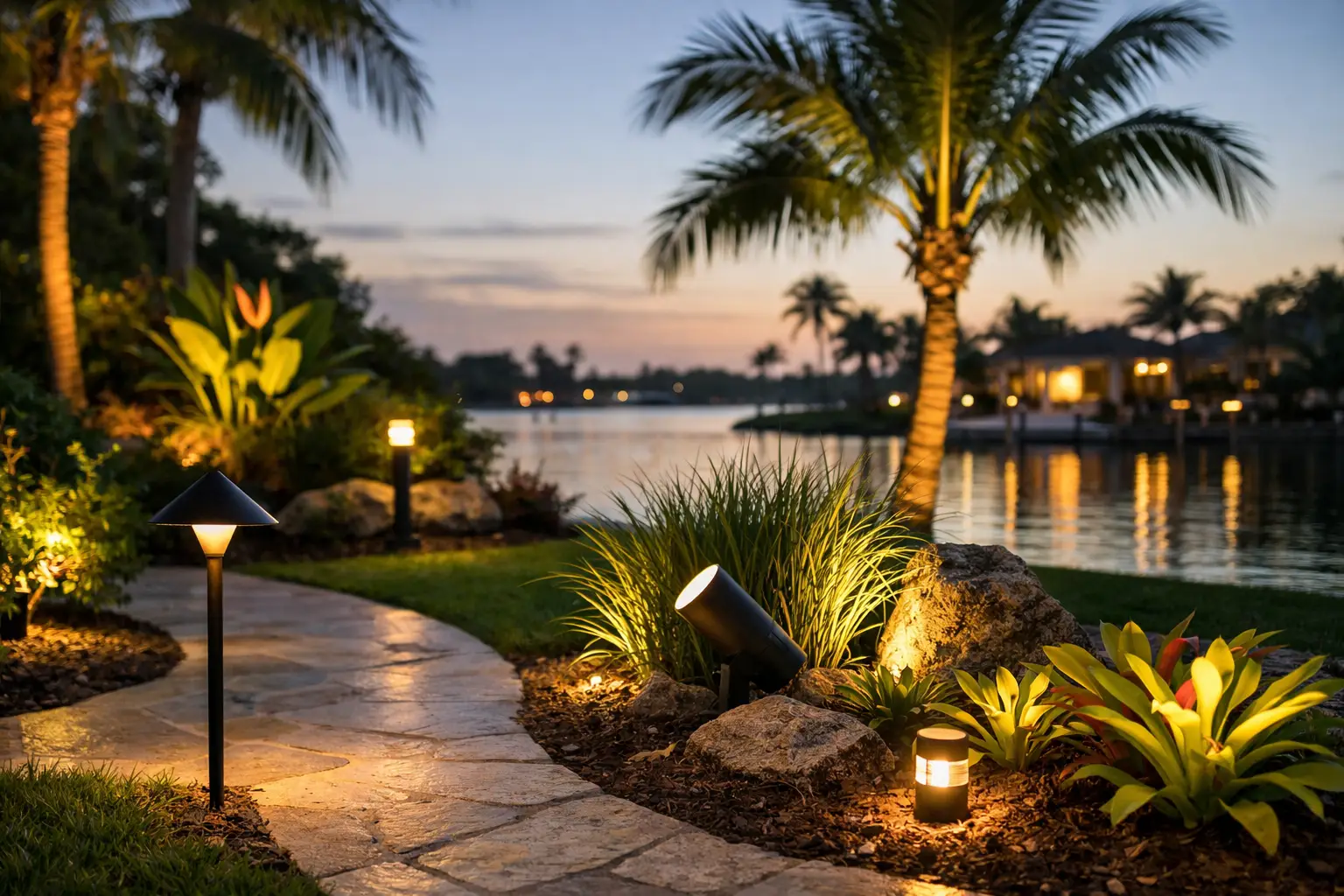
Path lights are designed to illuminate walkways, garden borders, and transitions between outdoor zones. Select fixtures with shields or hats that direct light downward. The fixture should light the walking surface, not a guest’s eyes.
Well lights sit flush with the ground and are useful for uplighting trees, walls, and architectural elements where a visible fixture would interrupt the design. They need careful placement and drainage, particularly in areas with frequent rain or irrigation. A poorly installed well light can collect water, debris, and mulch.
Spotlights and bullet lights provide more directional control. They work well for palm trunks, broad canopies, fountains, flagpoles, and facade accents. Adjustable beam angles are useful because a narrow beam that works on a tall palm may be too concentrated for a short ornamental tree.
Hardscape lights are tucked beneath capstones, benches, steps, retaining walls, and outdoor kitchen counters. These fixtures add a refined layer of low, indirect illumination. They are especially effective when homeowners want the space to feel finished without seeing the source of the light.
Florida Durability Is a Real Buying Factor
Landscape lighting in Florida faces conditions that product packaging rarely explains well. Heat can shorten the life of low-quality electronics. Afternoon storms test connections and drainage. Salt air can corrode metal components even when a property is not directly on the beach. Lawn crews and edging tools can damage exposed wire and poorly positioned fixtures.
For that reason, fixture construction and installation quality matter as much as the brand name. Use weather-rated connectors, protect cable where it crosses vulnerable areas, and keep fixtures clear of sprinkler spray when possible. A professional installer also accounts for changes that happen over time, including mulch buildup, plant growth, seasonal trimming, and future additions to the outdoor space.
Voltage drop deserves attention on larger properties. Low-voltage systems typically run on 12 volts, but long cable runs can reduce voltage at fixtures placed farther from the transformer. The result may be dimmer lights, inconsistent color, or premature LED failure. Proper cable gauge, zoning, and transformer planning solve this before the system is installed, not after the lights begin performing unevenly.
Controls Make Outdoor Lighting Easier to Enjoy
A lighting system should work around your routine, not create another task at the end of the day. Basic photocell and timer controls are dependable choices for homeowners who want lights to turn on at dusk and shut off at a set time. Astronomical timers adjust automatically with seasonal sunset changes and are often a better fit than a fixed schedule.
Smart controls add another level of convenience. Depending on the system, you may be able to adjust schedules, create scenes for entertaining, manage zones independently, or control outdoor lighting alongside audio, security, and other smart-home features. This is especially useful for properties with separate front-yard, backyard, pool, and patio zones.
There is a trade-off. More advanced control can add cost and complexity, so it should solve a real need. A simple, properly programmed timer is often ideal for a small front-yard installation. A connected control system makes more sense when lighting is part of a larger outdoor living design.
Why Professional Design Changes the Result
Low-voltage landscape lighting is often marketed as a weekend project, and small projects can certainly be approachable. Still, a professionally designed system delivers benefits that are difficult to achieve fixture by fixture: balanced brightness, concealed wiring, clean sightlines, durable connections, and room for future expansion.
The design process should happen after dark whenever possible. Seeing the property at night reveals what needs light, what should remain in shadow, and where glare could become a problem. It also helps determine whether an existing transformer can support new fixtures or whether the system needs to be upgraded.
For homeowners in the Tampa Bay area, Frequencies USA can design outdoor lighting as part of a complete outdoor technology plan. That means landscape lighting can complement a poolside TV, outdoor speakers, Wi-Fi coverage, cameras, and smart controls while keeping wiring hidden and the finished space visually clean.
A Better Way to Plan Your Lighting Investment
Set a realistic budget around the areas that will make the biggest daily difference. Start with safe access points, the front entry, major entertaining spaces, and architectural features that give the property its character. Then leave capacity for future zones instead of buying a system that is maxed out on day one.
Avoid the temptation to overlight. Darkness is part of a successful landscape design because it creates contrast and lets focal points stand out. A few well-aimed fixtures can make a home look more distinctive than dozens of lights installed at equal intervals.
The right outdoor lighting does not need to call attention to every fixture. When it is planned well, guests simply notice that the driveway feels safer, the patio feels more inviting, and the home looks exceptional after sunset.
 Previous Post
 Next Post