Television Wall Placement That Feels Right
A beautiful TV can still feel wrong when it is mounted too high, fights afternoon glare, or leaves cables draped across a carefully finished wall. Thoughtful television wall placement is what turns a screen into a natural part of the room instead of a piece of equipment that constantly demands attention.
The best location is rarely decided by wall size alone. Your seating, room layout, windows, lighting, sound system, and the way your family actually uses the space all matter. A professional installation considers the whole environment so the finished result looks clean, feels comfortable, and works the way it should every day.
Television Wall Placement Starts With Viewing Comfort
The most common mounting mistake is placing the television too high. It is easy to assume a screen should be centered on an open wall or mounted above a fireplace for a more dramatic look. But when the center of the screen sits well above seated eye level, viewers spend long movies, game days, and binge-watching sessions looking upward. That can create real neck and shoulder discomfort.
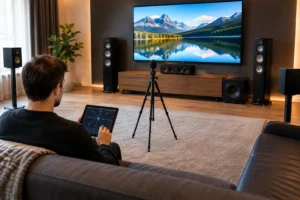
For a primary living room television, the center of the screen should generally land close to the eye level of someone seated on the main sofa. The exact height changes with the furniture, screen size, and viewing distance. A deep, low-profile sectional calls for a different mounting height than upright theater seating, for example.
Screen size also affects the decision. A larger television naturally extends farther above and below its center point. Rather than using a one-size-fits-all measurement from the floor, start with where viewers’ eyes rest when seated, then calculate around the dimensions of the specific display.
Distance matters just as much. Sitting too close to a very large screen can make the image feel overwhelming, especially for movies, sports, or gaming with fast motion. Sitting too far away reduces the impact of the detail you paid for. The goal is a screen that fills your field of view comfortably without forcing your eyes to work around the edges.
Consider the Room’s Real Seating, Not the Ideal Layout
Many rooms have more than one viewing position. An open-concept family room may have a sofa, accent chairs, a kitchen island, and a dining area all facing slightly different directions. In that case, the ideal television location may not be perfectly square to every seat.
Prioritize the primary viewing area, then use a quality articulating mount when needed. A properly selected mount can angle the television toward the main sofa while still allowing a clear view from adjacent spaces. This works especially well in corner installations or rooms where the only practical wall sits off-center.
Choose a Wall That Supports the Experience
A blank wall is not automatically the best television wall. Before committing to a location, look at how the wall relates to windows, doors, traffic paths, built-ins, and furniture. The goal is to create a viewing zone that feels intentional rather than squeezed into leftover space.
A wall opposite the main seating arrangement often makes the most sense because it provides direct sightlines and allows speakers, a soundbar, or cabinetry to be arranged naturally. When possible, leave enough visual breathing room around the display. A television jammed between a doorway and a large window can make even an expensive installation look crowded.
Wall construction matters, too. Drywall mounted over wood studs is common, but not every stud location lines up with the visual center of the room. Concrete block, metal studs, tile, stone, and shiplap require different hardware and mounting strategies. A secure installation should account for the actual wall structure, not rely on shortcuts or the television’s weight alone.
For Florida homes, exterior walls and rooms with high humidity deserve added attention. Covered patios, pool areas, and lanais may need weather-rated displays, protected power, and mounting solutions designed for changing temperatures and moisture. An indoor television on an outdoor wall may seem fine at first, but it is not built for that environment.
Manage Sunlight Before It Manages Your Screen
Florida sunshine can be the deciding factor in television wall placement. A screen mounted directly opposite large windows may look perfect during the morning walkthrough and become difficult to watch by midafternoon. Reflections are especially noticeable on glossy displays, even with a bright television.
Before choosing the wall, notice where sunlight moves throughout the day. West-facing windows can create intense late-day glare, while sliding glass doors can reflect nearly every light source in the room after dark. Window treatments help, but they should support a smart placement decision rather than rescue a poor one.
Sometimes the right answer is moving the television to a perpendicular wall. In other rooms, a higher-brightness display, adjustable shades, or an articulating mount can make the preferred wall work. The best choice depends on how much natural light you want to preserve and when the room gets used most often.
Plan for Sound, Power, and the Equipment You Do Not Want to See
A mounted TV should not mean settling for thin, underwhelming sound. Modern televisions are remarkably slim, which leaves little room for speakers that can deliver clear dialogue and satisfying impact. If the room is used for movies, sports, concerts, or gaming, sound deserves a place in the wall plan from the beginning.
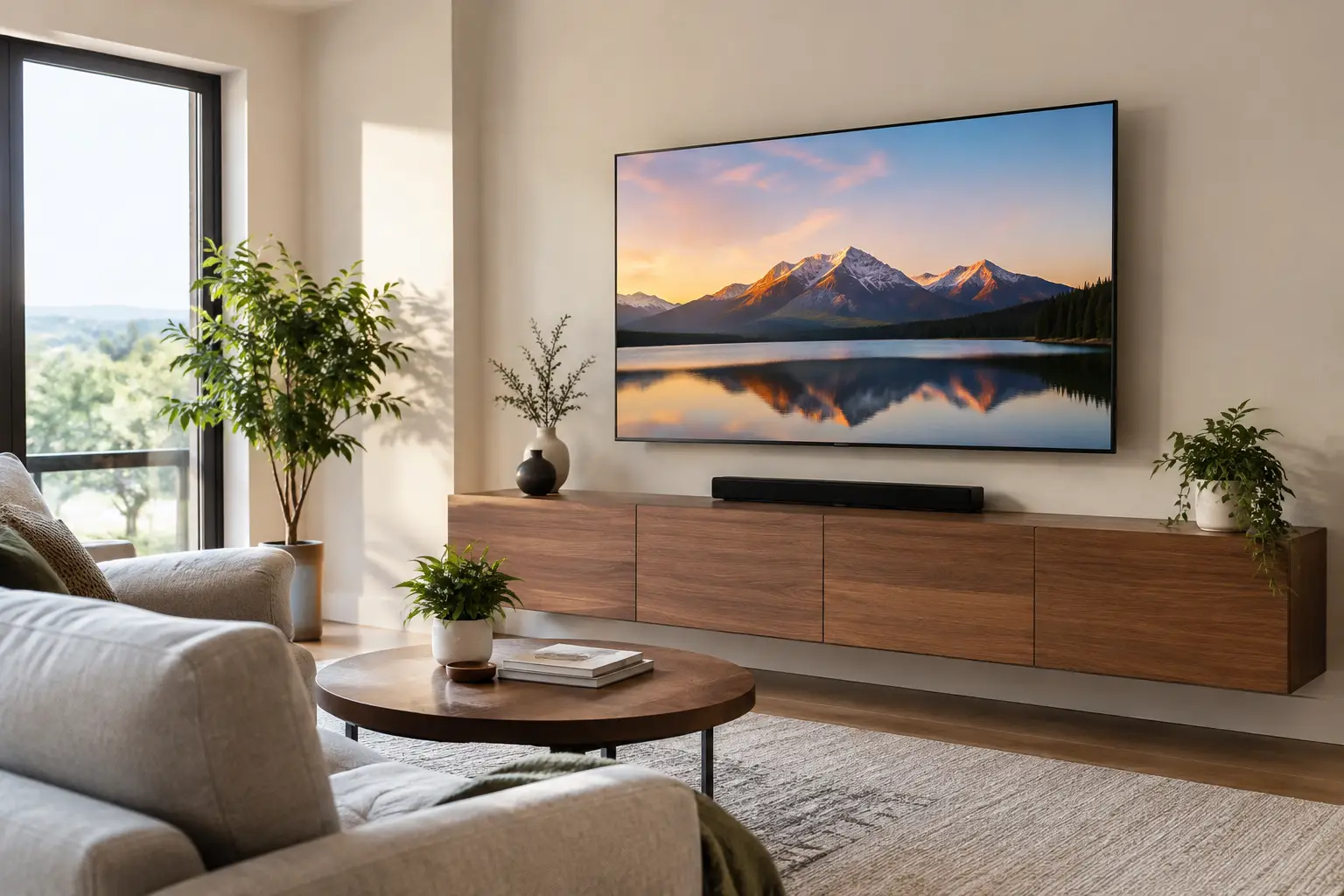
A soundbar can sit cleanly below the display, but it needs the right clearance and mounting height. For a more immersive result, in-wall speakers, surround speakers, and a properly placed subwoofer can be integrated without overwhelming the room. The television location should support speaker placement instead of forcing audio into awkward corners.
Then there is the equipment behind the experience: power, streaming devices, game consoles, cable boxes, network hardware, and control components. Visible cords can quickly undermine a polished installation. More importantly, running a standard extension cord inside a wall is not a safe or code-appropriate solution.
A clean design uses correctly placed in-wall power, rated cable management, and a planned pathway for HDMI, network, and control wiring. That approach keeps cables concealed while allowing room for maintenance and future upgrades. If a client wants the television to appear almost floating on the wall, the infrastructure needs to be considered before the mount goes up.
Do Not Forget Reliable Wi-Fi
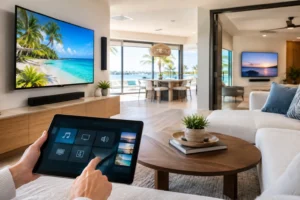
A smart television is only as enjoyable as its connection. Buffering during a big game or a movie night usually has less to do with the television than with weak wireless coverage in that part of the home. Media rooms, detached spaces, outdoor entertainment areas, and large floor plans often benefit from a professionally designed Wi-Fi mesh network or a wired network connection at the TV location.
Planning network access during installation avoids the temptation to rely on an unreliable signal later. It also creates a better foundation for streaming, gaming, whole-home audio, and smart home control.
Fireplaces Can Work, With Honest Trade-Offs
Mounting a television above a fireplace is popular because it creates one focal point. In some rooms, it is also the only practical wall. The trade-off is usually height. Unless the fireplace is low and the seating is farther back, an above-fireplace mount can place the screen higher than is comfortable for regular viewing.
Heat is the second concern. Gas fireplaces, electric units, and wood-burning fireplaces all behave differently. The wall surface and mantel may remain safe while the area above the fireplace gets warmer than the television manufacturer recommends. Measurements, ventilation, and the unit’s specifications should guide the decision.
A pull-down mount can improve viewing comfort by lowering the screen when it is in use. It is not the right solution for every fireplace, but it can preserve the clean focal-point look while reducing the upward viewing angle. The key is treating the fireplace wall as a design and engineering decision, not simply a convenient empty space.
Match the Installation to How You Live
The right placement for a formal living room is not always right for a game room, bedroom, conference room, or covered patio. A bedroom television may be mounted higher to accommodate viewing from bed. A commercial display may need to be visible from standing height and positioned for customer traffic. A pool-area screen needs to handle sunlight, moisture, and wider viewing angles.
This is where custom planning makes the difference. Frequencies USA helps homeowners and businesses build installations around the space, equipment, and experience they want, with concealed wiring and a finish that looks intentional from every angle.
Before drilling into the wall, sit in the room at the time you use it most. Look for glare, test sightlines from the seats that matter, and consider where sound, power, and network connections belong. A few careful decisions upfront can make every movie night, game day, and quiet evening at home more comfortable to enjoy.
 Previous Post
 Next Post